
Irrepressible: Mahvash Sabet’s Open Wide the Doors review
Words: Simone Kelly
‘Courage is not the absence of fear.
It is simply the ability to keep going while frightened.’
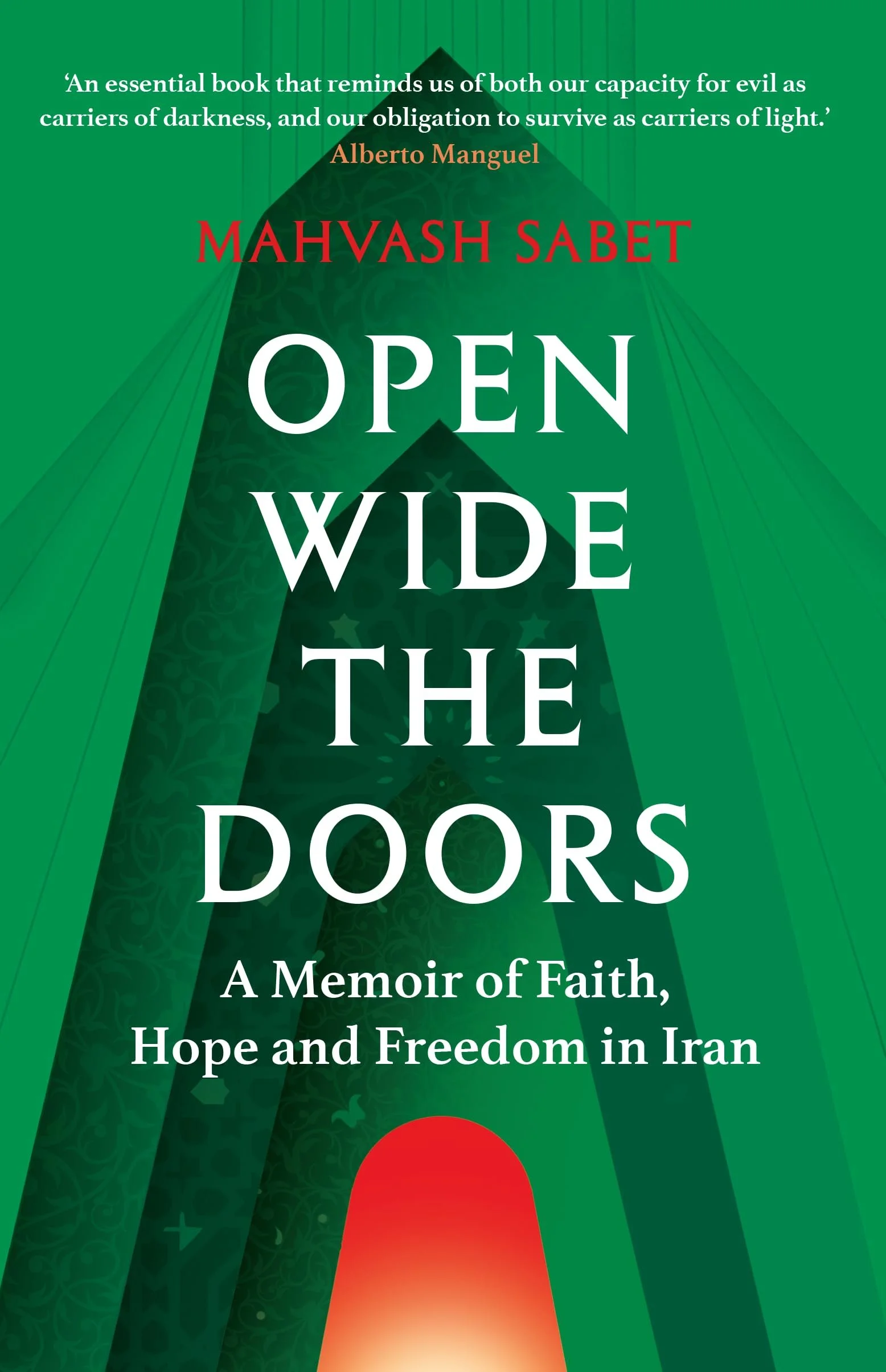
In Mahvash Sabet’s deeply heartfelt memoir, Open Wide The Doors: A Memoir of Faith, Hope and Freedom in Iran, we come to know a woman holding fast to her sense of self and humanity against a state whose goal is to break her.
Following the 1979 Islamic Revolution, the Baháʼí Faith has faced systematic oppression in Iran. In 2005, Sabet (a follower of the Baháʼí Faith) was imprisoned in Tehran's political prison, Evin, and held for thirty-four days. After her release, the fear of further arrest loomed over her, but nothing could prepare her for what followed. In March 2008, she was summoned by the Intelligence Bureau of Mashhad. What she believed to be a temporary detention would go on to become an abduction, as she would remain illegally imprisoned for ten years. A prisoner of conscience, her crime was being of the Baháʼí Faith. Sabet’s memoir recounts the first ten months of her unjust captivity and the profound resilience she held onto whilst facing it.
Mahvash Sabet is an award-winning poet, and this comes across clearly in her prose. The rhythm of her writing flows delicately, almost as a nod to the tone of her experience. She has an astonishing capacity to bring readers into her journey with descriptive and emotive language. Her personal experiences, and those of the prisoners around her, are handled with delicate care. We’re introduced to murderers, political activists and sex workers through her very eyes on an intimate level. Companionship inside isolated walls becomes a form of survival. It is remarkable to learn of her struggles whilst never failing to be able to picture the events, and the larger messages behind them, as they unravel.
What makes this memoir so striking is Sabet's ability to convey the political climate without diverting readers from her core message. It is a deeply intimate and personal contemplation of her own journey. Rather than providing a timeline of Iran's political system, or the history of the Baháʼí Faith, she shows us what it truly means to not lose oneself in the face of oppression.
Throughout the book, she weaves metaphorical imagery into her narrative, using it to communicate concepts and ideas that extend beyond the literal scenes unfolding. In one chapter, Sabet takes time to reflect on the nature of tyranny and oppression. She concludes with powerful symbolism, describing the ants within her cell: ‘the ants marched on across the floor, undaunted, unstoppable, irrepressible’. Tiny and vulnerable, they continue onwards despite the conditions surrounding them, acting as a quiet reflection of Sabet’s own perseverance as she carries on despite her fear of self-erosion.
From the mundane isolation of solitary confinement to the horrors of mental and physical torture, no visceral detail is spared. Not only does she recite everything in an attentive manner, but she does so through a lens of hope. Even within the confines of her imprisonment, her empathy towards those around her remains intact. Throughout these experiences, she reflects deeply on her own thoughts and identity, while also contemplating the actions and beliefs of those around her. It is a testimony to her humanity that will not be swayed.
Her involvement in the Baháʼí community paradoxically forces her into the box of a political activist. By deeming her a political threat, the state exerts control over how she is seen and who she is allowed to be. Finding herself surrounded by self-identified activists in Evin, she is not only answering her interrogators but also her fellow prisoners. Whilst she is forbidden from discussing her faith, many critique it. It is not only the interrogators scrutinising her ties to foreign states; her fellow Iranians quiz her too. Notably, Sabet warmly welcomes the inquisitiveness of some individuals. These conversations provide a lifeline to human connection, preserving her personhood. When she feels safe enough to do so, she indulges their curiosity; it is the brutality and inhumane treatment of her oppressors that she stands against.
Sabet's memoir encourages truth to remain heard. It is a collection of writings composed and translated into a book. She shares how she is warned not to disclose why she is imprisoned to anyone she comes across, nor is she to discuss anything of the Baháʼí Faith. If she were found to be preaching, or trying to convert in the eyes of the state, then she would most likely find herself inviting more trouble. Her movement, her identity and even her voice belong to the state. Yet writing becomes a way to reclaim what imprisonment takes from her. Sabet doesn’t divulge how she manages to get her thoughts onto the pages, but the translators, A. Mottahedeh and B. Nakhjavani, share the details in the postscript. After finding a pen under a sink, Sabet finds herself writing on pieces of tissue, expressively recalling the events and carefully hiding these treasures within books, blankets and clothing. She is not merely documenting her experiences; she is preserving her voice, identity and love for poetry, all within a system built to silence and break her. Ultimately, it is the very humanity she explores throughout the book that allows her to resist this repression, with her cellmates actively aiding in the smuggling of her notes and poems.
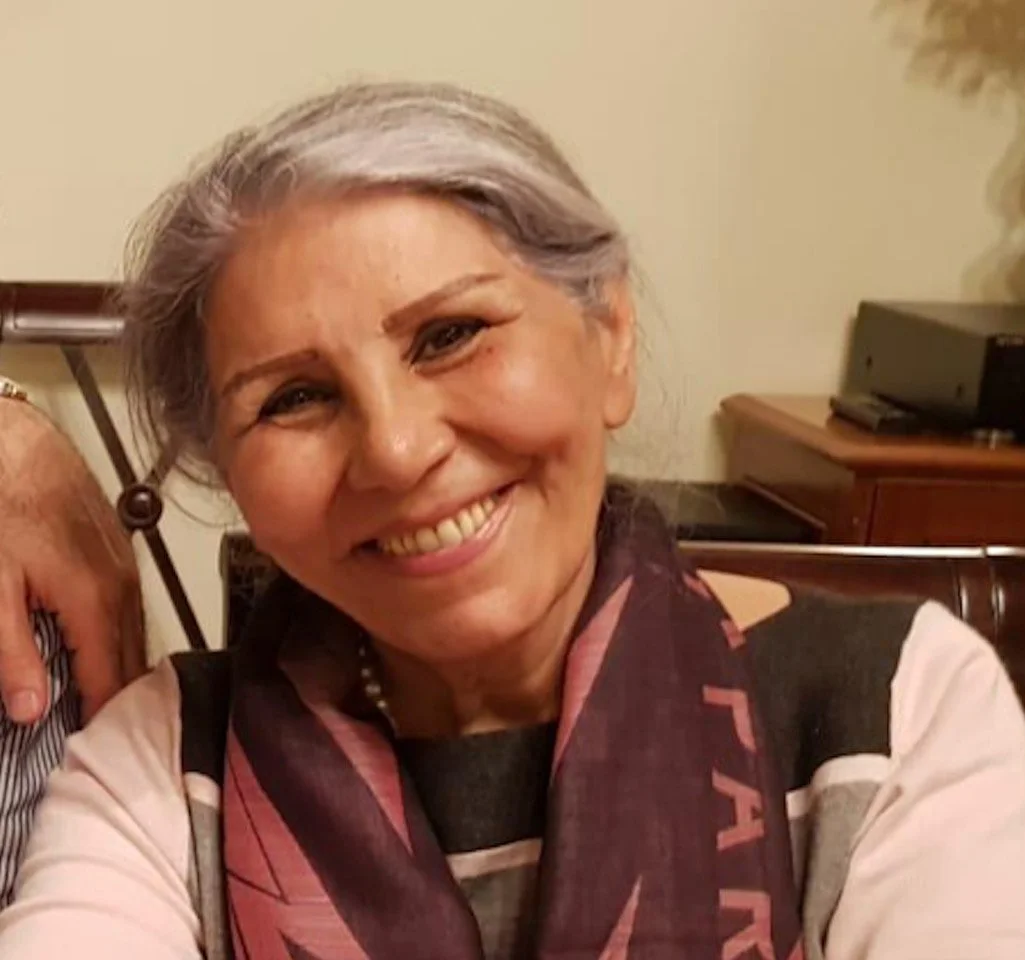
Her reflective book comes at a time where the persecution of Baháʼís worsened since her first arrest, but civilians from all walks of life continue to be held against their will and tragically killed during protests.
On 16 September 2022, Mahsa Amini, a Kurdish-Iranian woman arrested for not wearing a hijab, died in hospital three days into her custody. Eyewitness accounts stated that her death was a result of police brutality, though the Iranian state denies such allegations. Since Mahsa’s passing, the global Woman, Life, Freedom movement has been established, protesting against compulsory hijab laws and the systematic oppression of Iranian women.
In January 2025, Craig and Lindsay Foreman, a British couple travelling through Iran, were detained and charged on suspicion of being spies. They were sentenced to a decade in the same prison as Sabet, Evin Prison. Craig has also been punished for refusing to remain silent, with his sentence being extended by two years for speaking to the media. As of the time of publication, they remain in captivity and have recently ended a hunger strike.
Open Wide The Doors: A Memoir of Faith, Hope and Freedom in Iran is a testimony to standing true to your beliefs even when your voice feels drowned out. The experiences of those detained in Iran show that this struggle is far from over. Like the ants in Sabet’s cell, her words continue onwards: undaunted, unstoppable and irrepressible.
Mahvash Sabet was sentenced to a further decade in prison in 2022. She is currently out on medical leave following heart surgery and is awaiting reincarceration.
Words: Simone Kelly
Open Wide the Doors: A Memoir of Faith, Hope and Freedom in Iran
and Waterstones