
Féroce Meets: Mia McGrath
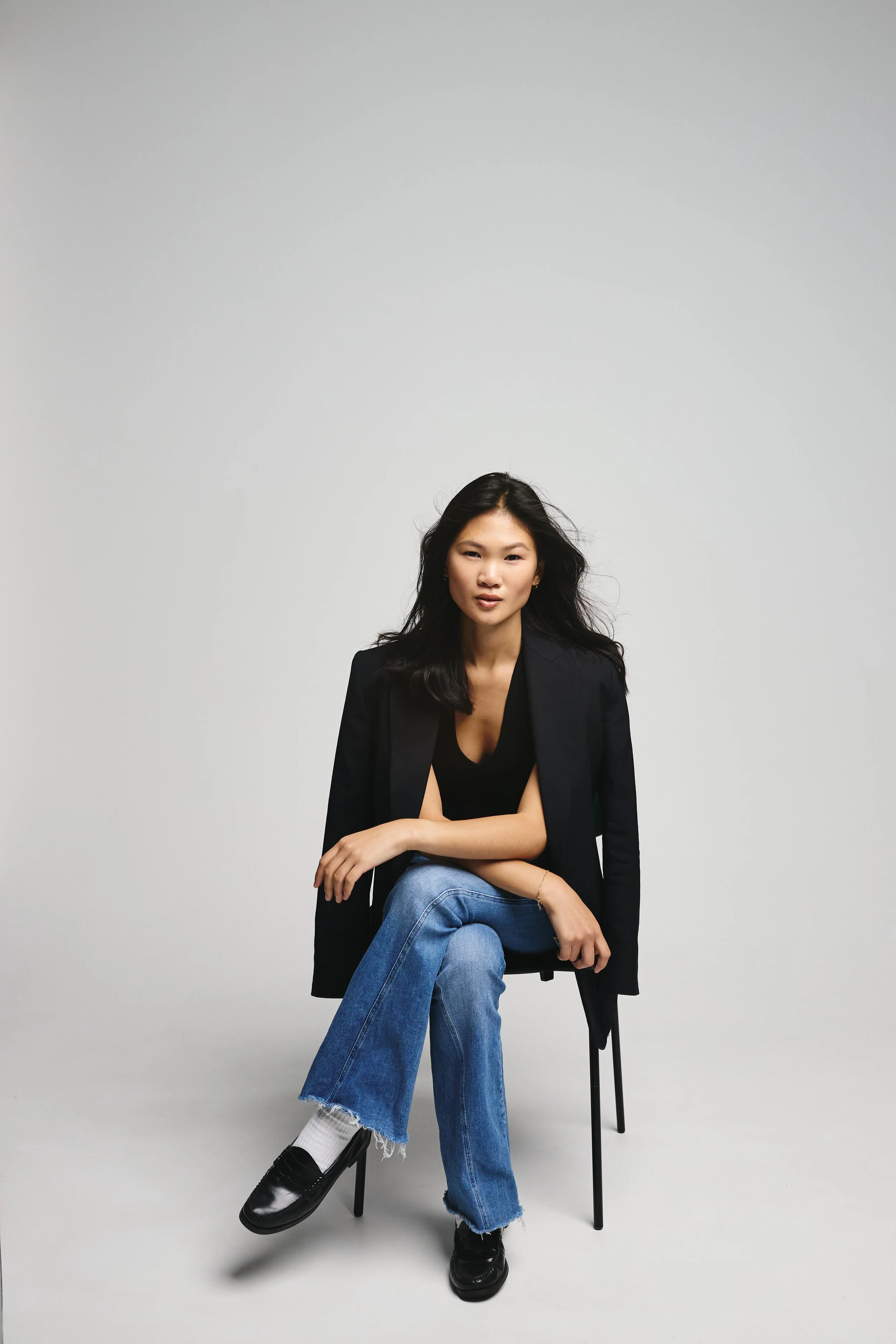
Mia McGrath has emerged as one of the most recognisable voices and the original voice behind the growing Frugal Chic movement, occupying a space where personal finance, taste and cultural signalling intersect. Known for her methodical, restrained approach to money, McGrath’s content resists the loud excess often associated with online wealth culture, instead framing financial literacy as something cultivated through intention, discipline and long-term thinking. To invest in your financial literacy is to invest in yourself.
Féroce was interested in speaking with McGrath not simply as a financial influencer, but as a cultural producer working within the constraints of platform economies. Her work raises questions that sit at the centre of contemporary creative labour: how identity becomes branded, how authenticity is maintained under constant visibility, and how aesthetics shape the way financial success is interpreted and aspirationalised online.
Through this interview, we wanted to understand what sits beneath the surface of Frugal Chic. From the practical realities of content production to the tension between personal growth and narrative consistency, we explore how McGrath navigates platform demands, responsibility, and in an economic climate defined by precarity. Rather than positioning frugality as a trend, this conversation considers it as a reflection of wider cultural anxieties and a potential reconfiguration of how value, labour and success are communicated today.
Féroce Magazine: What does your creative process actually look like from idea to upload? Is it instinctive, planned, or somewhere in between?
Mia: Somewhere in between. When I feel inspired, I will create content around that. But equally, for my niche, I know that I’m going to make similar videos month on month because recurring topics come up, like budgeting for that month, investment portfolio updates, how much I spent, etc. My content is a mix of evergreen content, so content that could be taken out of context or has no particular timeline, like how to invest in the stock market, which is quite universal, but then I also have timely content where it may be about current events or something that’s going on in my life.
Féroce Magazine: How much of your work is shaped by platform demands versus your own creative instincts?
Mia: It’s mostly platform demands that you have to fit into, but I don’t really mind that. I see it as an art form or a medium. For example, if I was painting or writing, I would still have to fit into what those confines consider useful or good to reach a mass audience.
Féroce Magazine: How do you decide what not to show? What gets edited out of the frugal chic narrative?
Mia: Something that I find challenging is that as my life improves, because I’m putting content out there and progressing in my career, my standard of living definitely improves. Things like going to events, gifting, or other parts of influencer life come into play. I find it difficult to balance that while maintaining an identity I built from an authentic experience, which was being frugal while in a 9–5. Luckily, I think frugal chic is quite adaptable, and I don’t want it to be purely focused on my life. It’s more about people placing their own identity within it and what they think is frugal chic. But I definitely try not to include anything that might contradict the narrative, because it leads to a lot of negativity. For example, when I went for a massage for my birthday, I felt it kind of contradicted the narrative, and I had to carefully play with the script to make it work. That’s an example of how I’d like to live my life a bit more, but I feel slightly restrained by the brand I’ve built. Equally, it is very freeing at the same time.
Féroce Magazine: What would you like people to notice about your work that often gets overlooked?
Mia: People think influencers don’t really do anything, they just post videos. But there’s a lot behind the creative process. I seriously had someone say to me that my content is no longer relatable to normal people, and that I get so much monetary benefit for doing such “little work”. I don’t think the work can be compared to hard labour, and there are many people in society who work the hardest and get paid the least. But I don’t see myself as just an influencer, I see myself as a creator online. Even though I make most of my revenue from posting on short form, the work goes beyond that.
For example, I put out a free and paid newsletter every week. I create one long form video on YouTube. I post roughly seven to ten times on short form, which doesn’t sound like a lot, but people often conflate the length of the video with the effort that goes into it. It might be a two minute video, but it may have taken me two hours or more to make. I have to create the idea and ensure all the boxes are ticked, that it’s highly engaging, informative, and factually correct. It definitely doesn’t take two minutes to make, which a lot of people think it does.
The job also requires you to always have high energy. With any kind of media, you would usually have media training, but there’s nothing like that for content creators. On top of that, you have to deal with doubt. For me, I deal with over 3,000 comments a month, and that’s a lot of opinions for one person. I don’t think it’s healthy or reasonable to give the same emphasis or importance to each one of those comments.
Féroce Magazine: If TikTok disappeared tomorrow, what would you want your work to translate into, writing, film, design, something else?
Mia: Even though I monetise a lot from TikTok and it’s how I currently make most of my living, I wouldn’t consider it my only source of income or project. I see short form media as a top of the funnel activity. I think any creator or business person should be using it as such. Creating organic content should always lead to something you are trying to monetise or capture, whether that’s for free, like a lead magnet, or a digital product, a newsletter, or capturing data. That’s what it’s there for. If you’re using it just as a product in itself, you’ll always be trapped in a cycle of having to post every single day to stay relevant. The real content leaders who are creating businesses from this are building their own ecosystem.
Féroce Magazine: Frugal chic relies heavily on taste, editing and restraint. Where do your aesthetic references come from, fashion, art, interior design, elsewhere?
Mia: I get a lot of inspiration from film, with my favourite eras being the 70s to 90s, or films inspired by those eras. Examples include The Holdovers, The Graduate, The Virgin Suicides, La Piscine, The Dreamers, and Before Sunrise. These films have what I see as the aesthetic of frugal chic.
For fashion, I see frugal chic as very Kate Moss and Jane Birkin. The singer Sade is the epitome of chic.
For interiors, I think mid century modern best suits this aesthetic. Clean lines, functional forms. Pieces designed for decades, not seasons.
Féroce Magazine: “Frugal chic” is as much an aesthetic as it is a financial practice. How conscious are you of style, presentation and taste in the way your content is received?
Mia: I carefully include imagery, fonts and colours that I think are frugal chic, like browns, neutrals and elegant fonts.
Féroce Magazine: There’s a long history of wealth being coded through subtlety rather than excess. Do you see your content as part of that lineage, or as a rejection of it?
Mia: Yes, I agree. But I see frugal chic as a democratisation of that idea, that wealth is something you create, not something you have to already have to partake in a trend.
Féroce Magazine: You’re often positioned as a “role model” for financial success. How do you personally define the limits of responsibility when presenting this content to a mass audience?
Mia: Anyone, from any circumstance, can see my content, which gives a great responsibility to be balanced and realistic. I tend to make a lot of disclaimers in my content because of this. Transparency can be helpful in understanding what’s possible.
Féroce often looks at how trends reflect deeper cultural anxieties. What do you think the popularity of frugality says about our current economic psyche?
Mia: We have a cost of living crisis, and people are addicted to their phones. It couldn’t be more timely. People are craving less and are looking for a way for that idea to be packaged into a palatable movement, not just a trend.
Féroce Magazine: Féroce is interested in creators as cultural producers. Do you consider your work part of a wider cultural moment rather than just a niche online genre?
Mia: Yes, I see it as something that can transcend social media and become commonplace, like Sophia Amoruso did with Girlboss.
Féroce Magazine: What conversations around money do you think are still missing from mainstream financial content?
Mia: Wealth management. A lot of content like mine is directed at beginners because you can reach the masses, and I too was on an average salary last year, so I was speaking from my experience. But as I progress in my career, I’m more curious about the true inner workings of a brand. I think it’s still very hidden because people have the mentality that if they help others, those people will overtake them. I would love to see more finance content for entrepreneurs, not just those in a 9–5.
You can explore Mia McGrath’s content here:
https://frugalchic.co.uk/
https://www.miamcgrath.co.uk/
https://www.tiktok.com/@miarosemcgrath