
Ten seconds is a remarkably short time to decide whether you want a dress. It is apparently enough time to buy one. In June, Vogue Business described a Whatnot livestream where a brown-and-white shirt dress, advertised as fitting anything from a UK size 6 to 20, sold for $18.80 after a ten-second auction. The seller moved straight on to the next item. There was no fitting room, no lengthy search through listings, and certainly no time to sleep on it.
For anyone who remembers shopping television - I’m talking about Gems TV, The Shopping Channel, Screenshop and Bid-Up.TV - this should sound rather familiar. Long before influencers began delivering breathless product demonstrations from their bedrooms, QVC had perfected the art of making an otherwise ordinary purchase feel like an occasion or at the very least, keeping every insomniac in the UK company until it was time to get up for work or go to school. The presenters had patter, the deals had deadlines, and the viewer had a telephone. The telephone persists, except now there’s a comment section, a checkout button and, occasionally, an auction that ends before you’ve decided if you like the colour. Sometimes items can be shown on screen for as short as one second, - Zheng Xiang Xiang went viral on Douyin by stacking up cheap items (often under $1.50) and flashing them on screen for just a few seconds each without any traditional sales pitches. Somehow, teleshopping has become young again.
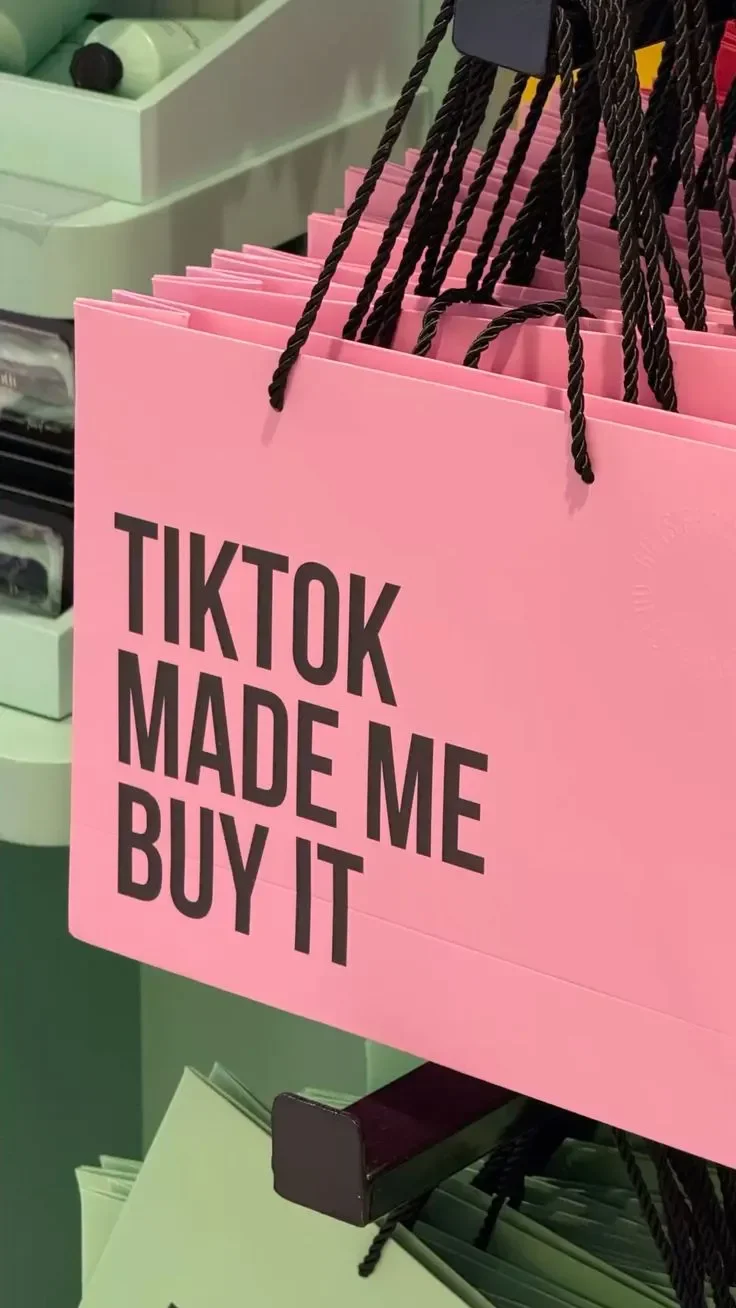
TikTok Shop arrived in Britain in 2021, and shopping now occupies a substantial part of the platform’s commercial operation. In August this year, TikTok said it was hosting more than 6,000 shopping livestreams a day in the UK, with LIVE shopping up 55% year on year. The company also reported that more than 300,000 UK small businesses were selling through TikTok Shop. Those are TikTok’s figures, of course, but the ambition is difficult to miss: the platform wants to keep viewers watching, discovering and purchasing in the same place. This would be a good thing for small businesses, except by 2025, bigger brands have recognised its potential and now Samsung, ASOS, L’Oreal and MAC Cosmetics are using it as a distribution channel. Sometimes I’ll be watching a candid, low effort TikTok video to find it’s actually an advertisement pushed by the brand on the platform. They see that word of mouth marketing is still paramount after all these years - influencers built their credibility on this concept.
Are Gen Z buying it? Marketing agency Savvy surveyed 1,005 UK shoppers this summer and found that 47% of Millennials and Gen Z had browsed or bought through TikTok Shop in the preceding three months. Among those younger shoppers, 57% said they enjoyed watching live shopping events, while 66% said seeing products go viral or sell out made them more inclined to buy. That final statistic feels especially revealing. The rush of buying something before everyone else gets it has become entertainment in its own right.
There are limits to what these numbers prove. Millennials and Gen Z were grouped together, browsing isn’t the same as buying, and watching a live sale doesn’t mean participating in one. Still, YouGov’s separate 2025 research found that 66% of British Gen Z used social media to research brands, compared with 35% of older consumers. More than a third discovered products through influencers. The younger consumer might still try on the trousers in a shop. Increasingly, though, the idea to buy them begins on a phone. Searching social media has always been a great way to get a true feel for a brand and its quality, however with everyone - not just influencers with a high following count - being financially incentivised to recommend TikTok shop items now, it leaves the comment section wondering who benefits from the recommendations. The worst video ads I’ve seen on TikTok for products are glowing women claiming that they got rid of ‘fishy, dead odors and parasites’ down there by taking a TikTok shop supplement. That’s a whole other Substack. Not every shopper watching a video for a few seconds will spot the cracks - I watched a woman promoting a clear whey protein drink in her video, claiming she cannot consume milk and I wonder what poor soul is currently living in their bathroom on her recommendation.
Ordinary TikTok videos, the kind that might pass for an outfit diary, a skincare routine or a little rant about a recent purchase, are doing enormous amounts of retail work. Ecommerce data firm Charm.io found that pre-recorded videos generated 60.6% of US TikTok Shop sales volume in the first quarter of 2025. Livestreams accounted for 21.8%. These are American figures, but they complicate the assumption that social shopping requires a host calling out prices to an audience.
A shopping channel used to be something you consciously switched on. TikTok’s version can turn up between a music clip and somebody telling you about their terrible date. The product may be tagged with a shopping basket; the creator may receive a commission if you buy. Even an untagged haul can supply the desire that a later advertisement converts into a sale. There is little ceremony involved. You came for the video, and the shop was already there.
For independent fashion sellers, though, the livestream has a particular attraction. Vintage traders can hold up a garment, show its seams, answer sizing questions and sell it within minutes, sparing themselves the work of photographing and listing each piece. In a June report, Vogue Business noted that auctions on the UK fashion-shopping app Tilt averaged 23 seconds. London vintage seller Isabella Vrana told the publication that Tilt was accounting for 70 to 80% of her sales. Resale marketplace Fleek’s September 2026 survey found that 27% of the resellers it questioned were already selling live, with another 29% planning to start. The survey was self-selecting, but it’s a useful glimpse of how selling second-hand clothing is changing.
There’s something appealing about all this. A knowledgeable vintage seller explaining an unfamiliar label, or a stranger trying on a jacket so viewers can judge its proportions, can offer additional value to audiences looking to discover new (but old) brands. However, I’d say the pace also deserves scrutiny. A bid that lasts 23 seconds leaves little room to ask whether you need another jacket. Second-hand shopping can become its own form of overconsumption and this is shown with the vast popularity of Vinted haul videos on the platform.
The pressure to purchase doesn’t always come from a countdown - it can arrive disguised as familiarity. Influencers talk to us while doing their make-up, getting dressed or tidying their bedrooms; the sales pitch can feel like a friend’s recommendation and that’s precisely what word of mouth marketing was meant to embody. In 2025, the Advertising Standards Authority reviewed a sample of influencer adverts across Instagram and TikTok and found that 34% had no advertising disclosure at all. If the boundaries between a recommendation and a paid promotion are hard to spot, shoppers have an additional job to do before deciding what they trust. If you’re someone who is unsure how to spot if they’re being sold or recommended something, there’s 3 sales principles; scarcity, urgency and exclusivity. If someone is emphasizing to you that there’s not a lot of something left, that you don’t have much time to secure what you need, or that only a certain type of person is brave enough to buy it - you might be being sold to. Exclusivity is harder to spot, since it’s the antithesis of sales, in that they convince you that you might not be entitled to it, which makes you want it more. Teleshopping heavily relied on urgency, usually saying that if you ordered today you’d get a deal or free shipping. These days it’s that it’s ‘viral’, ‘selling out’ or one particular phrase “I feel bad for anyone who bought this for £10 because it’s now £2.”
There is one delicious irony in describing Gen Z as the new QVC generation. QVC itself staged a ten-hour TikTok LIVE for Black Friday Eve in 2025. According to TikTok, 80% of QVC’s TikTok Shop customers were over 35. The original teleshoppers haven’t necessarily disappeared; they’ve followed the presenters onto another screen. I think despite the rampant consumerism and dark sales tactic, there’s an opportunity for a community that spans generations on there, all with one thing in common…I just hate that the one thing in common would be shopping.
So perhaps the comparison tells us more about the technology than the generation. Gen Z still visits actual shops, and YouGov found that 51% browse in person before buying. The radical change is how comfortably selling now sits inside everything else we watch. You might never attend a live auction or deliberately open a TikTok Shop. You can still spend the evening being shown things to buy. QVC no longer needs its own channel.