
Interview: Yuval Sorotzkin Discusses Subverting Perfection
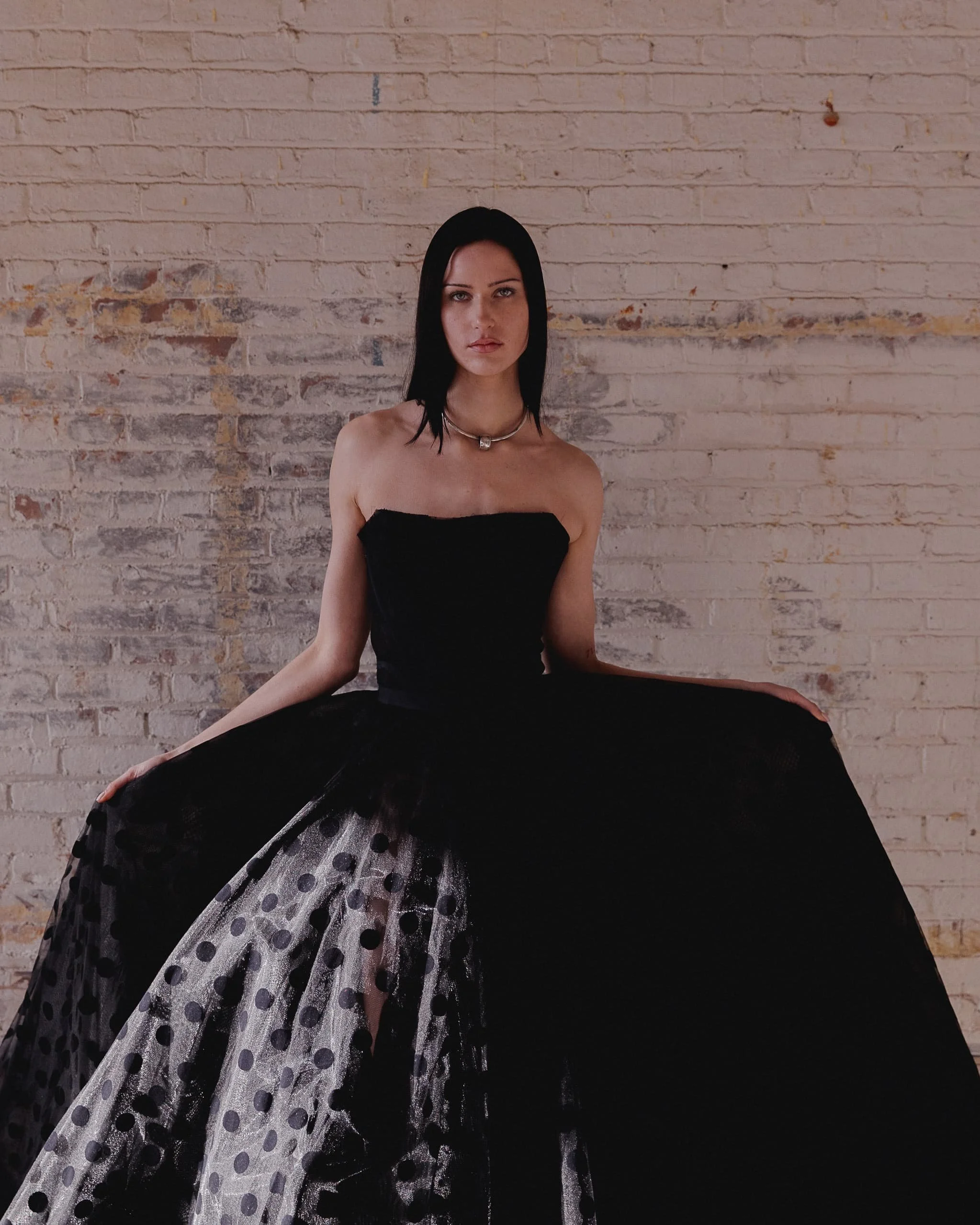
Following our review of Yuval Sorotzkin’s collection ‘Work in Ruins’, we followed up to ask more about what drove her to the fashion industry, how she makes her creative decisions and how she honours the artisinal methods within fashion design in her work, by picking it apart piece by piece.
What was the first garment you remember helping you decide this was what you wanted to do?
One of the first garments that made me realize this was what I wanted to pursue was a tailored suit. When I began researching the internal construction behind tailoring - horsehair canvases, padding stitches, internal structure, I became fascinated by how much labor and precision exists inside a garment that is never actually seen in the finished piece. That hidden architecture completely changed how I looked at clothing. It emphasized for me that garments are not just surfaces or silhouettes, but complex structures built through layers of technique and decisions. That discovery still shapes how I approach design today, especially my interest in revealing or reinterpreting the internal frameworks that usually remain invisible.
Are there techniques you deliberately misuse or subvert?
Yes. I am very interested in taking techniques that are traditionally used to perfection, and shifting them so they reveal processes instead. I often expose construction that would usually remain concealed, or I interrupt expected finishes so that the garment carries evidence of its making. My insistence on showing those details that fashion designers would typically hide is sort of like my own love letter to the fashion design process itself - a glimpse behind the curtain of all the work we do to make people look amazing.
When you choose to expose a garment’s internal framework, how do you decide what remains hidden and what becomes visible?
It comes down to what is essential to the garment’s identity. I reveal the elements that hold emotional or structural weight, fabric salvage, seams, inner layers such as horsehair, pattern marks, because those are often the parts that interest me most. At the same time, I do not want to expose everything or the balance shifts out of the garment’s favour. I think this can change depending on what you’re designing too, and thinking hard about what makes sense to expose from a functionality angle. I want my clothing to challenge what we deem to be perfection and to allow people to find appreciation in what they usually wouldn’t be able to see but it must remain well constructed and stand the test of time.
At what point does reconstruction stop being ‘repair’ and become something entirely new?
For me, reconstruction shifts into something new the moment it stops trying to return to an original state. I’m not interested in restoring a garment or an idea to what it once was. What interests me is what can emerge through continuous restructuring—when the process itself becomes generative rather than corrective.
I often work within a self-imposed framework, limiting the addition of new elements and instead pushing what already exists as far as it can go. That constraint becomes a tool. It forces a deeper engagement with the material and the construction, and it’s within that tension that something genuinely new begins to take shape.
How do you balance control with chance when working through experimental construction?
I begin with a strong structural intention, but I leave room for the garment to shift during the process. Draping, cutting, and reconstruction often introduce unexpected proportions or tensions, and I try to stay open to those moments rather than forcing everything back into a predetermined outcome. The balance comes from knowing when to let the fabric redirect the piece and when to refine it with precision. It’s definitely possible to take it too far, haha!
What can you tell us about the design choices behind this collection? We love the variety and juxtaposition of fabric choices and how beautifully you've combined freedom of movement with restriction on the body. How do you decide what fabrics and colours make the cut?
Thank you, fabric plays a central role in how I build a collection. I’m particularly interested in creating a dialogue between traditionally masculine and feminine material languages. I often combine classic menswear suiting fabrics with evening materials such as satin, tulle, or sheer textiles. Suiting carries a strong tailoring tradition and a sense of structure, while evening fabrics introduce fluidity, transparency, and movement. Bringing these materials together allows the garments to exist in a space where those identities can interact rather than remain separate.
Movement is something I often return to conceptually in my work - nothing beats the beauty of it. In a previous collection, "Room for Movement", I explored how clothing can reflect the idea of freedom and self-definition, both physically in how a garment moves with the body, and symbolically in what it represents in someone’s life. That idea continues to inform how I approach materials.
When choosing fabrics and colors, I’m usually looking for materials that hold a clear contrast in character. The juxtaposition between structured tailoring and fluid textiles helps communicate the complexity of the people who wear my work. The palette is kept relatively restrained so that the focus remains on silhouette, texture, and the conversation I’ve tried to create between these different material worlds.
You can see more of Yuval’s work here: http://yuvalsorotzkin.com/