
Cultural Autopsy: A Retrospective of Acid Bath
Words: Jack Hinks - Music Editor @ Féroce Magazine
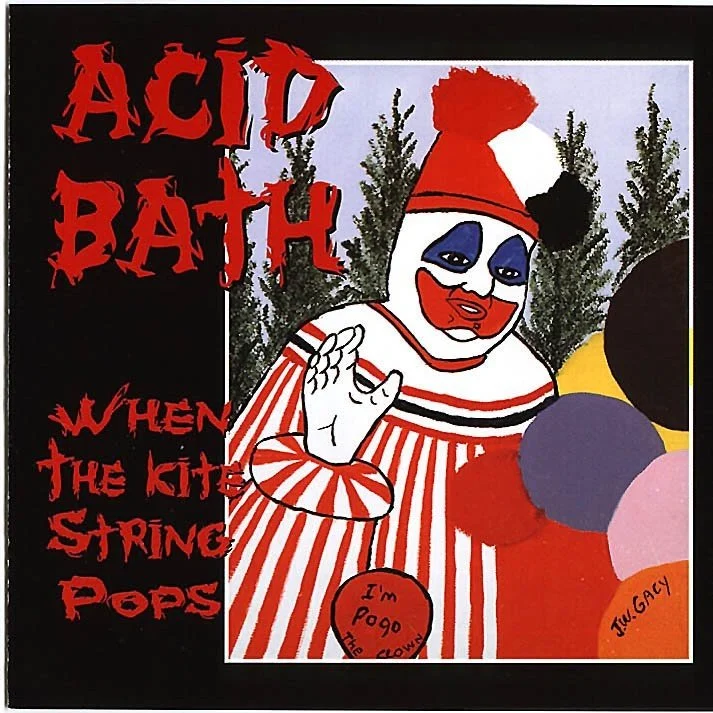
Acid Bath: When The Kite String Pops
Time has proven Acid Bath’s first album, When The Kite String Pops, to be seminal not only in their career as a band, but as an inspirational force within hardcore and metal scenes for decades to follow. Underappreciated in its time for its genre-blending, multi-faceted approach to songwriting, production and metal itself, Acid Bath has seen a consistent rise to cult status in recent years, now amassing half a million monthly listeners on Spotify alone.
When The Kite String Pops (1994) encapsulates all of the experimentation and raw energy you come to expect of a band’s first album. We are met by a wall of guitar feedback in stereo, layered with overdubs of plectrums scratching and pinching across the strings, holding the listener in suspense and unease. Fans of metal will be accustomed to treading water in sonic paint like this, and it’s something that Acid Bath do very well. When the feedback erupts, we’re locked into the trudging death march of ‘The Blue’, driven by a sludgy bass line (Audie Pitre) and solemnly matched by the drums (Jimmy Kyle). As the guitars (Mike Sanchez & Sammy “Pierre” Duet) creep back in to join the bass line in full force, we get the first directive from vocalist, Dax Riggs:
“Across your face, I see what you are.
You wanna kill the sun, blot out the stars.
I know you, you’re nothing. You’re so small.
You’re fucking nothing.”
As the album continues we get more of a sample of Acid Bath’s diversity, with multiple tempo changes per track, often combining faster choruses with progressively slower breakdowns and refrains, now a staple of modern metal and djent. The more I heard, the more each track felt like it had been written in movements rather than following a traditional pop structure. From my own experiences as a musician and composer, this felt like an untempered freedom of expression afforded to a new project or artist, before experience and conventional influence inevitably colours the creative process. Their second (and final) album, Paegan Terrorism Tactics (1996), manages to benefit from this experience without losing their signature expression.
Lyrically, Riggs keeps Acid Bath’s tone firmly locked in the gothic and lamenting, often swirling around body horror and a deep sense of anti-establishment. This consistent aesthetic affords them drastic genre shifts in the same album without feeling disjointed. ‘Scream of the Butterfly’ takes a hard pivot into a psychedelic soundscape, with 70s-esque phaser and flanger-effected guitars, a chorus-driven bass line and pristine acoustic guitars; an arrangement that, on paper, could be an entirely different band or even decade, and yet is still undeniably Acid Bath. I found myself comparing When The Kite String Pops to Quentin Tarantino’s unmistakable aesthetic that is often imitated but rarely matched. Both artists choose to focus on brutality and violence as a narrative tool, and in doing so open up the doors to the unlikeliest of soundscapes for genre and juxtaposition. Amidst a sea of bands that strive to be the best in their field, Acid Bath reminded me that genre is as much an aspect of composition as composition itself.
Another underappreciated aspect of Acid Bath’s production is their use of samples. ‘God Machine’ and ‘Cassie Eats Cockroaches’ both feature sampled recordings from The Jerry Springer Show, and A Clockwork Orange and David Lynch’s Blue Velvet. In doing so they borrow cultural capital from fellow cult treasures that share the same dystopian outlook and strain of bleak societal reflection as Acid Bath. These are panned wide on repeat to create a sense of surrounding, inescapable intensity that is only pushed further by a pulsing wall of guitars and distorted vocals.
‘The Bones of Baby Dolls’ presents another moment of introspection amidst a torrent of outward aggression. These occasional breaks in the storm give the listener a welcome dose of headspace and allow Riggs’ vocals to command more ground than usual, granting this drop-tuned piece of acoustic Americana an anthemic quality that feels like it’s bleeding internally.
It’s easy to hear Acid Bath’s influence on the likes of early Slipknot, Gojira, Rob Zombie, Deftones and, in places, even Scotland’s own Biffy Clyro. Blackened Sky sounds like a beneficiary of the road paved by Acid Bath. Even their more acoustic tracks herald the experimentation of bands like Stone Sour and Alter Bridge. Despite having an unfortunately short discography, owed primarily to the tragic death of bassist Audie Pitre, Acid Bath manage to remain faithful to their unique sound, whilst establishing different directions in their production between albums. When The Kite String Pops revels in layers of unstable audio landscapes, usually guitars, whereas their second album Paegan Terrorism Tactics feels more concise and curated, whilst still possessing the aggressive, untameable edge that their songs are known for. It could be that this was a product of playing live, and a need to keep their material performable without relying heavily on extra musicians or backing tracks, something that would have been rarely seen in their gigging era. In spite of this more considered approach, their whole discography celebrates a rich blend of styles, influences and moods.
Paegan Terrorism Tactics begins more melodically with a nod towards southern classic rock and blues, but of course with the recognisable Acid Bath spin on things. ‘Paegan Love Song’ embodies a lot of the same tonal choices as When The Kite String Pops, crooning and distorted vocals, tightly distorted drop-tuned guitars, imposing bass and thunderous drums that carry them all, but it carries an air of experience and polish that comes with a second album. It follows a more conventional pop structure, and feels more accessible to an uninitiated fan. The next two tracks continue in the same vein, displaying a real sense of cohesion in the arrangement. Guitar harmonics are matched by the kick drum pattern (‘Graveflower’), specific parts of vocal phrases are doubled up with overdubs (‘Bleed Me an Ocean’), and the guitars navigate different tones that create a real sense of distinction and character in their parts, whilst complementing each other in the choruses of ‘Locust Spawning’. This track in particular set me thinking if their writing process was inspired by their swarm-like tone, or if it was a response to concept. Perhaps it was purely my ability to understand their music that grew with time, but Paegan Terrorism Tactics found me considering aspects of their work that I hadn’t realised I had missed in When The Kite String Pops.
The second half of the album leans further into poetics and gospel. ‘Old Skin’ boasts a cinematic soundscape and vocally effected spoken word, which leads seamlessly into ‘New Death Sensation’, a creeping siren song that starts acoustic and by the end has engulfed you in a discordant, pseudo-religious psychedelic trip. This is also the first time that keyboards and synths have been notably heard on an Acid Bath track, performed by Tommy Viator, who briefly joined the line-up for PTT. The addition of keys and string patches allow a broader scope for AB’s tracks, and help sculpt the brooding end for ‘New Death Sensation’, light-mallet drums and layers of plectrums and fingers on guitar strings. This more cinematic and gentle end really hammers home the tragedy of Acid Bath’s story, hinting at a whole new direction that the band might have explored had it not been for his untimely passing.
‘Venus Blue’ pays homage to Louisiana gospel with ample religious iconography. ‘13 Fingers’ draws on their blues inspiration with shifting scales, chromatic riffs and, at its heart, a frenetic instability that prevents a feeling of resolution or rest. ‘New Corpse’ keeps this energy going with an unedited start to the track, with random drum and synth trigger hits, before counting in the rest of the band, highlighting how live all of their work sounds. Due to the nature of their tracks’ many changes across both albums, it would make sense that most of their performances were rooted in a sense of live collaboration, rather than deconstruction and layering. The heart of the band is alive and audible, still. ‘New Corpse’ also stands as an example of their ability to push boundaries and explore even within their niche. It features a much higher-tuned snare, something that’s often found in reggae, forcing the listener to reconsider with fresh ears before they can get too comfortable or complacent.
‘Dead Girl’ is an anthemic acoustic track that, in hindsight, feels like a mournful toast to the end of the band. I found Acid Bath’s acoustic tracks were always well placed in aiding the flow of both albums, and ending on this track feels right given the hindsight. It combines many of the styles and influences that birthed Paegan Terrorism Tactics: rock, blues, gospel, and even poetry, and resolves to a major refrain, something very rare with Acid Bath and wider metal.
Despite all of the aggression and horror, I ended the album with a smile. Not all bands can achieve that, especially given the resistance and brutality from which Acid Bath was born.
Bonus Poem, Bonus Ending. Only after nearly 17 minutes of silence, we are given one final piece of Acid Bath. A timpani drum war march with synthesised brass is given a final vocally shifted sermon in the form of Riggs’ poetry. The final line, “It’s maddening, always touching something” speaks to the discomfort and struggle of life, and the artistic questioning that followed Riggs into his solo career after Acid Bath began their 28-year hiatus.
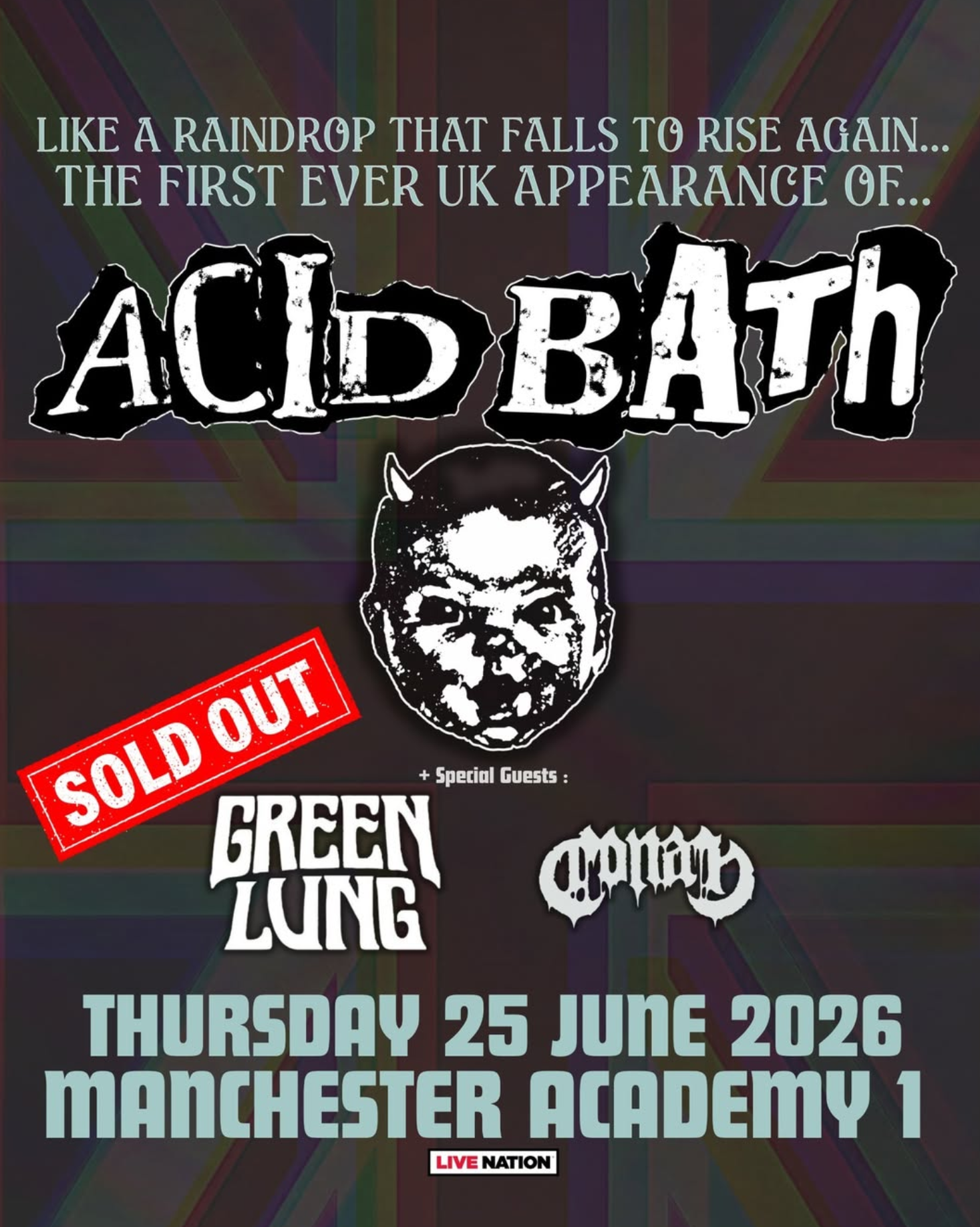
For a band with such a concise discography and short active career, Acid Bath have managed to leave a lasting legacy on their audience and the musicians they inspired. From metal giants like Slipknot, System of a Down and Crowbar, to stalwarts of the scene like Eyehategod and Goatwhore, Acid Bath are as relevant today as they were at the height of their activity in the mid-nineties. Given the spiritual succession of their work, paired with their consistent listenership, it should surprise no one that Acid Bath announced a live reunion in 2024, with live shows beginning in 2025. After a 28-year hiatus, they announced their first ever UK show in Manchester on 25 June 2026 at the Manchester Academy. They will also be going on a 10-date European tour with System of a Down and Queens of the Stone Age starting in late June 2026.
Visit the Acid Bath website for more information: https://www.acidbathofficial.com/
Acid Bath Merch: https://merch.acidbathofficial.com/
Upcoming Show Dates: https://acidbathofficial.com/dates.html