
REVIEW: The Story of Skids: Scotland’s No.1 Punk Band
Words by Diana Rotten, Print Editor @ Féroce Magazine
Féroce Magazine was given exclusive access to the Blu-ray documentary release of Mark Sloper’s The Story of Skids: Scotland’s No.1 Punk Band. This earnest, candid documentary features fresh performances from Skids, alongside archive footage and photographs spanning decades.
Formed in Dunfermline in 1977, Skids are responsible for breakout hits Into the Valley and The Saints Are Coming, and exist as a rare example of what can happen when your fanbase remains dedicated and your frontman does not descend into a cringe alt-right fascist pipeline. Skids are one of Scotland’s most beloved punk bands, and this documentary is truly for the fans.
The film frames the Skids through the life and memory of Richard Jobson, a figure who comes across less as a restless cultural worker who never stopped thinking about what music was really for. Exploring complex themes, the documentary works as social history, personal memoir, and a study of how art survives the industries that try to consume it and shit it back out again.
Becoming Skids: Ambition, Fight, and a Small Pond
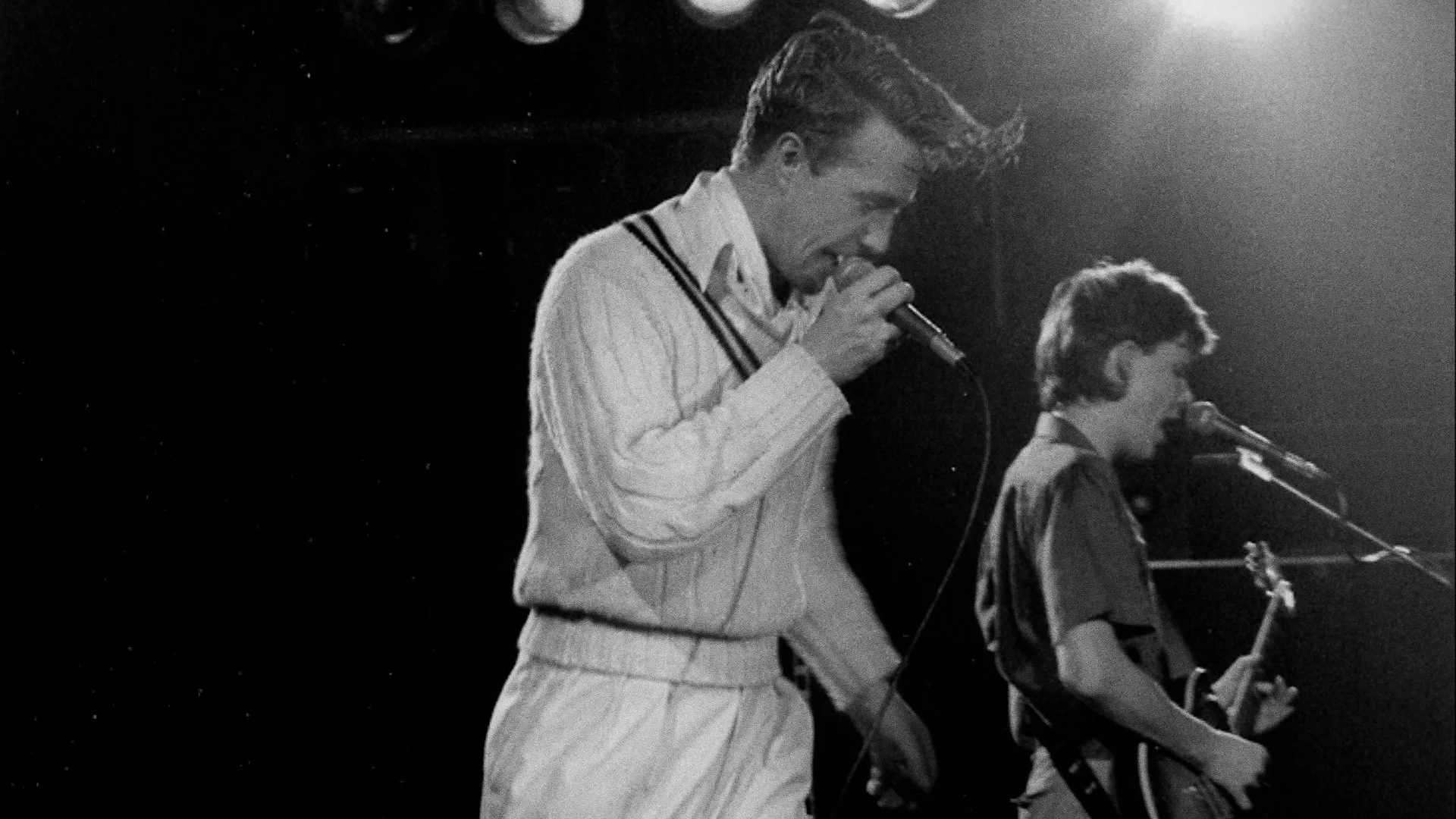
One of the film’s early pleasures is how bluntly it deals with myth-making. The Skids were voted Scotland’s best punk band at a time when there were not many Scottish punk bands to compete with, yet they built a fiercely loyal local following and are still widely regarded as one of the most iconic British punk groups. Jobson’s own entry into the band is characterised by his audition, where he reportedly told the other hopefuls to “get lost or else”. It is this Scottish fervour that placed him at the front line of a growing punk movement within Dunfermline and beyond.
There is something refreshingly honest in the way the film talks about scale. Working in a factory while the band’s reputation grew, Jobson describes the strange advantage of being a bigger fish in a smaller pond. When bands toured Scotland, the Skids were often booked as support because they had already built something real at home. This is something we can learn from today, where much Scottish talent ends up moving to London or abroad to secure their bag. The band challenged the status quo, but wasn’t immune to traditional punk charm. The Skids’ first gig being a brawl in a bar feels less like a romanticised origin story and more like a rite of passage.
Punk, Class, and the Politics of Being There
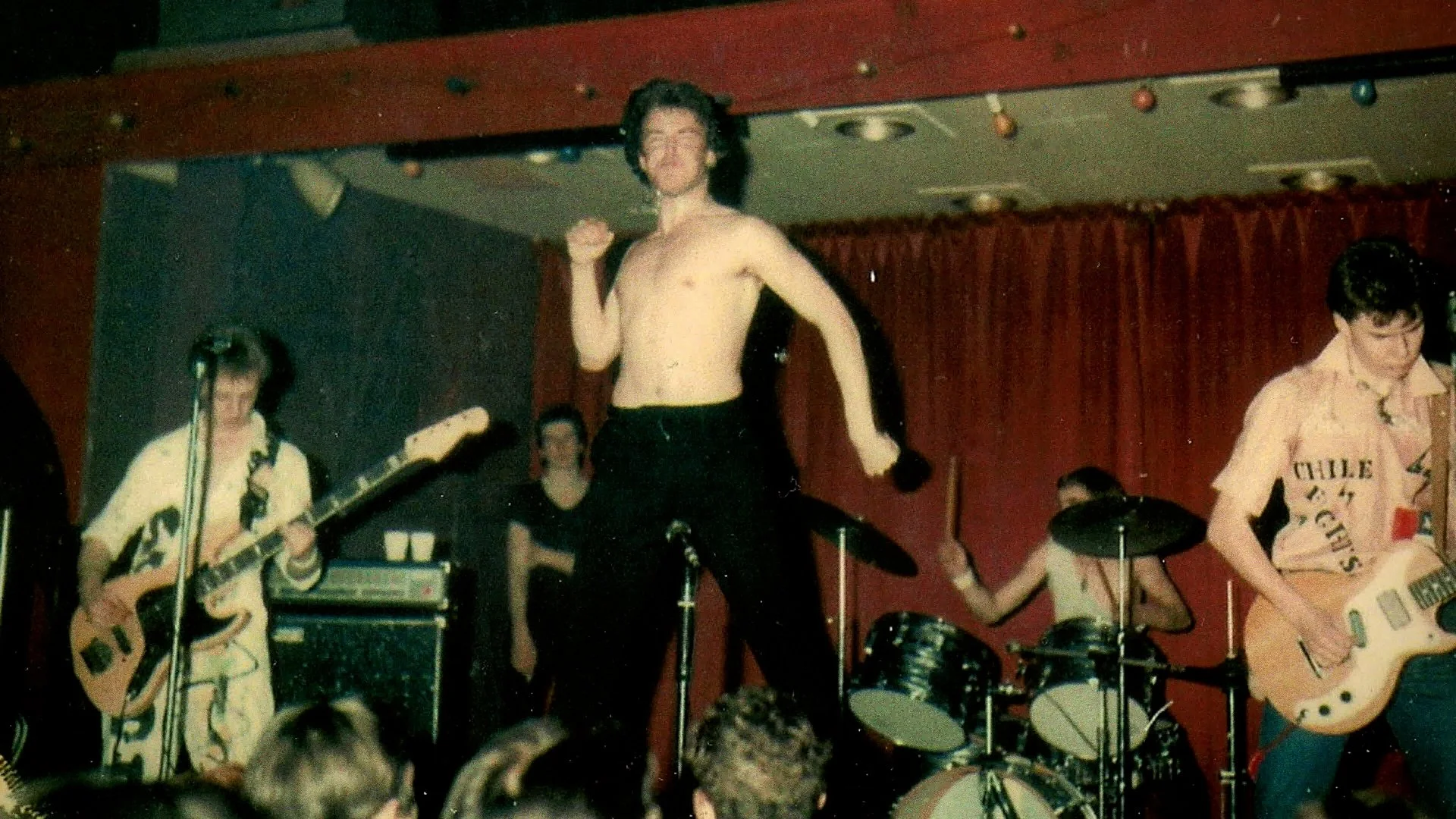
The documentary stays true to Scotland as more than a backdrop or jumping-off point. A history lesson unfolds through places like the former Belleville Hotel, where the Skids played their first gig, and the Barrowlands, once a ballroom where Bowie played and later a nightclub. The band played matinees there because Jobson and so many of the Skids’ fans were under 18. Gigs were timed to the end of the school day so a core part of their audience could remain included. There was even a period of “Skids for Kids”, which Jobson looks back on with a profound cringe.
Entertainment laws dictated that under-18s were not permitted to work in entertainment without supervision. The solution, having Hugh Cornwell listed as Jobson’s “teacher” on the road, is both absurd and perfectly in the spirit of a young punk’s persistence in following his dream. Jobson has never lost his sense of youth, and you can tell. He speaks of the glory days as though they were yesterday, and the future as though it has only just begun.
The film never pretends punk sat comfortably within any neat political box. Instead, it shows a scene shaped by class, frustration, and the simple need to make something happen in a smaller community. It is noted in the documentary that when punk was just beginning, very few publications supported it, with the exception of NME, and that it was John Peel playing Charles on the radio that changed the trajectory of the band forever.
Jobson reflects on the connections he made in the industry, noting that he does not recognise the Sid Vicious others describe, and that butter-seller John Lydon hates him and he hates John Lydon. But believe me, we all fucking hate John Lydon. Jobson is arguably more punk than many, with the likes of Johnny Rotten, Michale Graves, and Ian Stuart Donaldson having long since succumbed, like cowards, to the alt-right. Jobson, by contrast, is a breath of fresh air.
At the beginning of the documentary, he notes how women were treated terribly back in his youth, and how, when he first saw the cover of a New York Dolls album, he did not know if they were boys or girls, and it did not matter. Jobson’s art continued to subvert the “boy meets girl” tropes of songwriting throughout the decades, drawing instead on rich and often harrowing histories, and establishing broader critiques of how Nazi Germany drained the optimism from art after the First World War.
Contrary to first impressions, the album Days in Europa and its controversial cover art do not reflect Jobson’s political ideology. He displays profound empathy for impoverished communities and outsiders, and remains loudly anti-fascist to this day, using his musical talent for gigs such as Love Glasgow Hate Racism in 2018. He is a leading example of the potential within men to reject hyper-masculine rhetoric and instead embrace a genuine love for the arts and community.
Songs as History and Foretelling
The Skids’ album Scared to Dance is framed as being inspired by the Great War poets and their attempts to process trauma through art. Into the Valley grows out of that lineage and, in a sombre tone, Jobson refuses to participate in the humour surrounding its “unintelligible” lyrics. He doubles down on the importance of the song and the meanings behind it. The Skids owe their success to history, and it is obvious that Jobson has stayed true to that sense of honour and respect for those who lived through it.
He speaks openly about Scotland’s religious divides and about the impact of the Troubles on young men in the community, describing how many were traumatised by their time in Northern Ireland, with Bloody Sunday hardening hatreds that lingered long after. Jobson’s response was to immortalise the stories of his friends in song, to write about slow-burning hatred and how it evolves through generational trauma. It is hard not to be struck by the fact that The Saints Are Coming was written when he was fifteen, and that forty years later it is still embedded in popular culture. Covered by both U2 and Green Day, Jobson reflects on how, even four decades on, he still receives requests for the song’s use.
The film also gives space to the ideas behind the songs. The Saints Are Coming is described as a conversation between a son and a father he never met because he had died. Charles is framed as an eerily prescient song about the coming digital and technological age, a reminder that the Skids were not just reacting to their moment but trying to think beyond it. Masquerade, written about the bombing of Guernica, remains a classic to this day.
Style, leather, and British subcultural memory
Jobson’s musical influences are worn openly. Velvet Underground, Roxy Music, Frank Zappa. From the age of six onwards, he was soaking in The Stooges and New York Dolls. He grew up on the greats, with Iggy Pop named as a central inspiration when he was around twelve. His wide range of influences sits neatly alongside his broader view of music as something with genuine transformational potential inside what was, at the time, a regressive society.
Like a lot of young punks, Jobson was keen to create his own visual style, sporting dyed black hair with a white streak and paying homage to Iggy Pop with iconic black leather trousers until they were absolutely wrecked. His affection for “The Dominator” leather jacket, the same style worn by Sid Vicious, opens into a wider conversation with Derek Harris of Lewis Leathers about the heritage of biker jackets and their place in punk and rock and roll. It is a small but telling piece of British subcultural history, where clothing is not just costume, tracing back to the 1950s rock and roll era.
The Industry, and What It Takes from People
Sloper does not dodge the uglier parts of the story. The documentary briefly but firmly addresses the suicide of Stuart Adamson, Jobson’s bandmate. Jobson recalls later seeing photographs of him and being horrified, not just by the personal loss, but by how clearly the music industry can chew people up, and spit them out, under the fictional promise that money and audiences will keep flowing indefinitely. There is no attempt to turn this into a morality tale. Instead, it sits alongside discussions about adaptability and the need to evolve one’s skills within an insidious business that rarely rewards the people who feed it talent. The film does not try to smooth these edges down. It lets them stand as part of a scene that was never as unified or as simple as later histories sometimes pretend.
After Skids: A Life in Many Forms
The latter part of the film tracks Jobson’s life beyond the band into spoken word, writing, television, and film. His line, “I had what middle-class people didn’t have: aggression, an edge. I was not afraid of you,” neatly summarises how he moved through different cultural spaces with an unapologetic commitment to who he has always been. He comes across as a kind of Swiss Army knife of artistic impulse, restless and adaptable, capable of anything.
There is also a quieter pride in the way his work has travelled. He loves Germany, speaks the language, and notes that the German football team even used his song as an anthem. It is another sign of how deeply some of these songs have embedded themselves in culture, long after the original scene that produced them has changed.
Ending Where It Began
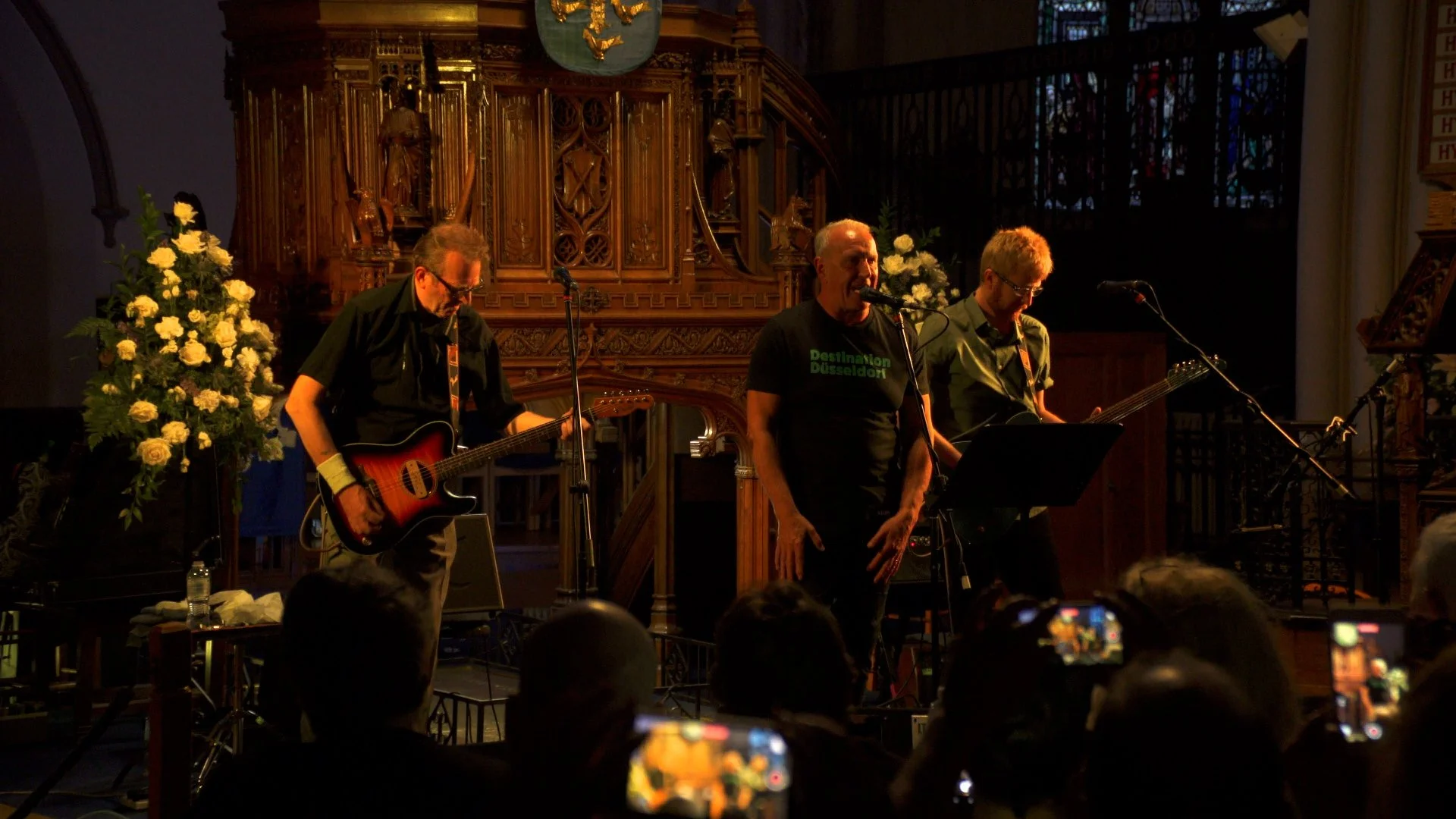
The film closes with the Skids playing at Dunfermline Abbey, a setting that brings history, place, and memory into the same frame. Jobson reflects on the heritage of the building and its wider importance within Scotland, noting that nobody else would get back in to play a gig like this. It does not feel like self-mythologising so much as a genuine awareness. Jobson is completely devoid of arrogance and beautifully earnest in his retelling of the Skids’ history.
Ending on The Saints Are Coming makes sense, not just as a greatest hits moment but as a way of underlining the band’s lasting value to Scottish punk. The Skids are rightfully framed as forefathers of a movement whose effects are still being felt.
Our Verdict
The Story of Skids has something for anyone interested in art, history, politics, working-class culture, or fashion, but it never tries to please everyone at once. It is thoughtful about context and unapologetic about the darker sides of punk history. Above all, it feels like sitting down with your older, cooler uncle who has lived several lives and remembers exactly what it cost everyone around him. Richard Jobson emerges as someone who was always in it for the love of the art, and the film makes a convincing case that this, more than any chart position or retrospective praise, is why the Skids still matter.

The Story of Skids: Scotland’s No.1 Punk Band is available to order now:
https://screenbounddirect.co.uk/product/the-story-of-skids-scotlands-no-1-punk-band-limited-edition-blu-ray/