
Resident Evil (2026) Review: Zach Cregger’s Bloody, Absurd Triumph
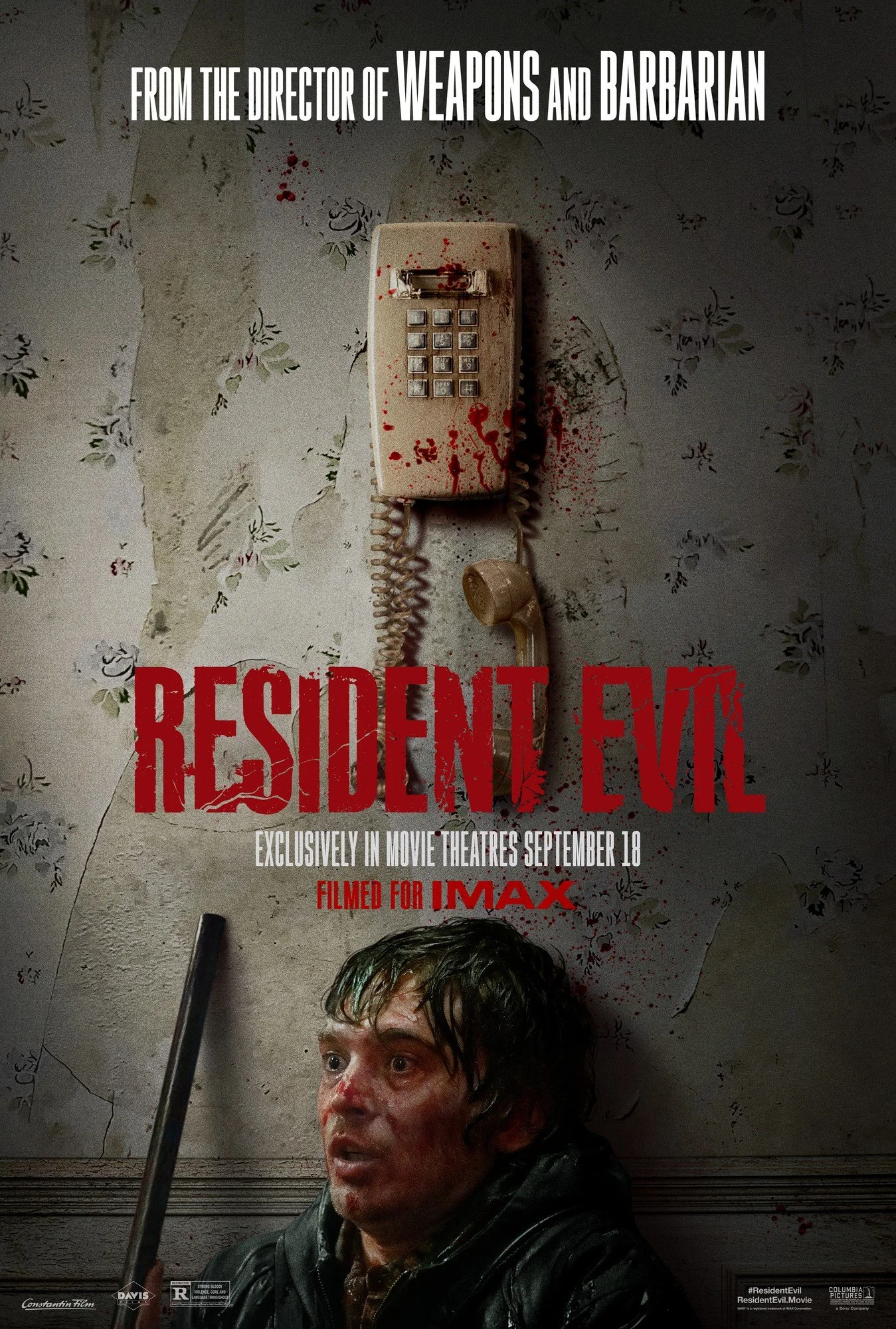
Never has a man struggled with padlocks more than Resident Evil’s beleaguered courier Bryan. 2026’s frenetic adaptation of the long-running video game franchise perfectly captures the feeling of playing the games, with a bombastic and lean dedication to chaotic fun. Zach Cregger takes the helm, with Resident Evil as his third film since his excellent debut as a director with Barbarian in 2022, followed by Weapons in 2025. Cregger continues to demonstrate the strength and adaptability of his craft, as well as his ability to create a singular and unique spectacle.
I think it’s fair to say that Resident Evil as a franchise is something that anyone who has an interest in horror is at least vaguely aware of. It’s loomed large as a highly influential video game series, which Paul W. S. Anderson also made into a long-running series of bombastic and very loose film adaptations. Constantin Film, which owns the rights to the franchise, attempted to reboot the series by choosing to directly adapt the games’ storylines, giving us 2021’s Resident Evil: Welcome to Raccoon City. Bland and joyless, the film was received with a shrug by fans and critics alike. This led to another pivot when Cregger approached Constantin Film with his own idea for an adaptation. And thank God that he did.

Resident Evil © Sony Pictures Constantin Film Dusan Martincek
What makes Resident Evil such a deep and profound joy is that it defies the idea that a franchise film needs to cling to past characters, adhere slavishly to ‘canon’ (which is a ridiculous enough concept in itself, but the worst parts of modern far-too-online-please-touch-grass fandom have become obsessed with the idea of its importance), and repackage the same story for comfortable re-consumption over and over again. There can be new in the familiar, innovation within the known; and the very best stories told within any franchise are the ones that are told by those who are able to be inspired by, but not beholden to, past stories within a series.
Instead of leaning into the complex mythology of the games, Cregger instead chooses to narrow his focus entirely onto the everyman Bryan (Austin Abrams), a somewhat harried and hapless medical courier, as he proceeds to have the very worst night of his life. We meet him on the phone with his girlfriend, stressed and bewildered as she tells him of the results of her pregnancy test, while he’s making his last delivery of the night to a hospital. Rather than going home to face a difficult conversation, he picks up another job at double pay when it’s offered to him. Tasked with making an important delivery to Raccoon City General Hospital, he’s then thrown into the night’s unfolding chaos as the Umbrella Corporation’s unleashed mutating virus spreads with rapid viciousness. While driving through the night on snowbound, slippery roads towards the city, he strikes an infected woman with his car as she runs into the vehicle’s path.
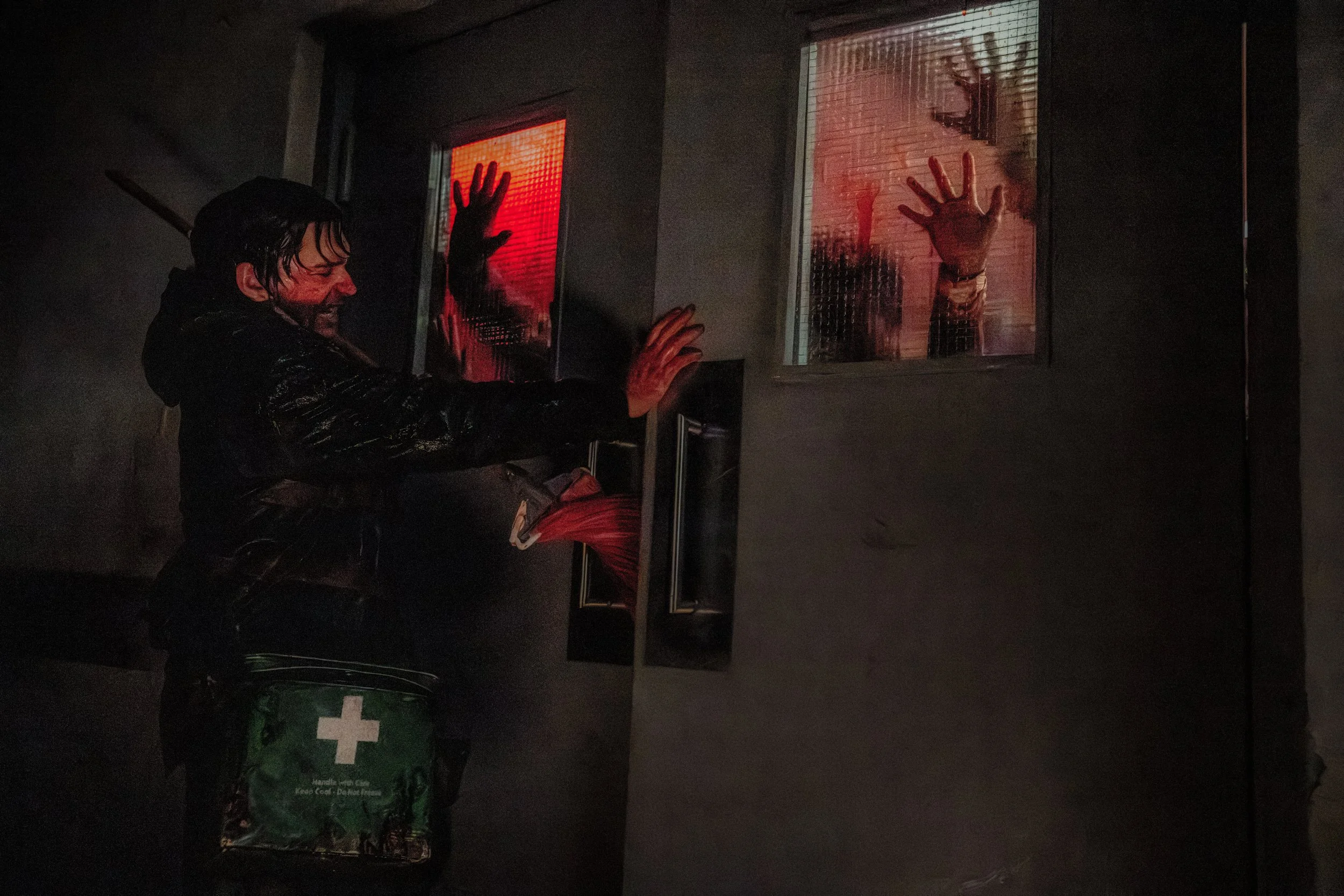
From this moment on, Bryan is chased, terrified and desperate. Careening from one spectacular set piece to the next. Unfamiliar with guns, and most certainly the opposite of the traditional cool-under-fire hero, Cregger delights us with the absurd hilarity of a normal man trying his best to make it through the night. Resident Evil is deliciously mean, lean and cut to the bone. Taking us on a thrill ride as we are dragged along with its unrelenting torment of Bryan, in a way that is deeply evocative of Sam Raimi’s Evil Dead II, a film which he’s mentioned as a major inspiration. Resident Evil captures the same type of gleeful energy in the delight it takes in throwing Bryan from one horror to the next, combining slapstick chaos with buckets of blood, gore and terrifying monstrosities worthy of The Thing in all their writhing, tentacled glory.
Resident Evil © Sony Pictures Constantin Film Dusan Martincek
The commitment to this incredibly narrow focus is impressive in how beautifully it’s executed. It evokes, more than any other video game movie, the feeling and the experience of playing the games that it’s adapted from. The spirit of the series is embedded in every moment, with Easter eggs and flourishes that don’t jar as references for the sake of references, but as holistic parts of the whole. Despite its clear influences from films such as The Thing and Evil Dead II, it is no mere rehash. Cregger’s confident and talented film lovingly creates something that feels fresh. Working with cinematographer Dariusz Wolski, Cregger carefully utilises the camera to set the tone. It follows close over the shoulder at times, slips to first person occasionally, or loops itself outwards to observe from afar with a confidence and craft that is exquisite in its execution. It evokes the sensation of the gameplay with camera positioning reminiscent of the angles used in first- and third-person games, but never so slavishly as to make the tension or the action suffer. The lens adapts to the scene as needed. Along with the careful editing, excellent score and frantic pacing, it all blends perfectly to keep the audience endlessly enthralled.
Cregger shows us just how close comedy and horror can align, with truly hilarious moments within the gory spectacle.
Watching Bryan trying to navigate the problems he faces leaves us cackling in one moment, then cringing the next. There’s a Buster Keaton energy to Austin Abrams’ performance; in the physical comedy of watching him fumble with guns, flee in terror, or fall out of a barn’s top floor. Combined with his dry and bewildered commentary on the events he’s experienced, the comedy breaks through beautifully as a catharsis after the high-stress moments of terror. Cregger takes deep delight in reaching ever-escalating heights. In just how disgusting and horrendous the mutated monstrosities that Bryan comes across can be. There are endless eruptions of blood, bile, bursting body parts, and a particularly disgusting scene in a maternity ward that will stick with viewers long after watching. Just to really push poor Bryan’s buttons as he faces his newfound fear of becoming a parent. It’s shameless in its glee, playful and flamboyant; but never cruel to the audience or edgy for the sake of being edgy. The cruelty is reserved entirely for poor Bryan as he runs screaming through Raccoon City.
We can’t help but root for the poor guy as he desperately tries to shoot padlocks off gates, find shotgun shells and load them with shaking hands, climb over electric fences, or edge along precarious ledges. But we also can’t help but laugh when he fumbles the attempt. The best thing about Resident Evil is in its refusal to be anything but a complete and utter blast. You’re here to have a good time, and this is one beautifully crafted good time. It’s OK to make a horror movie that isn’t trying to teach some deep introspective lesson, or grapple with the complexities of trauma. Those types of films are often incredible in their own right (many are in my list of favourite movies), but they aren’t the only way to make good horror. Resident Evil has a singular purpose, which is to be fun as hell. And it utterly excels in this purpose.
Words: Arete Noctua, Film Features Editor & Writer @ Féroce Magazine
Arete is Féroce’s Film Editor, overseeing the magazine’s film coverage through incisive short-form reviews and longer anthology pieces. Their writing explores cinema as both art form and social mirror, examining how iconic films reflect, challenge and shape the cultural moments they emerge from.
With a critical and respected voice in the community, Arete situates film within wider political, aesthetic and historical contexts, drawing connections between screen narratives and cinema history.
Their editorial approach balances close analysis with broader cultural insight, offering readers thoughtful criticism that moves beyond ratings or hype to consider film’s lasting impact, relevance and position within society.