
Wired for Chaos: Harley Flanagan and the self-Discipline of Survival
Rex Miller’s Wired for Chaos traces Harley Flanagan’s journey from unprotected childhood to punk notoriety and eventual reform. This review examines trauma, violence, male ecosystems and the work of survival inside America’s hardcore scene.
That assertion frames Rex Miller’s documentary from its opening moments, and the film spends its runtime testing whether that philosophy holds under pressure. What unfolds is a portrait of a childhood without safeguarding, a youth shaped by violence and notoriety, and an adulthood defined by redemption. It is also a cultural document of American punk, of male ecosystems that reward aggression, and of the gut-wrenching labour involved in reforming one’s own character.
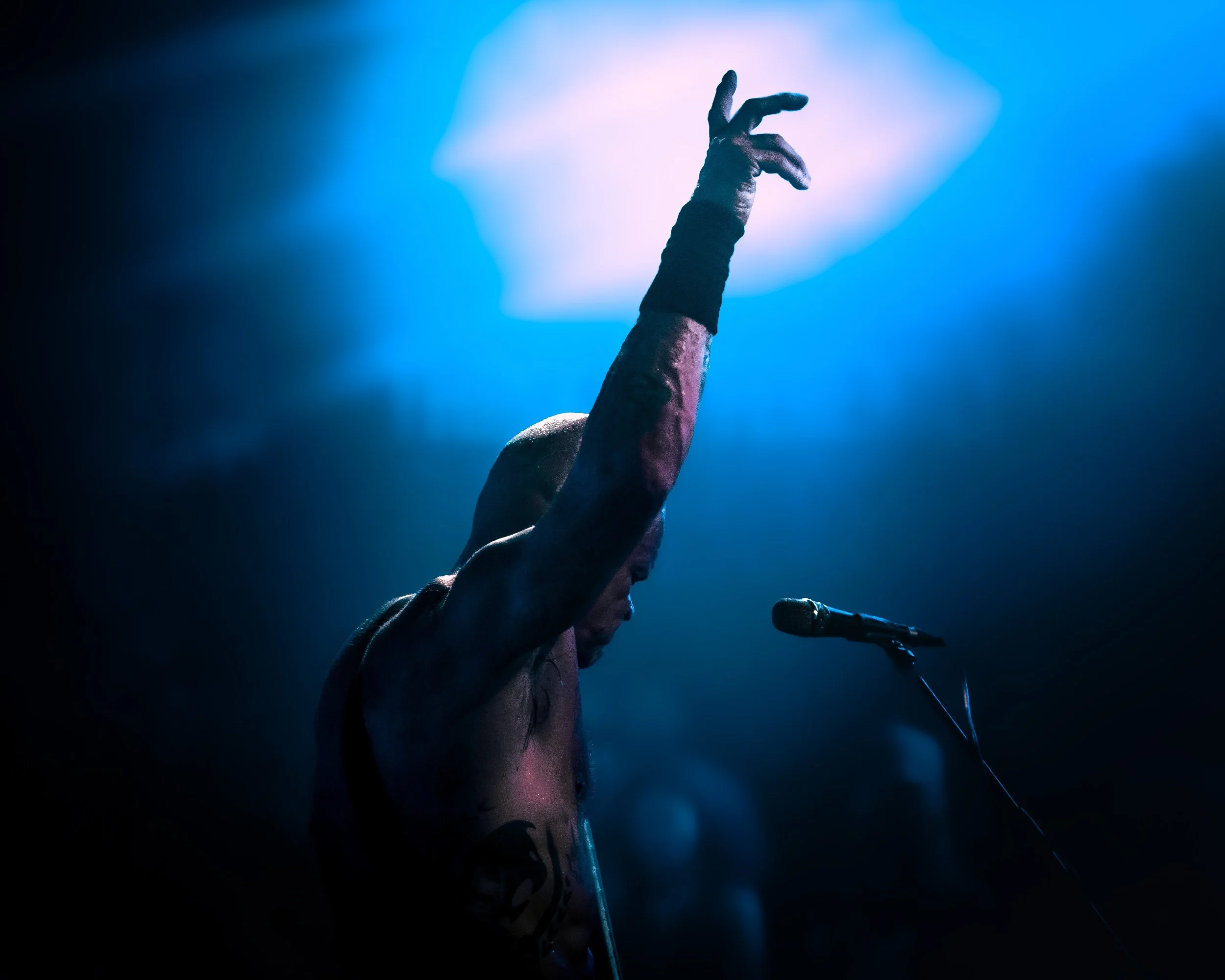
Prodigy Inside a Risk Ecosystem
The Lower East Side of the 1960s and 70s is often remembered in softened tones: free love, artistic revolution, downtown mythology. Miller’s documentary dismantles that aesthetic comfort almost immediately with hard-hitting dialogue that describes the material reality of the scene. Archival footage of Warhol screen tests and communal life initially gestures towards cultural romanticism, but Harley Flanagan’s recollections impose a harsher reality. With hindsight, the era appears less as liberation and more as concentrated risk for a child growing up inside it.
Harley recalls knowing what sex was before he knew the alphabet; a mic drop moment that needs no further analysis. Even in its most difficult moments, the film refuses trauma as entertainment, a discipline that stands apart from the current wave of mainstream true-crime narratives built around perpetrators. The film gestures towards the gendered silence that surrounds male victims, acknowledging how boys are conditioned to minimise violation, especially when the perpetrators are women, though it does not expand this thread into broader cultural critique. One senses that such expansion would have strengthened the film’s exploration of this theme, yet the refusal to instrumentalise sexual trauma also carries ethical weight.
The social backdrop is rendered with thoroughness rather than sentimentality. Slumlords, addiction, poverty and city unrest are not deployed as excuses but as explanatory context that surrounds a polarising figure like Harley. The film is clear that the environment shapes nervous systems and maladaptive coping mechanisms and exists as a show-and-tell for how young men are shaped into potential aggressors in adulthood. Compounding instability leaves residue that Harley reflects on with the gift of age. Present-day voices challenge any convenient defence that it was simply a different time, especially Harley’s partner Laura Lee Flanagan, who snaps, “It was a stupid time.” Musicians who recount Harley’s early brilliance do so with affection, yet without denying volatility.
By eleven, he was drumming for The Stimulators, already occupying adult rooms with preternatural command. The documentary lingers on the spectacle of child genius, but not uncritically. Punk’s brand of authenticity did not insulate him from the machinery that consumes so many young, talented musicians. Even within supposedly anti-establishment spaces, the funnel of child stardom remains intact. The curation of visual material is meticulous, building a densely textured historical account of America’s punk scene. Posters, ticket stubs and street photography function as cultural evidence surrounding Harley’s earlier years.
A particularly cutting moment arrives when photographer Brooke Smith reflects on that time, stating, “How many people in your film have been sexually abused? Has anyone not been?” The question reframes the entire environment in the audience’s mind. In that moment, the film stops being a biography and becomes a sociological observation about a generation raised inside a subculture without protection. The documentary handles these disclosures of sexual violence carefully, allowing the survivor’s words and perspective to lead the narrative, as it should always be done.
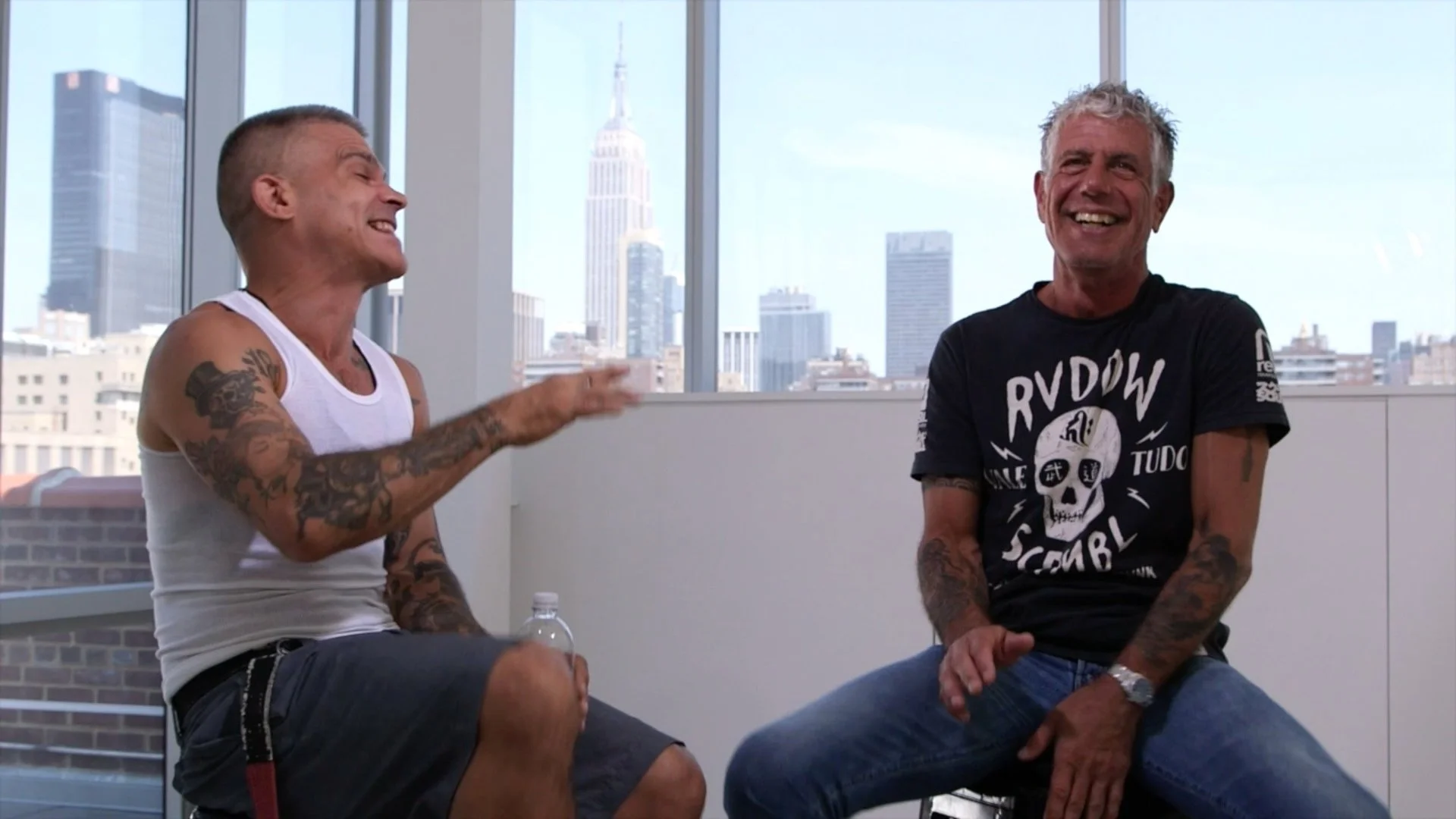
New York Natives Interview - Harley Flanagan & Anthony Bourdin
Learning the Rules of Engagement
The film draws a coherent line between early trauma and the adoption of violence as social language. Skinhead culture enters Harley’s life as protection, armour against prejudice. Within the male ecosystems depicted, violence operates as currency, status and defence. Harley states the explicit rules: if you do not get your hands dirty, you become the next target.
Miller connects poverty, gang hierarchy, masculine performance, drug use and paranoia into a recognisable structure. The documentary is particularly effective in articulating the psychology of hypervigilance, showing how behaviours that begin as survival strategies ossify into identity. Crystal meth and escalating conflict distort reality further, accelerating an already volatile trajectory.
The film operates as a confession booth in a sense, as Harley reflects on the harm his behaviour may have caused others. The documentary does not sanitise the consequences of the coping strategies he utilised to function within the scene. It shows clearly how cycles perpetuate themselves, how violence learned in childhood can be redistributed in adulthood.
Race politics remain present within this landscape. Black and brown interviewees articulate the realities of structural persecution with clarity and precision. Harley’s own narration of marginalisation sits within that tension. The film does not resolve the friction, nor does it flatten it. It allows the viewer to feel the discomfort of overlapping narratives of oppression without adjudicating them neatly.
Formally, the editing pace mirrors psychological chaos. Childhood is examined in depth, then the timeline accelerates through increasingly frantic years. The sensation feels deliberate. The viewer is carried forward in momentum rather than granted retrospective calm.
The Webster Hall stabbing appears late in the documentary, carrying the weight of anticipation for anyone familiar with Harley’s public reputation. The incident is addressed directly. The film does not lean on ambiguity as a shield, and it very clearly discusses the ways in which a further character assasination took place. He served time at Rikers as a result of the incident, and his feelings of betrayal and frustration with the media circus that followed are palpable.
Alongside this, the documentary interrogates cultural labour within music. Cro-Mags tour with Motörhead and play CBGBs, yet financial precarity persists. The talent is frequently the last to benefit from its own skill, something that feels unchanged decades later. For poorer artists, building from nothing remains the only route available, and access continues to cluster around affluence. The array of high-profile talking heads such as Daryll Jenifer, Denise Mercedes, Ian MacKaye, Ice-T, Glenn Danzig, Henry Rollins, Ray Cappo and Scott Ian, to name a few, reinforce Harley’s significance within the scene while also underscoring how deeply embedded he is in its mythology.
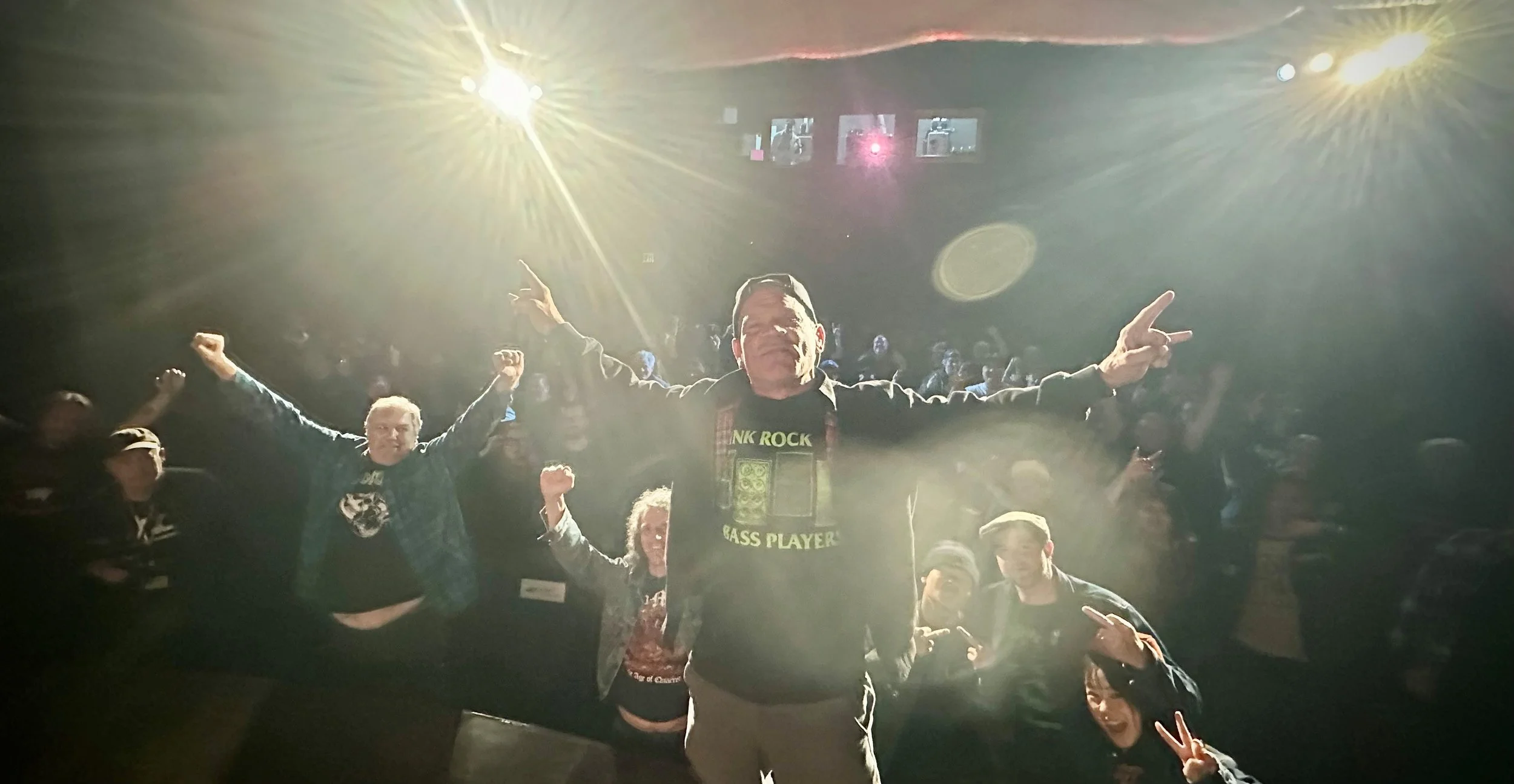
Reforming the Self
The final movement shifts from escalation to reformation. Fatherhood and hindsight reconfigure the narrative without erasing what preceded them. Harley’s father, Tex, appears through recordings, his influence lingering even in absence, and the audience feels a grief alongside this. It is a saddening but deeply intimate look into the interpersonal conflicts within Harley’s family. The presence of a paternal voice across time underscores how lineage and memory shape outlook.
Erica’s storyline forms the documentary’s emotional centre in the theme of cycle-breaking. Harley raised her for three years before losing contact, and she later found him again. The reconnection carries a quiet gravity through interviews and gig footage that surrounds it. It suggests that even brief paternal presence leaves a durable imprint. The two feel reunited. A brief moment of closure and relief is captured for the audience, that a happy ending is on the other side of getting clean.
The contrast between the man depicted in earlier chapters and the man who now teaches jiu jitsu to children is stark. The juxtaposition is almost jarring and impossible to imagine if Harley were not walking, talking proof that a completely different life beyond your wildest dreams is possible with perseverance. Where violence once functioned as reflex, his visible restraint now requires conscious effort. He speaks of walking away from confrontation with a dog walker despite anger that still exists within himself at times. The documentary does not frame fatherhood as a moral reset, but it presents change as ongoing labour that must be performed continually, day by day, for the rest of your life.
Longevity itself becomes part of the film’s argument. The documentary exists because Harley survived long enough to narrate his own history. A man who has lived a thousand lives speaks to the audience with a sharp, cutting reminder that you only have one life. Hindsight, in this context, is a privilege earned through survival.
Ultimately, the film advances the position that choice can override circumstance, though not without sustained internal work. Harley is not delusional or reductive about his actions in the past. He does not speak of forgiving himself, but instead of accepting what he has done. He acknowledges harm directly without erasing it.
Wired for Chaos functions as a biography, but it also captures a generation raised inside scenes that celebrated rebellion while neglecting vulnerability, and it traces how trauma mutates into violence before being confronted. It takes a lot of balls to be a cycle-breaker. The opening assertion lingers throughout. “You can’t let your circumstances define who you are. Only death is certain, everything else is optional.” Where you start doesn’t need to define who you are and what follows depends on the discipline to reshape oneself in spite of them. Let Harley be an example to any young man that every saint has a past and every sinner has a future.
From director Rex Miller (Citizen Ashe) Harley Flanagan: Wired for Chaos was released this week on Limited Edition 4K UHD Blu-ray Dual Format on 11th May 2026 - Available to order now.