
Michael Jackson’s Biopic ‘Michael’ and Reputation Laundering: a Conversation with Spencer Murphy
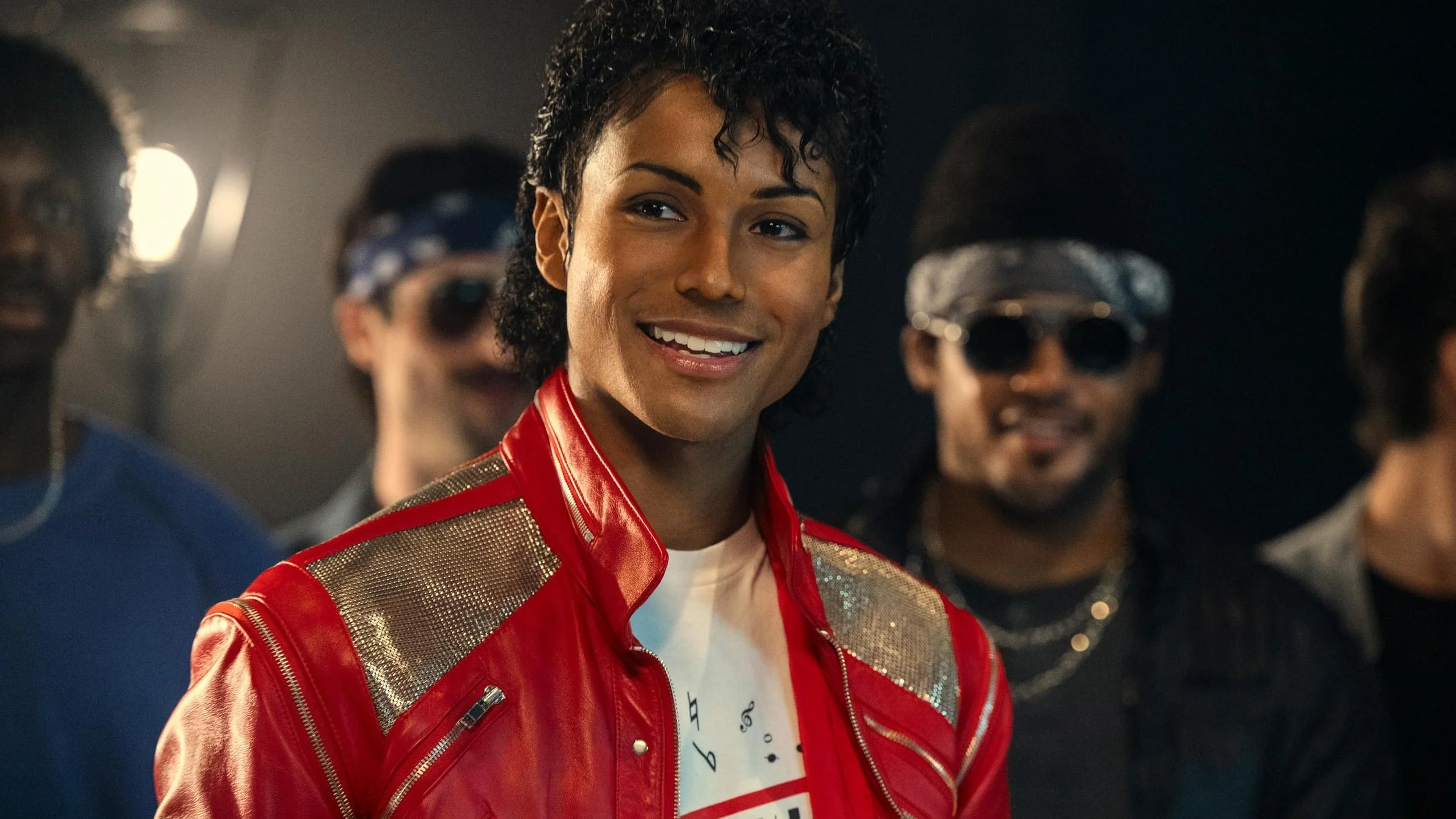
Michael (2026) Courtesy of IMDB
The recent release of musician biopic Michael has raised a lot of controversy due to its lack of acknowledgement of Michael Jackson’s alleged child abuse. The film conveniently finishes during the peak of Jackson’s career, allowing it to entirely circumnavigate any controversies, and presents Jackson in a state of triumph. With the recent release of the Epstein Files, this seems particularly grotesque when we, as a society, are seeing how little justice and accountability seem to apply when it comes to the world’s wealthiest and most powerful men. Michael’s release can’t help but feel like a confirmation of that in some ways. Regardless of his alleged crimes, he’s still presented as a hero worth celebrating, showing audiences that men such as Jackson can be entirely insulated from consequences surrounding their behaviour, even after death.
To discuss the context around the release of Michael, Féroce was delighted to speak with Spencer Murphy, Assistant Professor in Media and Communications at Coventry University. Spencer specialises in film theory, audience studies, and the context of media convergence. His insights into the film industry, the musical biopic, and the cultural significance they hold give fascinating context to the issues surrounding Michael and biopics like it.
Arete: “Musician biopics are consistently very popular. What is it about them that continues to have wide-scale audience appeal?”
Spencer: “I think if you look back over the decades at the Hollywood approach to the musical biopic, it tells us much less about the actual, real person, the subject of the biopic, and it tells us more about the era, the context of the filmmaking, and what the attitudes of audiences are at that particular moment. What they do or don't believe, what they value, and what’s on their agenda at the moment. So I think they say a lot about that particular moment.
Recently, a lot of the focus has been on the individual, which is quite interesting, be it Michael Jackson or Amy Winehouse. That was another one that I think bears similarities in terms of the problems with some of these biopics. It reflects something that strikes me about attitudes towards music in general, the fact that there are no bands. At the moment, the charts are dominated by individuals. Everything's become very individualistic.
Looking back historically at the biopic, there's a key issue in terms of musical biopics in particular. It’s turning very complex people with very complex issues surrounding them into what I could only describe as inspirational brands.”
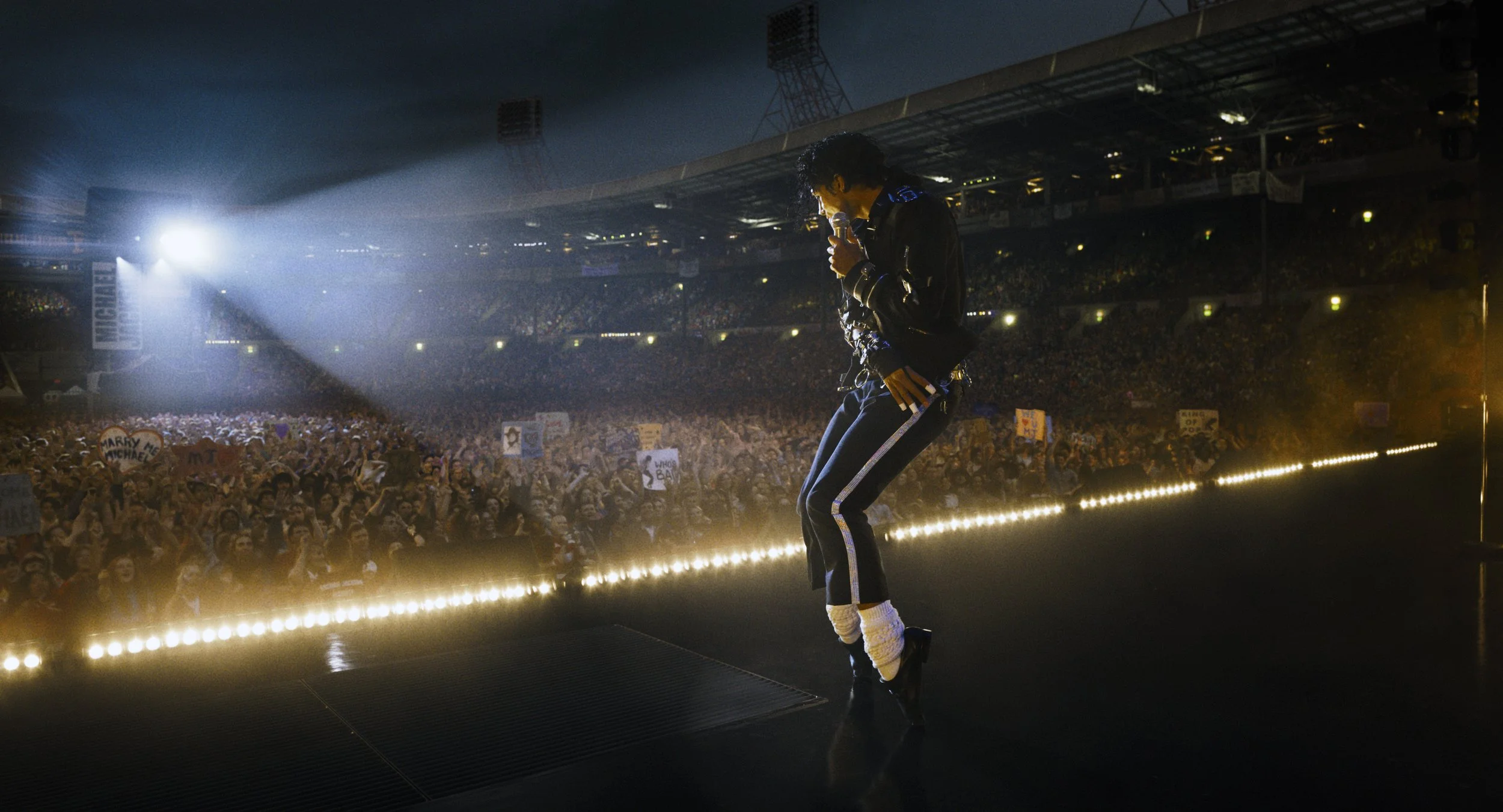
Photo courtesy of Lionsgate
A: “Biopics often have extremely positive impacts on music sales, which is a clear motivation for musicians or their estates to allow these biopics to be made. How much do the artists’ or their estates’ interests impact the objectivity of the films regarding the more controversial aspects of their lives?”
S: “Even just in relation to those few films I’ve mentioned, the massive problem with them, and many others as well, is there’s a sanitisation of these individuals that has an agenda and a purpose. There's a clear agenda from the estate. We can understand that agenda. Their responsibility is to protect the best interests of this commodity that they have.
However, my issue is that the audience is looking for inspiration. They're looking for something they can hang their hat on in very dark times, the fairy tale, an inspirational brand to connect to. These individuals are immensely talented in terms of their artistic output. However, we've got huge issues around their actual historical problems and the issues they encountered that, unfortunately, these films sanitise. Their purpose is to produce a film that is inspirational and produces a brand at the end of it that is sellable in whatever format that may be. They want patrons leaving the cinema feeling over the moon and dancing.
But it's a problem, because there’s not only what these individuals did, but also what the industry itself did to them. Both of those things need to be very carefully remembered, or we slip into this kind of postmodern erasure. Not just a fairy tale, but it becomes like an imaginary museum. These films are an imaginary museum of style and motifs, dance and images. The issue with these movies is that we end up with these films becoming just an imaginary museum that we watch, then walk out of thinking that we have some insight into the lives and problems of these individuals, when we're a million miles away from that.”
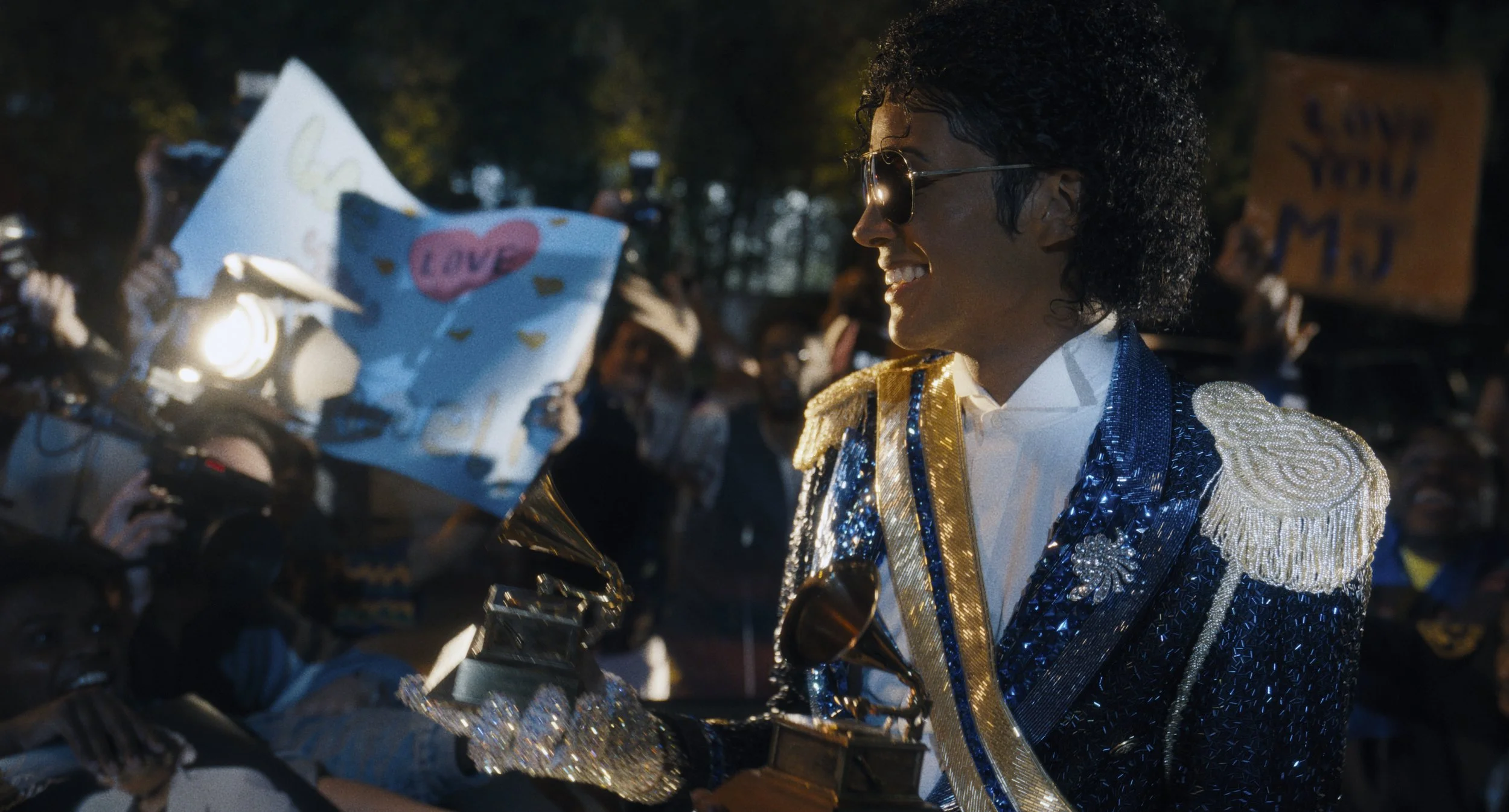
Photo courtesy of Lionsgate
A: “The release of Michael Jackson’s biopic film, Michael, only covers the early parts of his career, allowing the film to completely ignore the childhood abuse allegations against him, some of which are still being litigated. With recent revelations regarding widespread abuse in the film industry, and with the release of the Epstein Files, do you think a film like Michael operates to normalise or condone alleged abuse if someone is considered talented or important enough?”
S: “I think that's a very valid reading of the film. I don't think history is going to look very kindly at this film. Contextually, what the film has done is leave off at a point in Michael Jackson's career, and it's done so for a whole host of complex reasons. However, it is about how the audience perceives it and how the audience takes that film.
When you look at the motivations of this film, I see a lot of reviewers talking about how it's quite a ghoulish film, that it's protecting the legacy of Michael Jackson. But I think, even worse than that, it’s protecting an entire industry. It's not just Michael Jackson. It’s the industry that facilitates these individuals operating in the way that they do.
You couldn't possibly present any of the allegations against Michael Jackson without also presenting the system, the structure, the industry, and the institutions that facilitated this going on. As you quite rightly point out, given the context we are sitting in right now, with the Epstein Files and the Me Too movement, you've got huge problems where these artists themselves are used and abused, then the industry overlooks their indiscretions in the pursuit of money.
The thing I don't like about some of the criticism levelled at the film is, again, the focus on the individual, the focus solely on Michael Jackson. What about everything else? What about the whole industry that facilitates this? How the audience is complicit as well? We don't want to think about it. It's revealing something about us as a culture that we don't want to look at. Hence, it's completely understandable that the film stops at that particular moment, at the peak of his fame. More broadly, this is a celebration of somebody escaping a collective and becoming an individual. Then you relate that to broader issues in society. We're continually being asked to celebrate our individualism at the cost of the sense of how powerful we are as a collective.”
A: “How much social influence do you think film biopics have on social perception of their subjects, and are they an effective means of laundering reputations? Is this a notable pattern in biopic films?”
S: “In short, yes. I think historically you can go back and look at biopics and see the timeline manipulation, which is a massive problem in all of these films. They'll invent dramas, compress events, and rewrite what actually happened in order to fit the dramatic arc of a film.
I think Bohemian Rhapsody does that incredibly skilfully in order to have the film set at this moment of ascension, where Queen take the stage at Live Aid as if they'd been split up for many years, when the truth of the matter was that they were already touring all around the world. None of that actually happened, but the film has to do that.
Then there’s the erasure of race and class politics. One film that very few people wrote about the issues around was The Greatest Showman. P. T. Barnum and all the history of his exploitation, racism, and terrible treatment, all forgotten. There are so many biopics that are hugely problematic in themselves.
But the concern is not the film in and of itself as a piece of representation. It is the fact that people will watch them and have a sense that they are understanding a part of history, which is by no means true. It's like saying that I know what went wrong on the Titanic because I watched Titanic.
A big problem is that you've got shifting and changing modes of representation. That’s where film theory becomes so important, in understanding that these are institutional modes of representation. They're serving an institution that is purposefully hiding its agenda, burying its agenda into popcorn movies, and they have enormous impact on how we perceive ourselves and our position in the world. Sometimes they can be very good, but they need to be interrogated, looked at, and thought about very carefully.
Something such as the Michael biopic, my concern is the focus on Jackson, ironically enough, because this is not Michael Jackson. This is a movie, and he's dead. He’s not the thing dancing on the screen. This is a representation of something that we really need to interrogate, the institutions that have created this thing that we are watching.
More worryingly, as he's dead, he didn't make the film. It’s the industry that’s selling him and selling the idea of him. That industry abused him and enabled his alleged abuse. It’s a system protecting itself. The same could be said of the Amy Winehouse movie. Yes, we can talk about the estate, but of course the estate’s agenda, to me, is very clear, whereas the people who put this together have less clear agendas.
I went and watched the Michael Jackson biopic purposefully because of my strong personal views after watching the Leaving Neverland documentary, and because of my own relationship with Michael Jackson growing up. I wanted to watch the film to see what they did. But what they did was exactly what I expected them to do, which was present a set timeline, sanitise it, and turn this very complex individual into a brand. The brand has been repackaged so that people will leave the cinema, go on Spotify, and start listening to his music again.”
A: “Lastly, what’s your personal favourite biopic?”
S: “Oh my gosh. Now that is a good question. That is a hard one, but I think my favourite is the Weird: The Al Yankovic Story biopic. I've watched it like three times. It's so good. The most honest biopic I've ever seen, the most accurate. And I loved it more than I can put into words.”
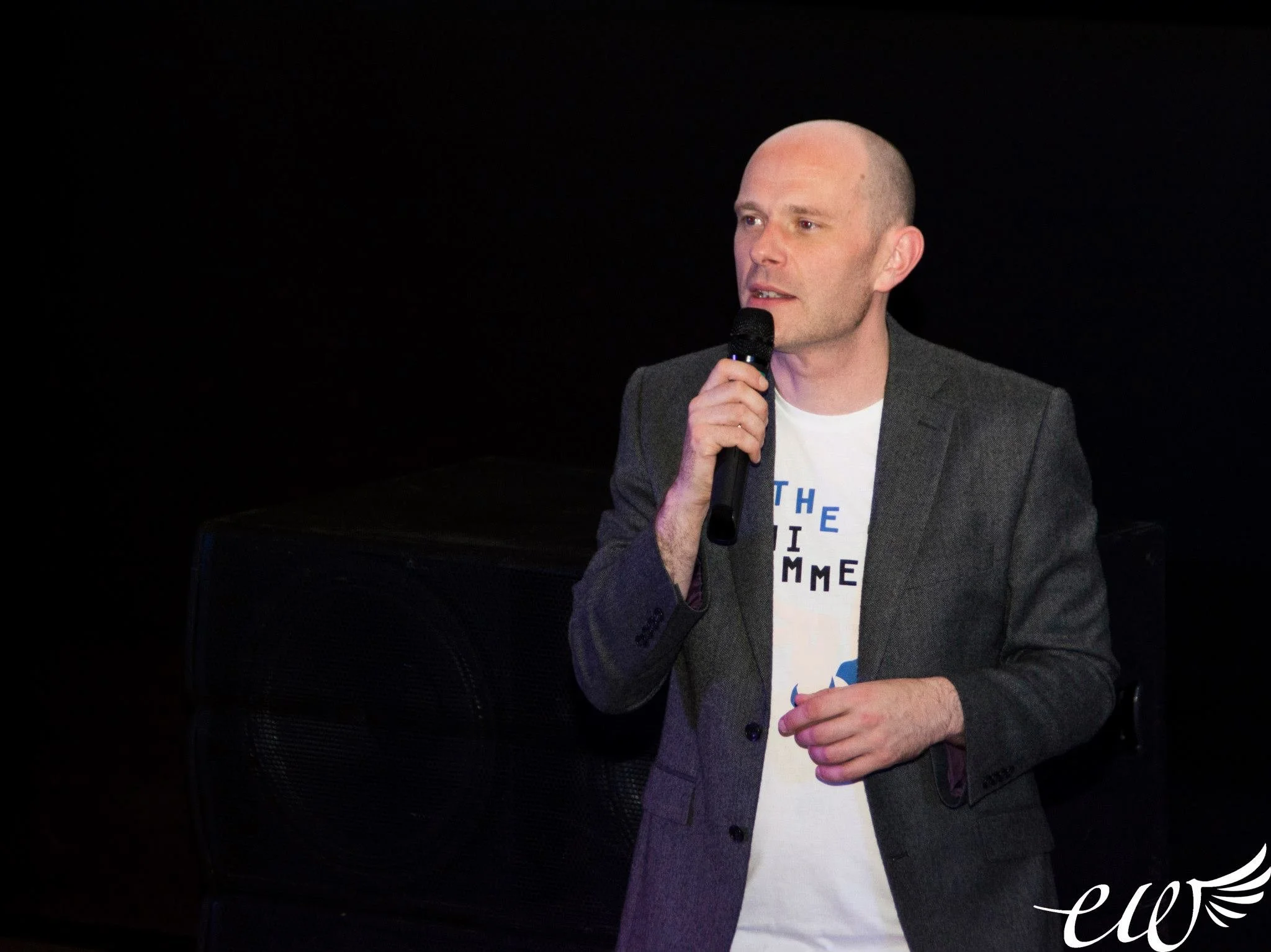
Photo By Andreea Dascalu
About Spencer
Spencer’s specialist field of academic interest is cross cultural analysis, post colonial theory and south East Asian cinema. He lectures and contributes across all three stages of the under-graduate and master’s degree programme in the department of media and communication across a range of modules covering media and cultural theory and production practices. Spencer principally specialises in film theory and audience studies and the context of media convergence.