
the road to god’s country: how Aditi Srivastava honours heritage and challenges colonialism in new collection
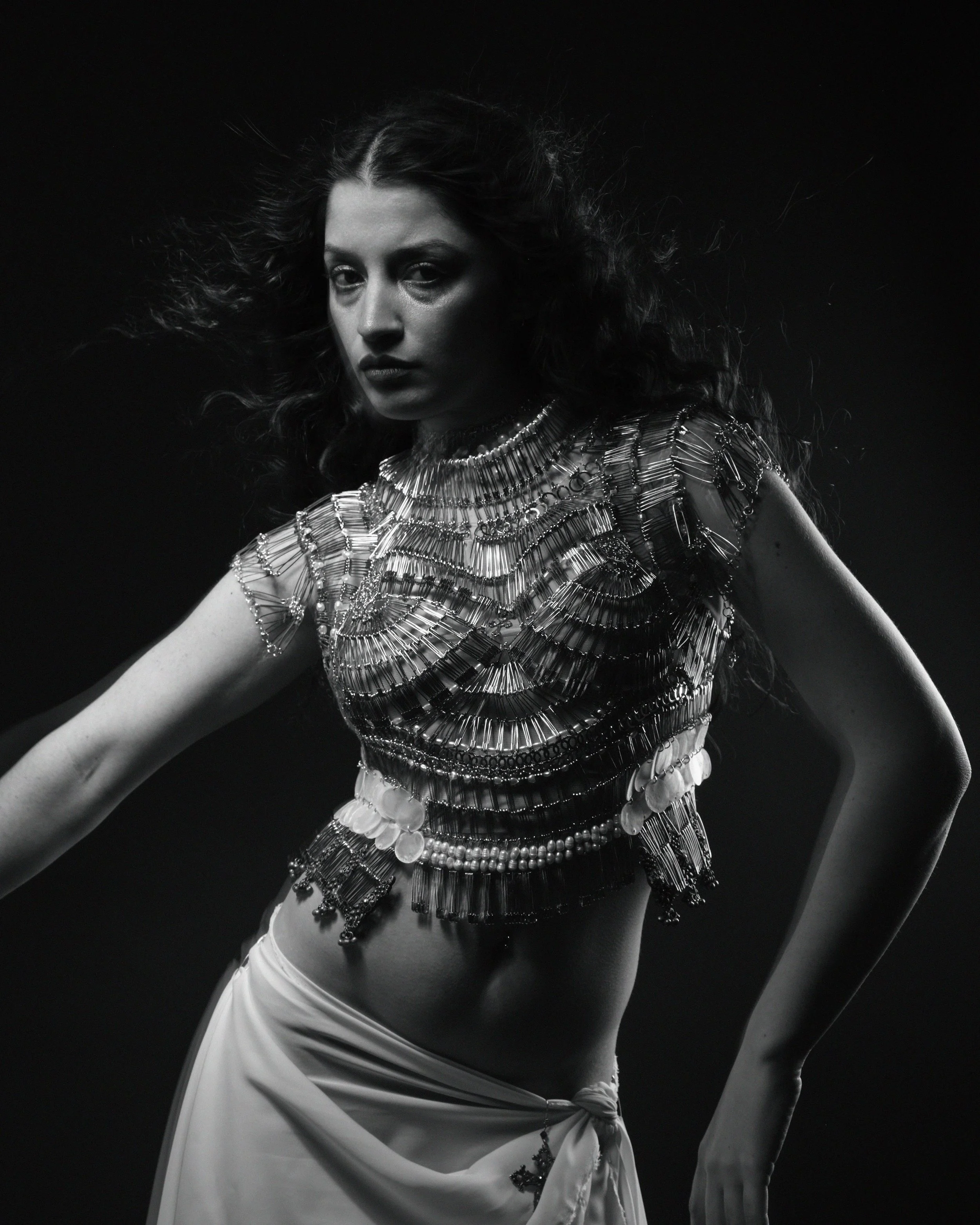
In God’s Country, Aditi Srivastava confronts the fractures of post-colonial identity through a capsule collection that is as materially intricate as it is politically charged. Drawing on her South Asian heritage, the legacy of British imperialism, and the intimate domestic memories of her grandmothers’ homes in colonial India, Srivastava brings together Banarasi silk, sari drapery, Tudor hoods, Victorian corsetry, safety pins, oxidised metalwork, and freshwater pearls in a deliberate collision of histories.
The collection reflects on the reshaping of Indian identity in the wake of colonisation and questions who is afforded dignity, reverence, and visibility within narratives of power. From a hand-linked safety pin top inspired by Hyderabad and the punk movement to a shredded, metal-boned corset constructed from heritage silk, God’s Country explores restriction and rebellion, survival and adaptation. Every pin, washer, and pleat carries context.
We spoke with Srivastava about reclaiming colonial symbols without reproducing their authority, the politics of craft, and why fashion cannot be separated from the histories it inhabits.






God’s Country deals with post-colonial identity and its fractures. What was the first image, memory, or feeling that sparked this collection?
I think I was drawn to India and its colonisation because of the current socio-political sphere we’re in, where it is virtually impossible to engage with the rhetoric of the times without confronting the place we occupy in the world. Identity is at the centre of all politics. A pivotal shift for me came from noticing traditional Indian craft appearing in contemporary ready-to-wear, often stripped of its origin and absorbed purely aesthetically. Concurrently, I noticed how much the intricate Indian maximalism, saree-like drapery, and textiles I grew up with surfaced in my work organically. Both my grandmothers grew up in colonial India, so this complex narrative of power, resistance, and survival was a natural draw for me. I was thinking about these strong motifs from my grandmothers’ homes – pearls in mahogany boxes, delicate lace curtains yellowed over time, flora carved into Kashmiri teak, ornate silverware – intricacies and maximalism that I love employing in my own work.
The title carries a lot of weight. What does “God’s Country” mean to you in this context, and who gets to claim it?
“God’s Country” came to me quickly and intensely, and I was struck by how searing it felt on the tongue. I wanted the title to stay open and up to the viewer’s discretion, especially because both nations have, in different ways, laid claim to it. The English Crown justified its colonisation and imperialism under the banner of the Anglican Church, while in India, religion too has often been weaponised in the service of political power. In the wake of so much exploitation, the title reads less as a tribute and more as a provocation. The double entendre is meant to hold that tension and to question who, within this struggle for power and dominance, is afforded reverence, dignity, and humanity.
How do you navigate the line between reclaiming colonial symbols and reproducing their power?
Toeing the line between reclaiming colonial symbols and reproducing their power is difficult and extremely precarious, but I think it greatly matters how these symbols are employed. I’m interested in grounding them in their context, disrupting their authority, and exposing their violence or ideology. This approach is the driving metaphor for my collection. For instance, in my second look, I manipulated a delicate, hand-dyed Banarasi silk saree into a rigid corset with shredded boning channels and a raw, distressed pleated hem. To me, the saree is in itself a metaphor for resistance and survival – a garment that has consistently managed to adapt to the zeitgeist, evolve, and endure. I was thinking about restriction, constraint, and obedience in this narrative. The juxtaposition of taking this ancient art form and shredding it, restraining it, taking its dynamic folds and pleats and forcing them still – all felt like a physical capture of my narrative.
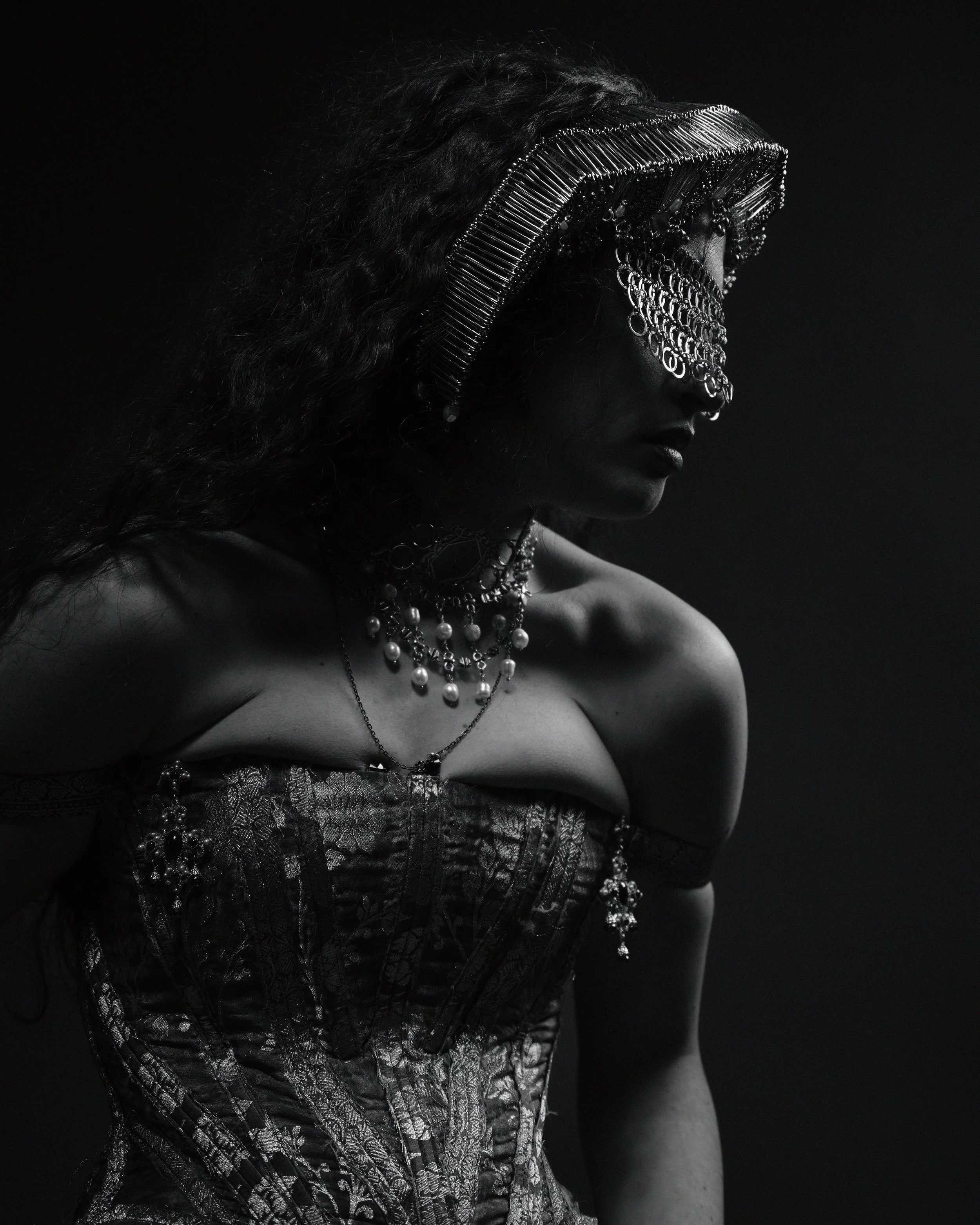
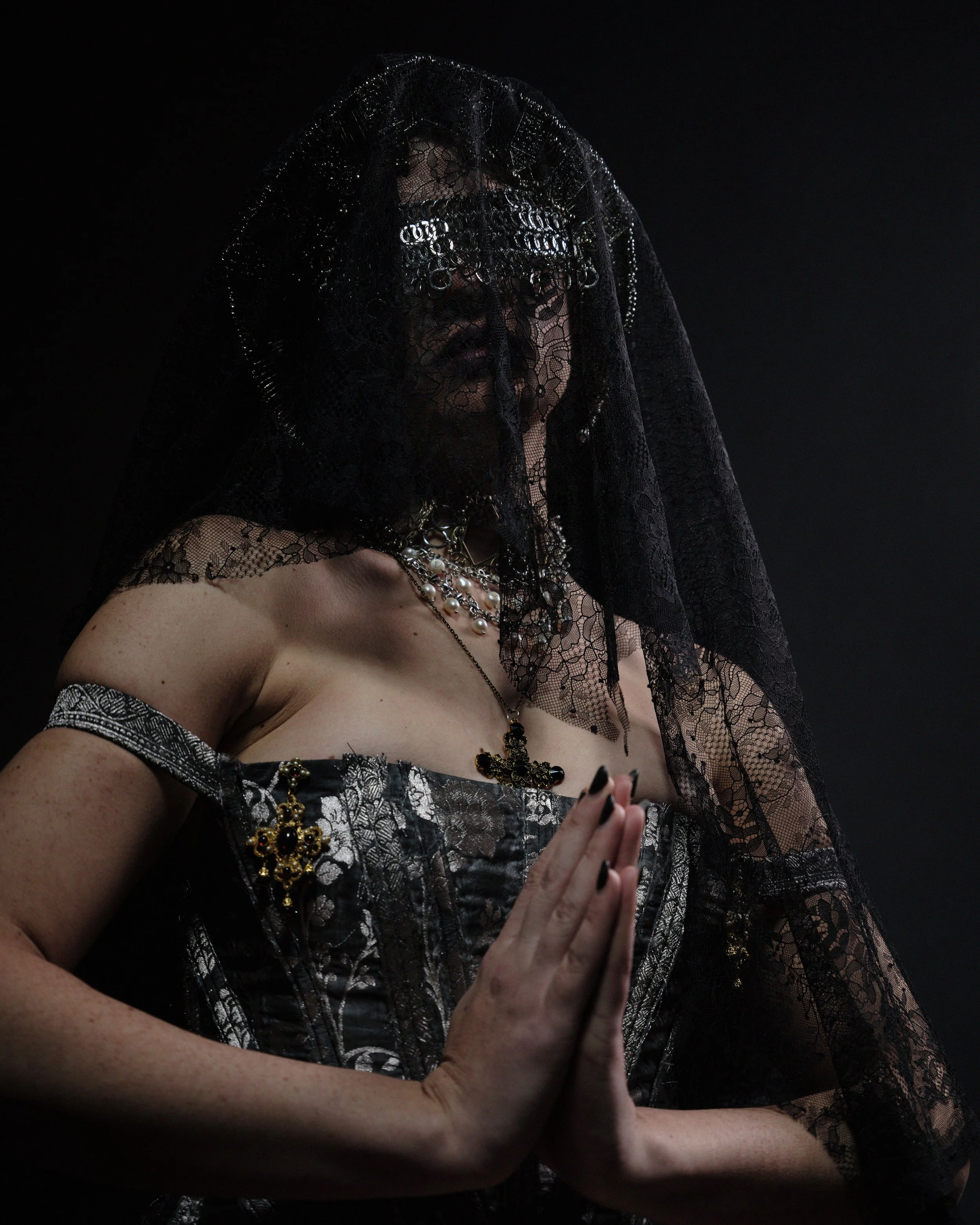
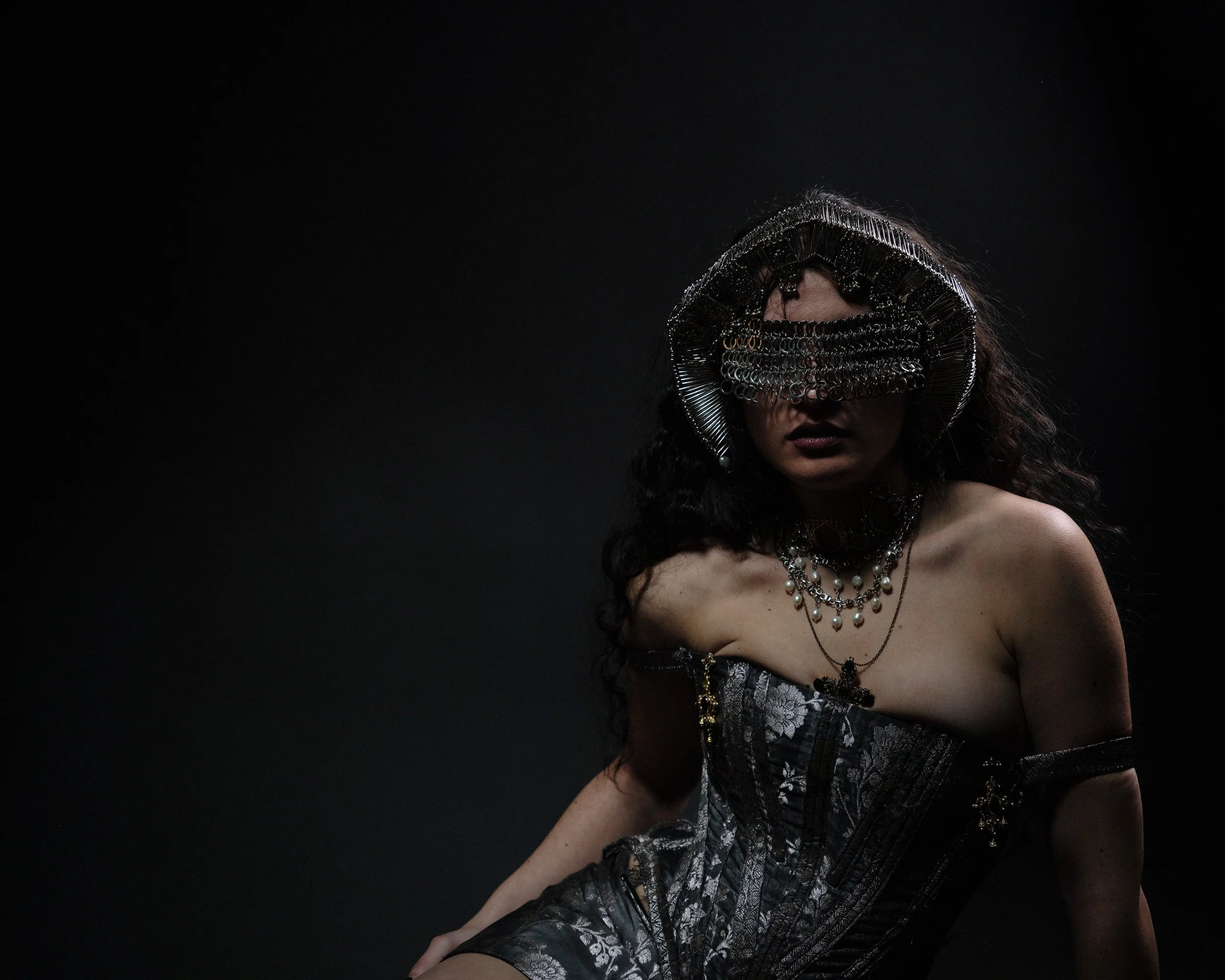
The same sentiment follows through with the headpieces. The gabled and French hoods are canonically those of Catherine of Aragon and Anne Boleyn, and I find it noteworthy how, despite being bourgeois women of immense privilege, they both, in different ways, became symbols of a loss of autonomy, identity, and agency. I constructed the hood out of wire and safety pins, embellished with oxidised jewellery and tipped with pearls. The hand-linked washer blinder and lace mourning veiling reflect the same ideas of a lost sense of self.
The hand-linked safety pin top feels both armour-like and fragile. What does working with found objects and hardware allow you to say that fabric alone wouldn’t?
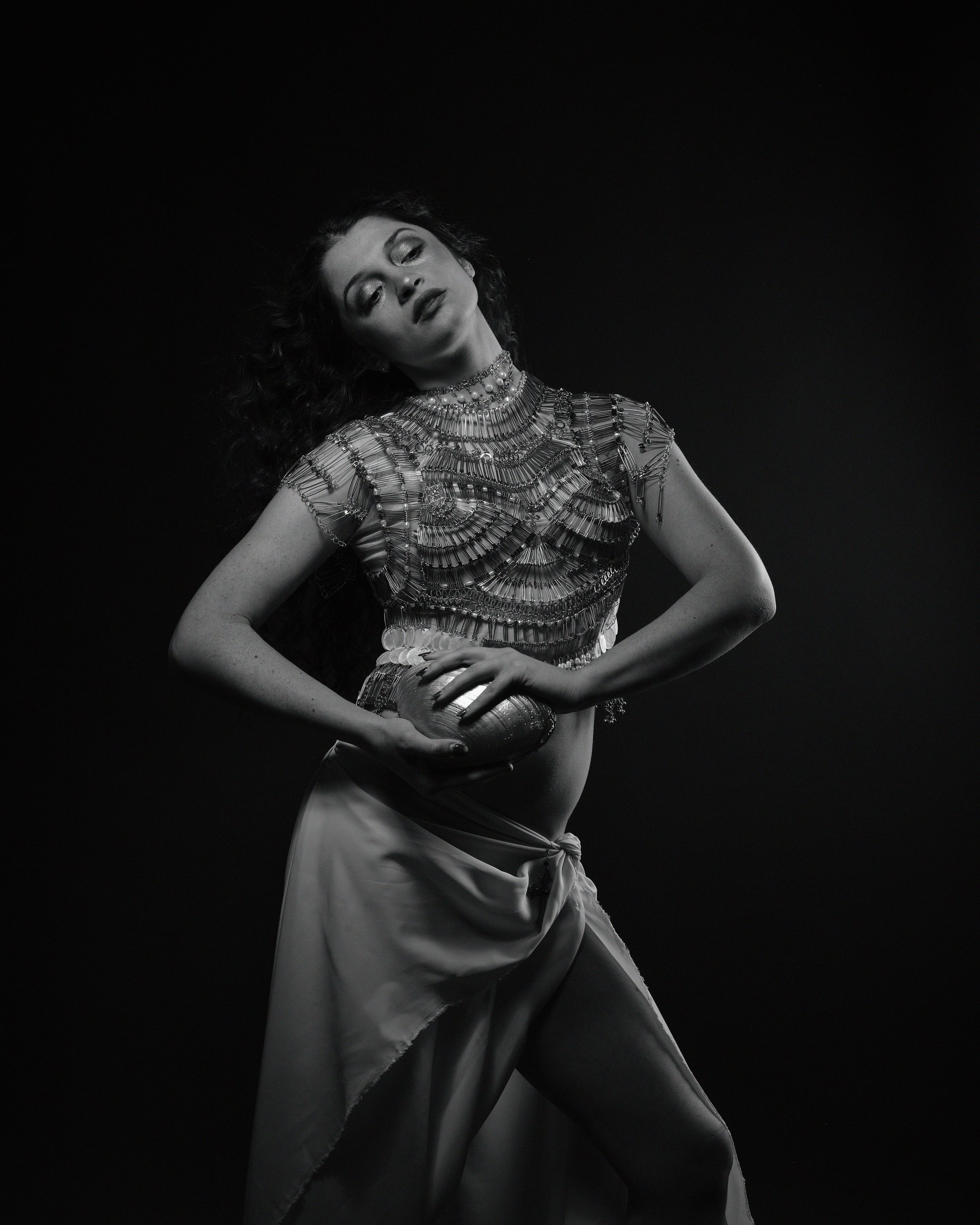
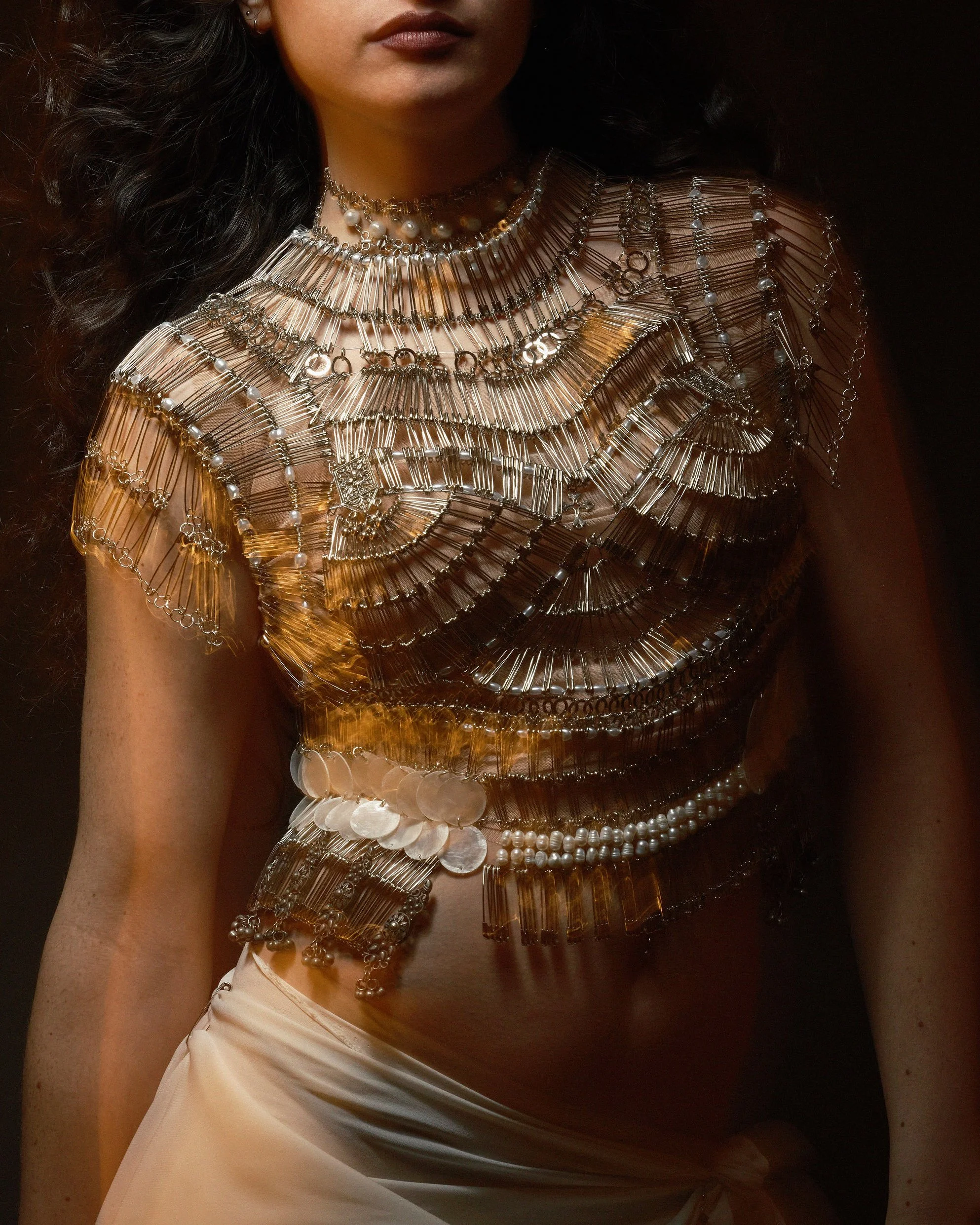
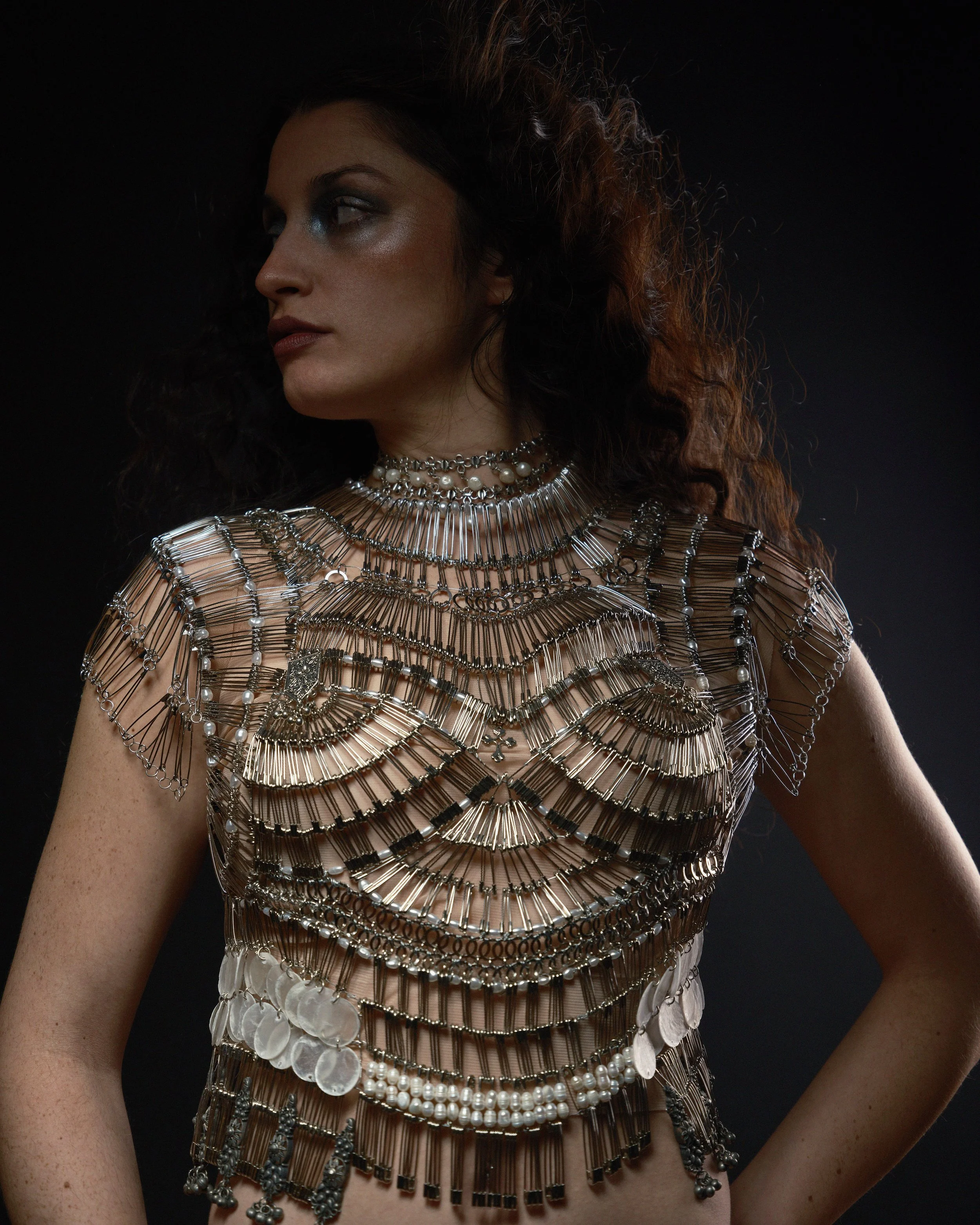
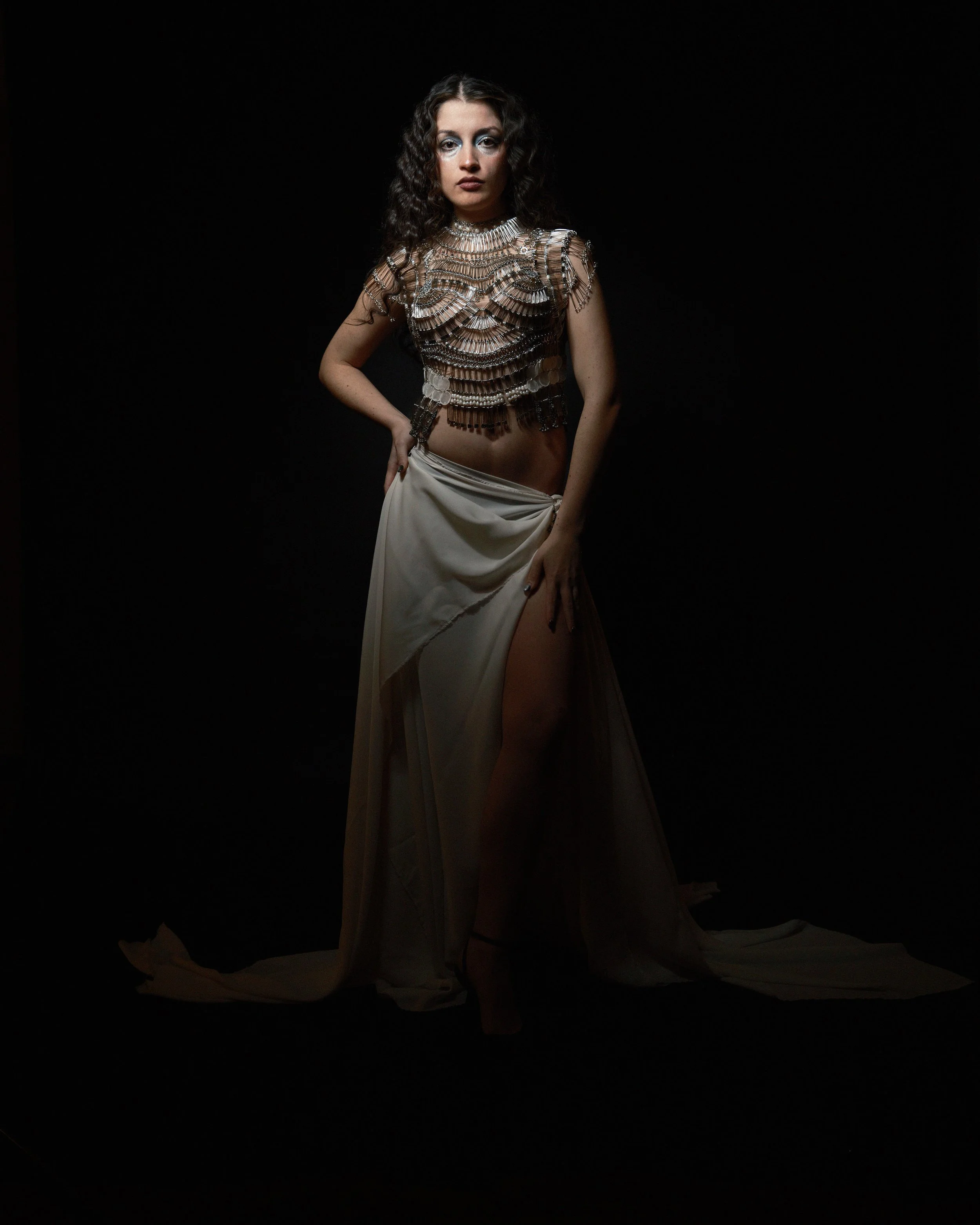
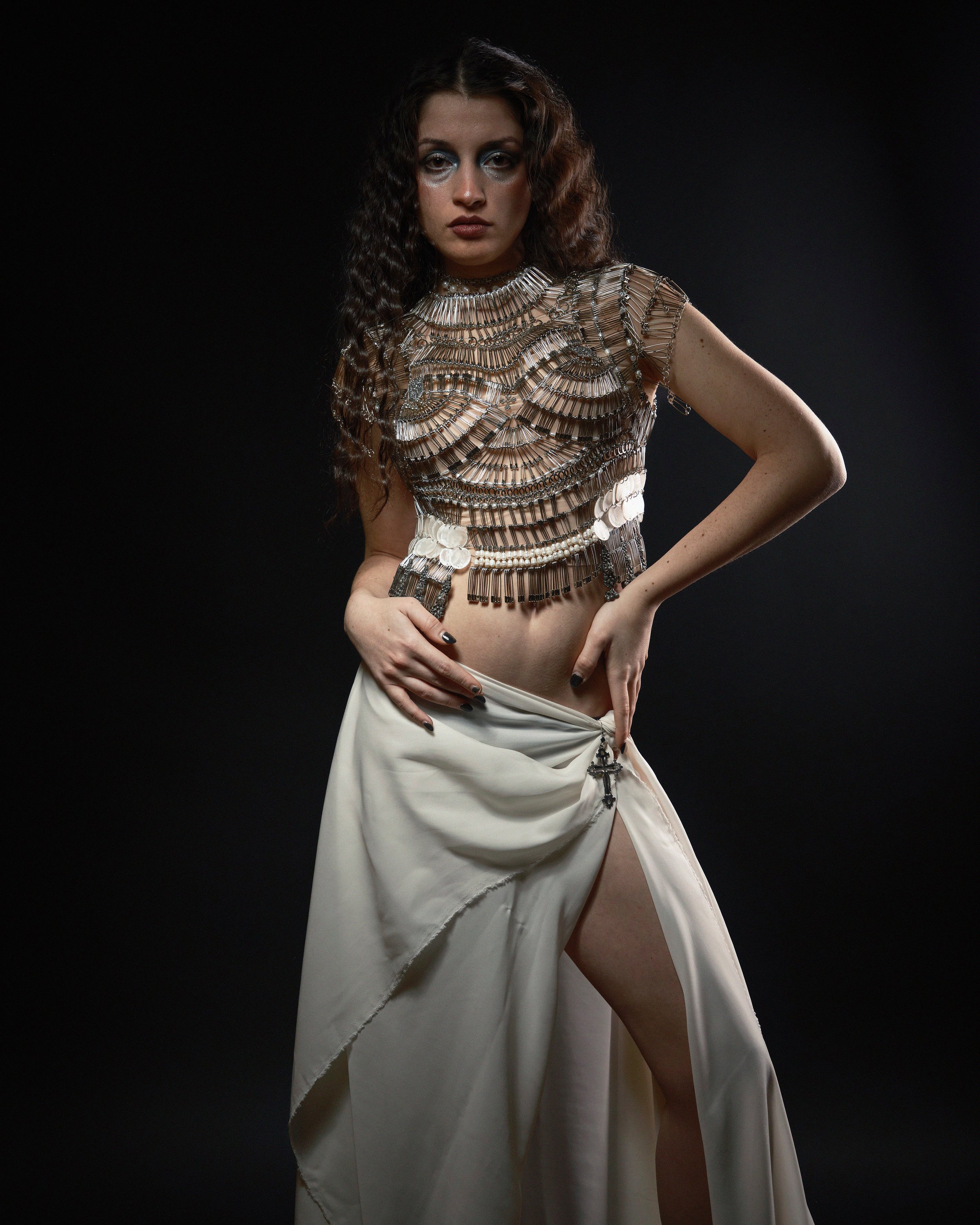
The genesis of my safety pin top came from oxidised black metal jewellery collected over time. I was drawn to safety pins as a long-time fan of the punk movement and its spirit of rebellion. The metalwork, paired with safety pins chain-mailed together to create this delicate cage, further carried my thesis forward – that oppression is vicious, its claws sink deep, but its foundation is fragile.
I like the idea of breaking down my element of construction to this basic utility piece. A lot of saree draping is held in place with a humble safety pin, and I wanted to employ that through chain-mailing in the piece. I also loved using safety pins as a reference to the punk movement and the idea of rebellion and chaos in clothing. The piece came together intuitively, and I let the form inform my construction and decision-making.
As a love letter to my hometown of Hyderabad, pearls make several appearances in this top. While it is anchored in symmetry, I wanted it to have an organic, natural touch by virtue of its freshwater pearls. This extended into the accessory paired with this look – a silver chrome-plated clutch made from Atlantic clam shells.
The crucifix at the bust is a reference to the Anglican Church and its role in British colonisation, as well as serving as another nod to the punk movement.
How do you see this collection speaking to contemporary conversations about post-colonial identity and cultural memory?
Handcrafted and detailed construction was central to my technical approach, particularly because it was these handloom textiles and practices that were lost to time and colonisation. In this era, where trends are passé before they resonate and our clothing feels increasingly impersonal and remote, the care of craft and quality feels paramount. I sought to create something that feels artistically ancient yet practically contemporary and refreshing in this capsule.
Fashion is a political art form, and it is simply impossible to separate clothing from its context. I think it is crucial that we retain the intellectual and historical elements in fashion, whether cultural or otherwise. It is such an inherently human art form – every garment is made by hand and is touched by another human being. I hope this collection makes that apparent for the wearer. I find that South Asian influences in fashion often get boxed into a limited, narrow look, and through this capsule I aim to subvert that expectation.
This capsule has had the most personal storytelling of all my work, and it was extremely important to me that I translated my heritage with integrity. I believe representation, done authentically and sincerely, can have impactful effects. This collection has helped me settle into my identity – combining elements of my South Asian heritage with the dark, haunting, romantic quality of the gothic and the macabre. I loved tapping into this historical narrative arc, and I hope to keep revisiting it in my future work.
Our Verdict
God’s Country marks Aditi Srivastava’s most personal body of work to date. In merging South Asian heritage with gothic romanticism and the macabre, she creates garments that feel historically conscious yet materially modern. Through handloom textiles, visible labour, and carefully grounded symbolism, the collection insists on integrity in representation and depth in storytelling.
For Srivastava, fashion remains inseparable from politics and memory. By subverting reductive expectations of South Asian influence in contemporary dress, she reclaims narrative space on her own terms. If God’s Country is a provocation, it is also an act of reconciliation.