
A Conversation with JEVGLOBAL on FRANCIS @ Edelweiss Gallery
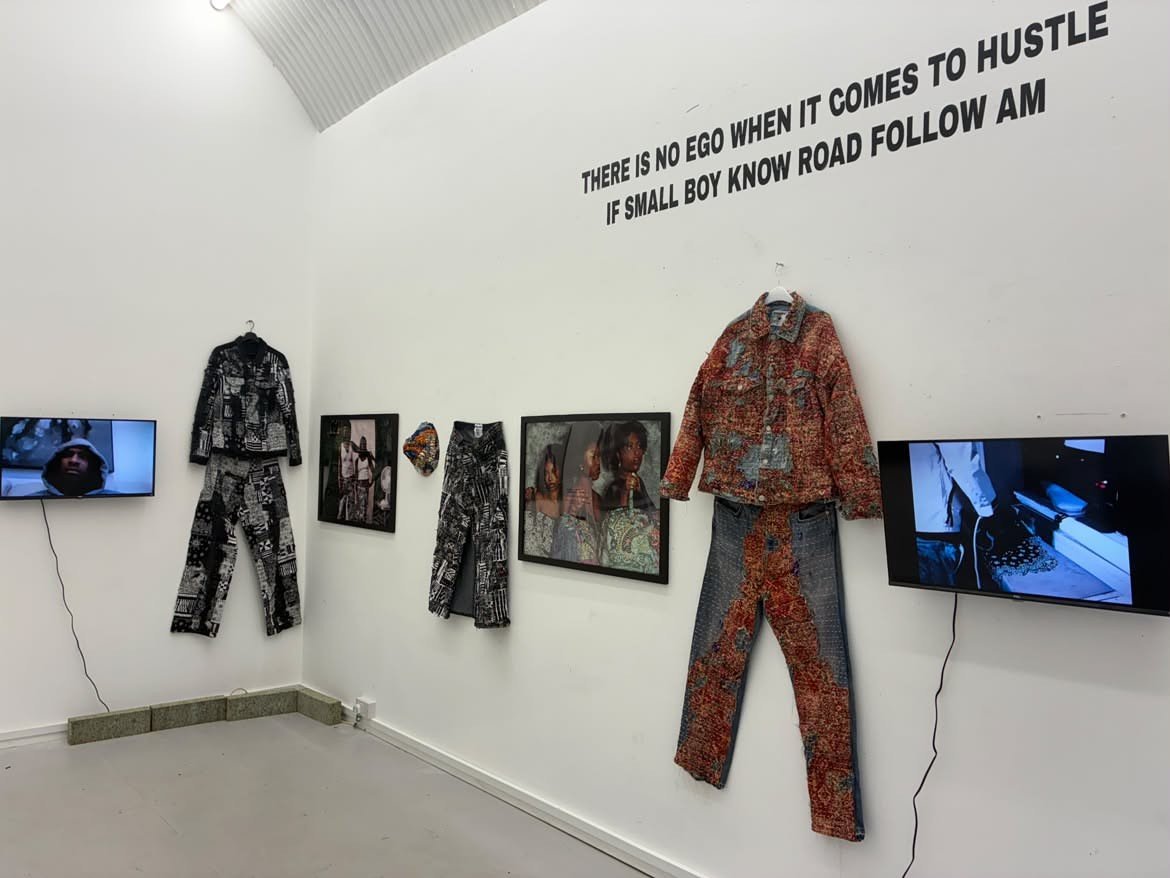
The inspiration for one of JEVGLOBAL's most recognisable designs came from a Lego film. He was 18 when he spotted a character wearing a balaclava and began wondering what it might look like covered in the little plastic bricks. He remembered the elaborate football games he used to invent with Lego as a child, stacking pieces to construct miniature worlds of his own. A few experiments later, he had made his Lego balaclava. It's a wonderfully peculiar starting point for a designer whose influences also include Japanese streetwear, basketball players and Vivienne Westwood, although he seems to find nothing particularly unusual about any of it. At 21, JEVGLOBAL has already accumulated a considerable body of work, and his latest exhibition in Glasgow’s Edelweiss Gallery offers an opportunity to see how those disparate interests have developed into something more coherent.
Born in London, he moved to Kent with his family at around 14, and it was there, during his mid-teens, that his interest in fashion began to take shape. Two labels in particular captured his attention: the American brand Gallery Dept. and Japan's Kapital. Unfortunately, he couldn't afford either. He remembers studying the outfits of his favourite NBA and football players, borrowing elements from each to construct imaginary outfits for himself. A particular pair of jeans eventually prompted him to attempt making his own, using a sewing machine gifted to him by his mother. She taught him the basics, including how to sew a straight stitch, and he took it from there. What began as an attempt to acquire the clothes he wanted quickly became an obsession with the process of making them. The satisfaction of being able to think of something and then physically produce it was unlike anything he had experienced before. Looking back, he considers those early experiments fundamental to developing his taste. "I always wanted to dress differently to people and look differently to people and think differently to people," he tells me. At an age when so much of our personal style is informed by what everybody around us is wearing or whatever micro-trend is dominating Tik Tok, JEVGLOBAL was making a conscious effort to establish his own.
He arrived in Glasgow in September 2023, and by November 2023 had already staged his first fashion show. It was a remarkably early introduction to an industry he was still learning to navigate, with only a couple of months of experience developing his work publicly. The show was far from perfect, something he readily acknowledges. He made mistakes, learnt from them and discovered just how much of fashion exists beyond the clothes themselves. Working with models, collaborating with other creatives and learning to articulate his ideas were all important lessons. His willingness to discuss the parts that went wrong is particularly interesting, given how carefully young designers can curate their public image in their first stages. JEVGLOBAL seems quite comfortable admitting that he didn't know what he was doing at first. He is also conscious of how valuable those early experiences have been. By the time we meet, he has spent the better part of three years refining his practice, initially under the name Badgevan, where his work focused predominantly on upcycling. He remembers those years as a period of trying practically everything, gradually working out which techniques, references and ideas felt most natural to him. At 20, he decided it was time to create something more substantial. He wanted a fashion house, complete with its own identity and stories, and rebranded under the name JEVGLOBAL.
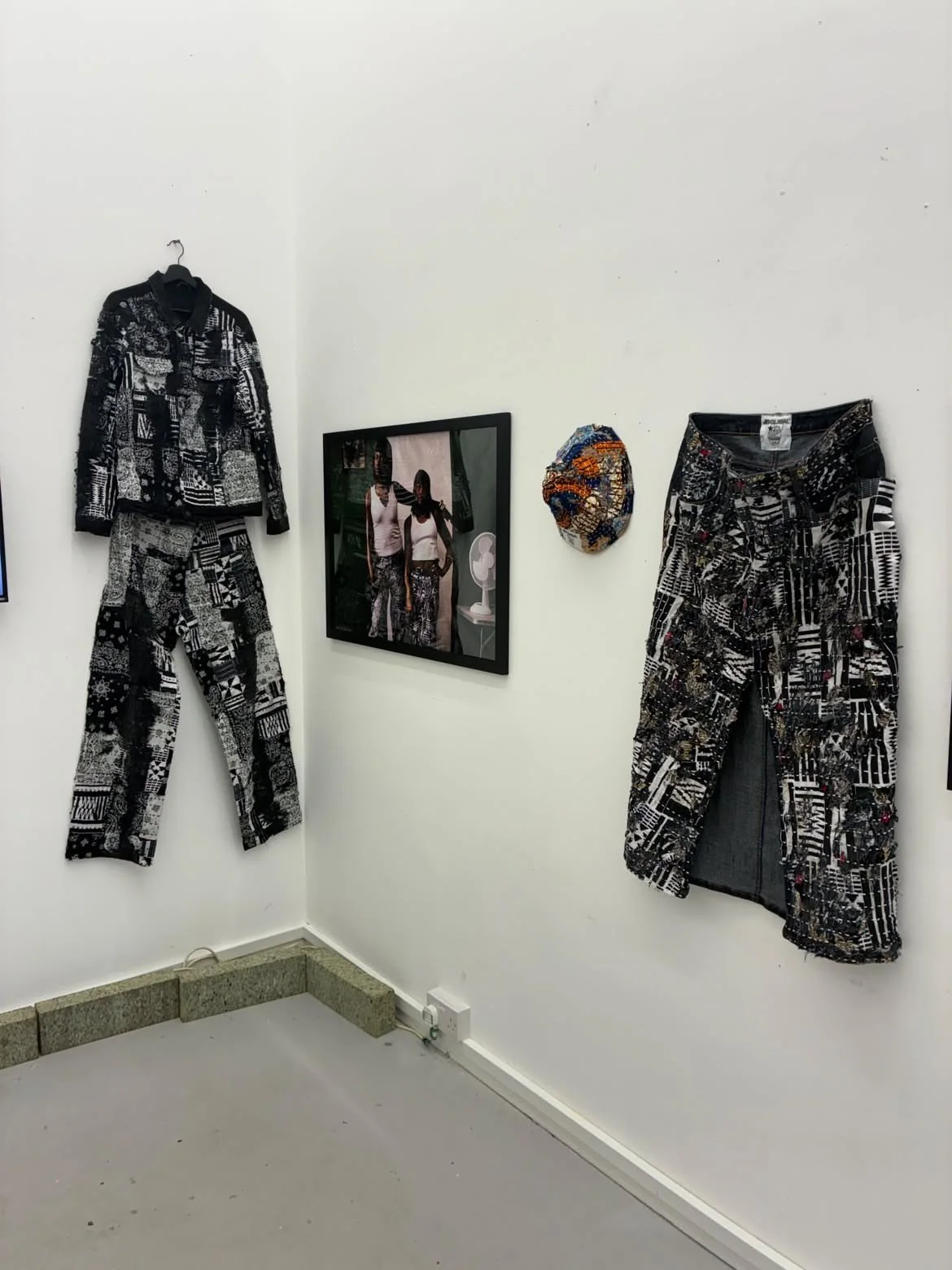
The exhibition represents approximately a year's work under that new identity, and there is an obvious enthusiasm in the way he discusses it. He is pleased to have finally brought together the ideas that have been developing since he was a teenager. What I find appealing about his approach is that, for all his ambitions to establish a serious fashion house, he has no apparent desire to abandon the humour of his earlier work. His earlier online videos incorporate memes, while his designs explore references to childhood toys, sports and the clothes he grew up admiring. I ask him how he intends to preserve that sense of youth as his career develops. He credits his parents, who encouraged him to take part in sports and pursue a variety of interests while growing up. He speaks fondly of the freedom he enjoyed as a child, recognising that other children are not always afforded the same opportunities. "I can be a child, but I also take my work very seriously," he explains. He sees no reason why the two should be incompatible.
Naturally, the question of influence comes up. JEVGLOBAL has previously expressed a reluctance to allow trends to interfere too heavily with his own creative judgement, an attitude that seems increasingly difficult to maintain when fashion imagery is so readily available. There is a distinction between his affection for particular designers and the way he approaches his own work. The influence of Gallery Dept. and Kapital is apparent in his attraction to reconstructed garments and unconventional streetwear. When I tell him that his Union Jack bag reminds me of early Vivienne Westwood, he admits that others have made the same comparison. “Which is beautiful because she's one of my favourite designers,” he says. But he is also interested in discovering his own references, however obscure they might seem. His process relies heavily on curiosity, and he talks about inspiration with the enthusiasm of somebody who still finds the possibility of making something genuinely exciting. The ambition to develop a recognisable aesthetic is certainly there, although he appears happy to arrive at it through experimentation.
For somebody so committed to his own creative preferences, JEVGLOBAL places a surprising amount of emphasis on other people. He considers community essential to establishing a fashion label, and the support surrounding his work is clearly something he values. When we speak, the exhibition has been open for only two days, yet visitors are already arriving with stories about discovering his designs online. Some are encountering his work for the first time, while others have been following his progress for years. He is particularly pleased that he has been able to establish this following in Glasgow, a city he moved to only three years ago. His approach to building that audience is uncomplicated. "I'm gonna make what I want because I need to love it first," he explains. If other people connect with it, all the better. His online presence has allowed that community to develop beyond the city, and he speaks passionately about the importance of sharing information with young creatives who may be trying to find their own way into fashion.
“There's gonna be somebody else who is 16, 15, looking at my work online in Peru or in Brazil [...] and they can just use what I say [...] towards their work.”
"There's nothing to gatekeep," he tells me. As a teenager, he had struggled to find designers who looked like him or communicated in ways he recognised. Even when he discovered people whose work he admired, they rarely explained their creative processes or how they had developed the skills necessary to produce it. He is determined to be more forthcoming. His videos and interviews discuss the practicalities of his work, including the mistakes and difficulties involved, because he remembers how much that information would have meant to him at 16. He takes this idea even further, contemplating the possibility that somebody might watch his work in 200 years the way he has been influenced by Japanese Sashiko upcycling methods. He is fascinated by the continued relevance of paintings made centuries ago, and the thought that an artist can communicate with people long after their death. There's something satisfying about independent designers in that way, who consistently consider the possibility of their work outliving them, particularly when so much of contemporary fashion is consumed and forgotten almost immediately, whilst the physical body of them rots in landfill.
For the remainder of my time there, I admire the photographs and the handbags hung up on the wall, and I ask him if the photographs are also his work, and he confirms it is. I draw comparisons to Oladimeg Odunsi (one of my favourite photographers) and admit that most of the projects I’ve seen where one creative tries to do multiple roles, one thing always falls short. There’s a distinct absence of failure here. Each and every element of the exhibition is executed with care, and reflection. When I arrived, I watched the 7 minute short film ‘Woven’, holding back tears at its message, and he tells me that the shoot for the beginning was done in 2 hours. We agreed that one of the actors, Elsie, is a natural and should definitely keep at it.
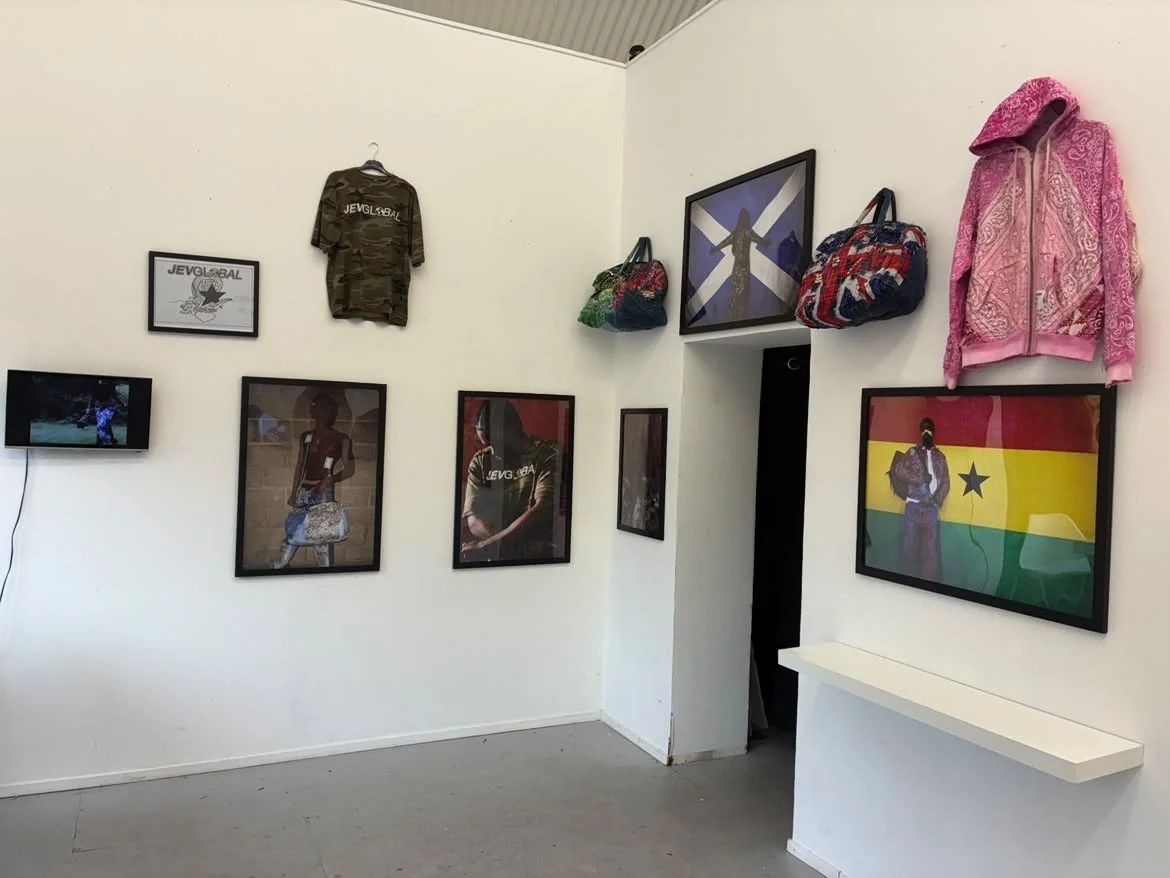
When I ask what he would most like to change about the fashion industry, his answer is immediate: "I want to see less waste." Upcycling has remained central to his practice since the beginning, and he has little interest in seeing his designs reproduced in enormous quantities. He talks about the personal investment involved in creating a garment, and how strange it would feel to spend months developing an idea only to send it away for somebody to manufacture 600 identical copies. He wants his clothes to be kept for years, imagining a father passing one of his pieces down to his son, who might eventually pass it on again. The sentiment is familiar to anybody who remembers inheriting clothes that had already lived several lives, although it feels increasingly distant from the way fashion is produced and purchased today. JEVGLOBAL is still establishing what his fashion house will look like, and there are plenty of questions that will only be answered as it grows. For now, his priorities seem clear. He wants to make clothes that people care about, share what he learns along the way and continue following the strange little ideas that occur to him.
It is difficult to imagine that the teenager who taught himself to sew because he couldn't afford a pair of jeans would have anticipated any of this. Then again, he was already thinking about making things that didn't exist. I believe he has star potential, and a deep, relentless hunger - not for standardised ‘success’ necessarily, but for change. A naturally capable disrupter to the fashion cycle, his clothing honours upcycling methods that came well before him but his execution of them is ahead of its time and would be at home on the footballers he analysed years before.