
WORDS: NADÈGE ELYSE MUSTAFA
This Christmas, we want CUNT. TikTok has become the equivalent of male birds peacocking for our attention through effort-maxxing. Luxury fashion houses are fluffing their feathers, flaunting their plumage and performing increasingly elaborate dances, all in the hope of getting us to stop scrolling.
The Attention Economy
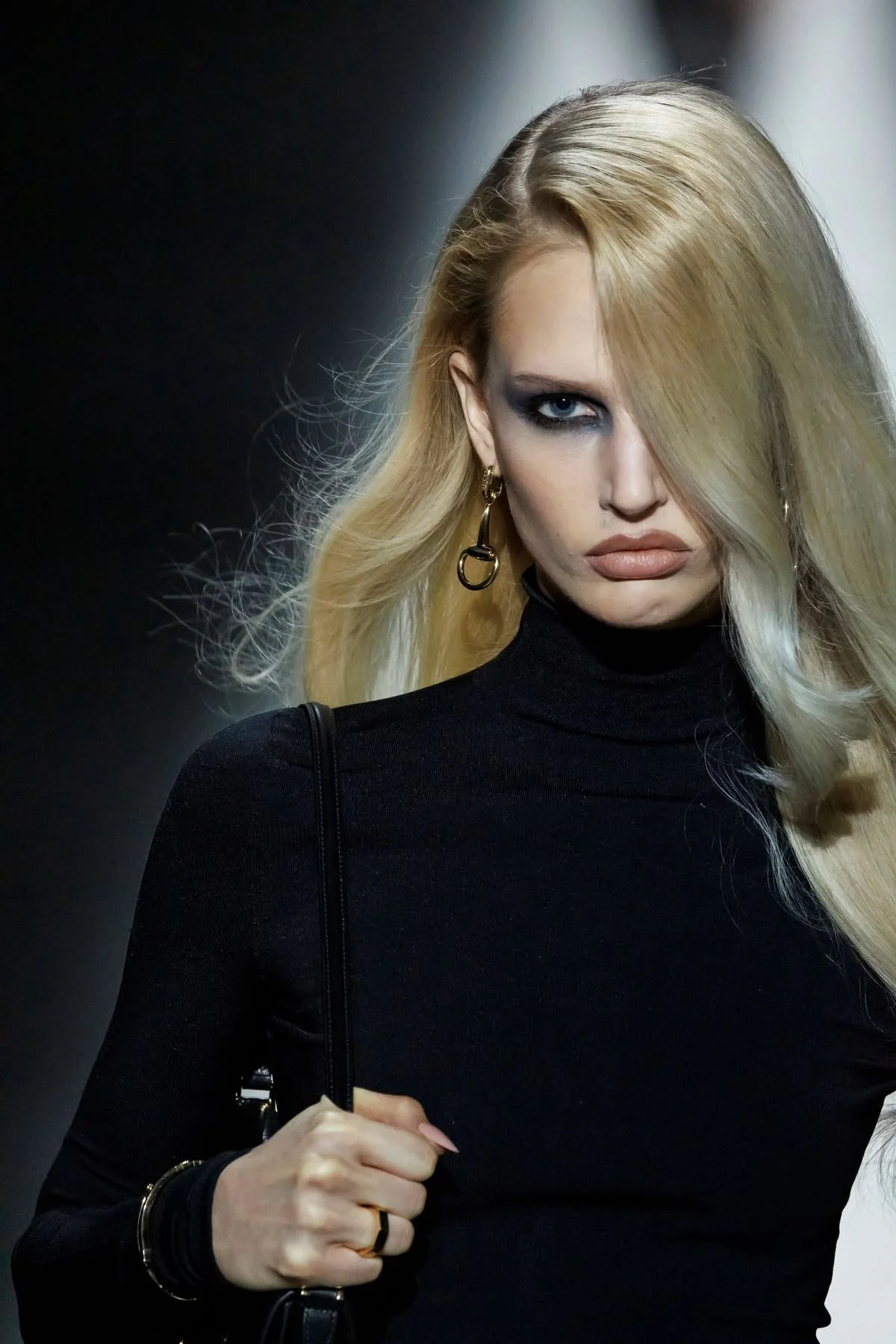
Enter Gucci, giving us hot goth baddies, faux-fur face-masked models and weird dance moves. Garnering millions of views, the brand’s feed veers into territory considerably stranger than the immaculate, beige-adjacent luxury content clogging up our timelines. I mean, in the words of Susan Sontag, ‘Camp is a woman walking around in a dress made of three million feathers.’ Yet, in an oversaturated social-media landscape, looking expensive isn’t enough. You have to be interesting.
Gucci, for all its occasional oddities, understands that one of the most effective ways to sell desire is to give us something we haven’t quite seen before. And we want more. On TikTok, a platform where everyone is fighting for the same three seconds of attention, familiarity can be a death sentence. Luxury has traditionally sold aspiration through distance: the unattainable face, the immaculate campaign and the fantasy of a life just out of reach. Social media is where this gets flipped on its head. A space of social paradox, where worlds are meant to merge.
Increasingly, we don't just want to admire the fantasy; we want to participate in it, remix it and, ideally, become part of the spectacle.

The CUNT Renaissance
With the return of ’90s runway drama, audiences have declared a coup d'état against the sea of identical silhouettes marching down fashion-week carpets, cobblestones and, well, whatever setting was supposed to shake things up a bit. We're looking for the same thrill on our socials.
Saint Laurent sent models braving desert sand dunes for SS21, in a show that felt like The Mummy had been given a couture budget. Directed by Nathalie Canguilhem, with Anthony Vaccarello at the creative helm, it offered a panoramic return to personality amidst the pandemic.
Coperni’s spray-on dress turned fashion into sculptural spectacle, harking back to the punkish brilliance of Alexander McQueen’s iconic No. 13 dress in 1999, when Shalom Harlow was spray-painted by robots. A connoisseur of spectacle, if ever there was one.
Then came Demna’s mud-filled runway for Balenciaga SS23, dragging the traditional polish and palatability of high fashion through the dirt. Galliano's rain-soaked fever dream for Maison Margiela Artisanal SS24 truly made us feel as though we had been blessed by the fashion gods themselves. Doll-like apparitions emerged through the downpour, and with walks like that of Leon Dame, we were finally satiated.
More recently, Jacquemus plated up a sun-drenched spectacle at Versailles for SS26, with everyone looking as though they’d stepped out of a Baroque painting. Clearly, fashion’s appetite for theatricality hasn’t gone anywhere. And yet, somewhere between the spectacle of the live show and the endless scroll of social media, that sense of drama seemed to get lost. The runway has been giving us theatre, while the TikTok feed was giving us, well… nothing.
Until Gucci decided to give the algorithm a much-needed ass-kicking.
Gucci, You’ve Got Our Attention
Perhaps that's what we've been missing: not necessarily bigger budgets or more elaborate sets, but a sense that fashion is willing to take a risk and look a little ridiculous on social media in the process.
We appreciate the BTS snippets and the ‘Are you a trench coat or knit?’ or ‘An autumn or a winter?’ quizzes. But the river has run somewhat dry, with fashion houses struggling to bring couture camp into the digital space, runway reposts aside. Too often, it’s the same overthought ‘quirky’ questions designed to make celebs, models, designers and the crème de la crème of society behave in an approachable, social-media-savvy way, instead of giving us something genuinely creative.
From Nosferatu-esque dancing to Melania Tur literally bodying high fashion with moves that would make Cirque du Soleil jealous, Kiki’s Dracula-themed cameo and, well, handing the phone to a Gen Z creator who knows exactly what they’re doing and isn’t afraid of a little backlash, Gucci is finally giving us something to feast on. The fashion house is decidedly demonstrating a genuine feel for where social culture is heading, rather than simply making glamour repostable.
I don’t know how many times we have to say it: out with Alix Earle, front-row pans and streamlined catwalk vids, and in with the Alex Consanis, Gabriettes and socialites with chronically online senses of humour. Yes, we still want a glimpse of shows we have no chance of getting into. But give us personalities, not just polished access.
VIVA LA RÉVOLUTION, and death to the, well, boring.
Gucci is giving the digital fashion landscape much-needed mouth-to-mouth, bringing fashion’s unapologetically vamped, provocative spirit into the social-media age. A pimped-out pioneer, if ever there was one. In a feed where every luxury house is desperate to look desirable, Gucci knows that sometimes the quickest route to desire is to give us something gloriously strange to talk about.
The #Primavera Effect
Now, credit where credit is due. Gucci was engaging with internet culture long before the current wave of luxury brands trying to manufacture virality, from the viral #GucciModelChallenge, which saw TikTok users recreating the house's distinctive styling through their own wardrobes, to the 2022 The North Face x Gucci collaboration with Francis Bourgeois, bringing an unexpectedly wholesome internet character into Gucci's luxury universe.
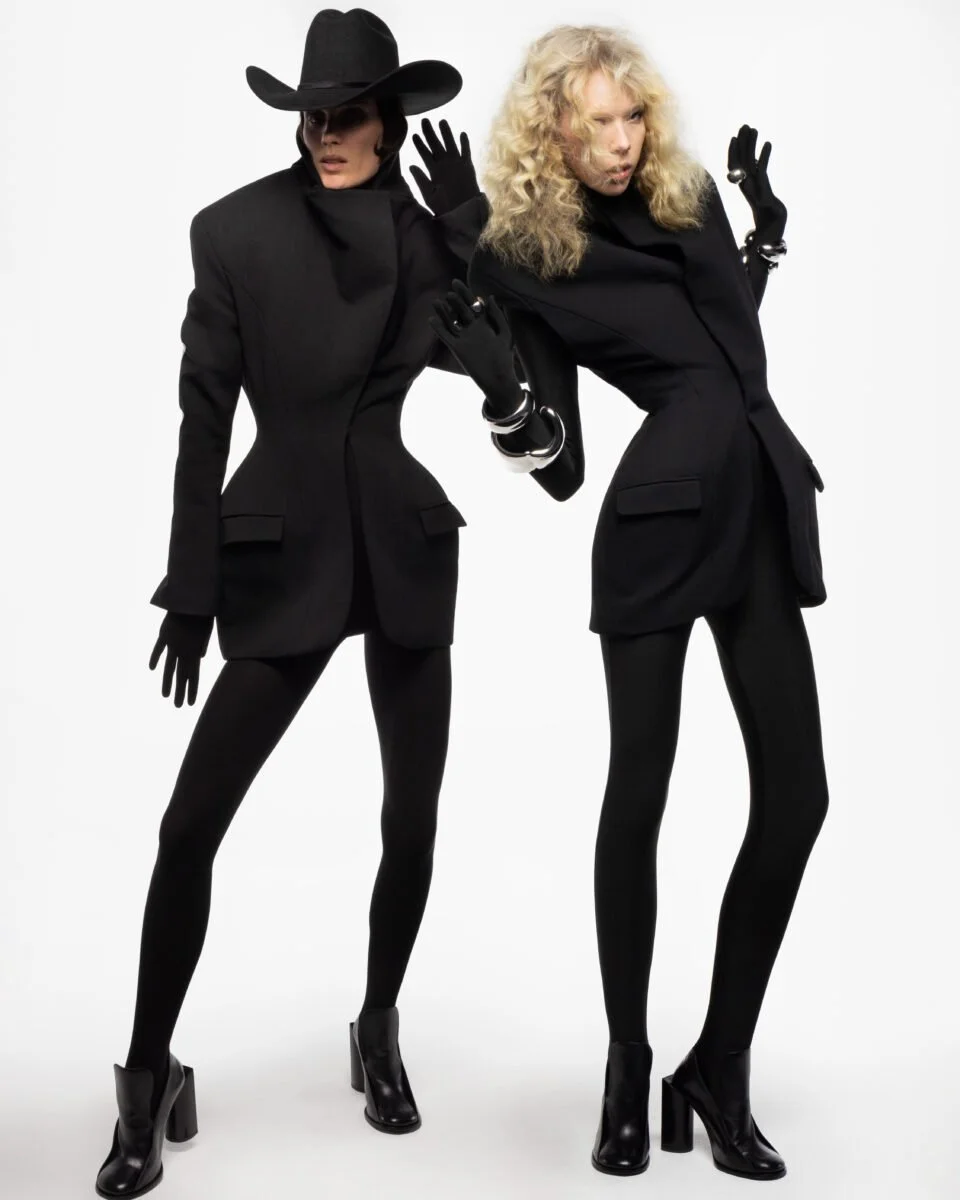
In a rather delicious full-circle moment, they have managed to bring the iconic days of heroin chic and Kate Moss’s legendary 1995 Gucci catwalk moment into 2026’s Primavera era, with Moss moodily lip-syncing to Chris Isaak’s 1989 cult classic ‘Wicked Game’ against a verdant backdrop.
Does anything really age better than a smoky eye, bed hair and a classic ‘I-don't-give-a-fuck’ attitude?
Never quite satisfied, much like the market, the legacy brand isn't just creating content that looks interesting; it's building an entire aesthetic universe that audiences want to inhabit.
Demna is demanding applause across every sphere, with Gucci’s new flagship on Avenue Montaigne in Paris exuding vampiric chic. From tapestry-like paintings and objects of curiosity that look as though they were stolen from a sexist villain’s lair, to Art Deco touches and tactile, polished surfaces, minimalism is given a light fluffing.
Conjuring Italian Renaissance palazzos, 1930s Milanese architecture and interiors inspired by the 1950s to the 1970s, Gucci is rooting its visual language in that of the greats.
All Hail Demna
Gucci is taking its takeover global, and I want in. I want in on Demna’s wardrobe, interiors and mind! My prayers, it seems, have been answered: he’s taking us there. In a digital landscape where content disappears almost as quickly as it arrives, creating a world that people recognise and want to return to is a rather clever way of keeping the fantasy alive. Of course, there is a contradiction at the heart of luxury's relationship with the internet. Exclusivity has historically been part of the appeal. This may, however, be precisely where the opportunity lies. After all, doesn't desire heighten when the carrot is quite literally dangling in front of our noses?
Fashion has always understood spectacle. But in an age where luxury risks becoming just another thing to scroll past, Gucci is reminding us that fashion should make us feel something.
And if that means a little more audacity, theatre and ’50s goth baddies, well, we’re certainly not complaining.
About the author
Nadège Elyse Mustafa is a journalist seeking to unpick the hidden beauty, uncomfortable truths and luminescence within visual culture.
Portfolio: nadege-elyse-mustafa.com
Instagram: @d.ivinefeminineenergy