
LEGGAME : mary wild
Mary Wild: The Ontology of Memory in the "LEGAME" Project
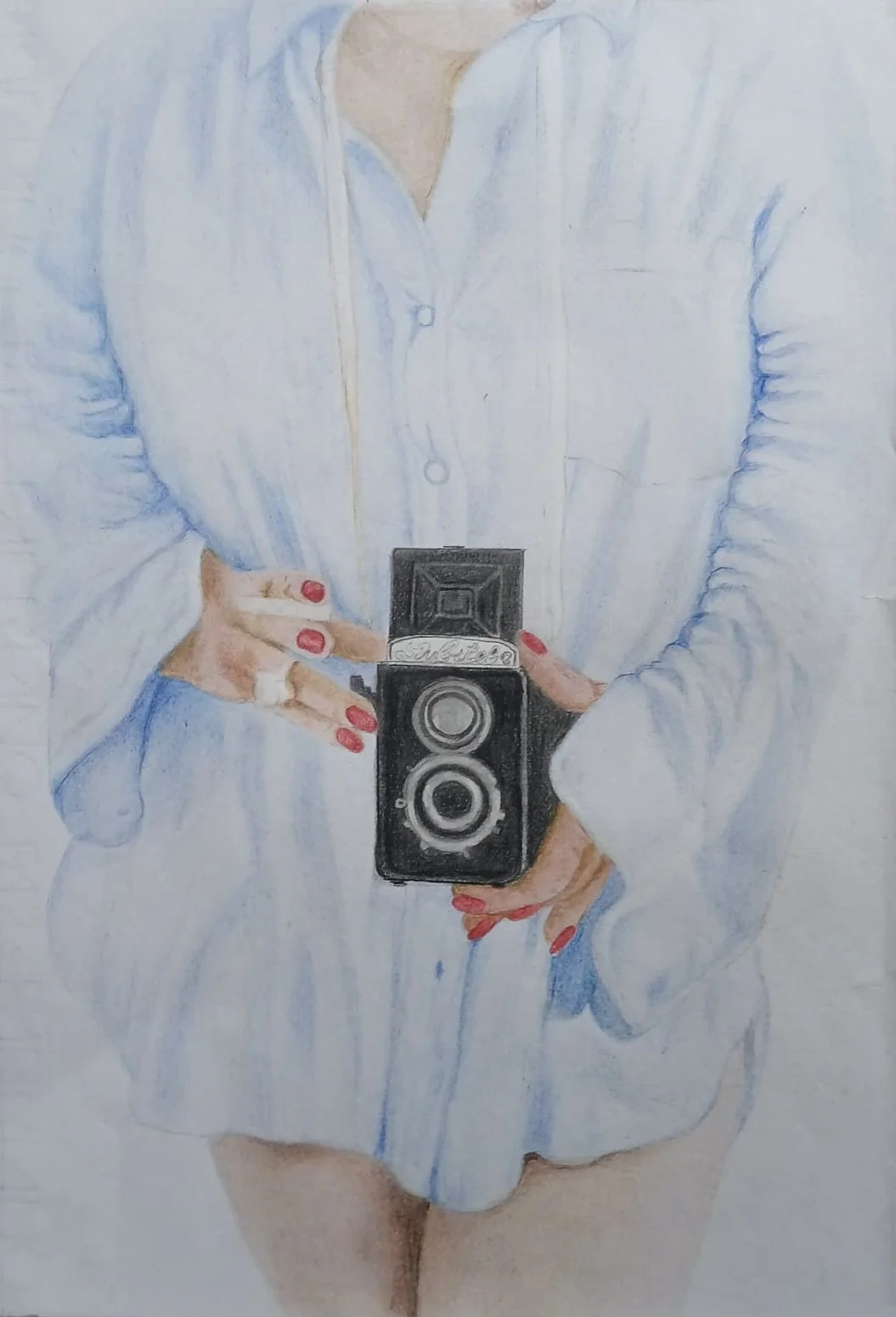
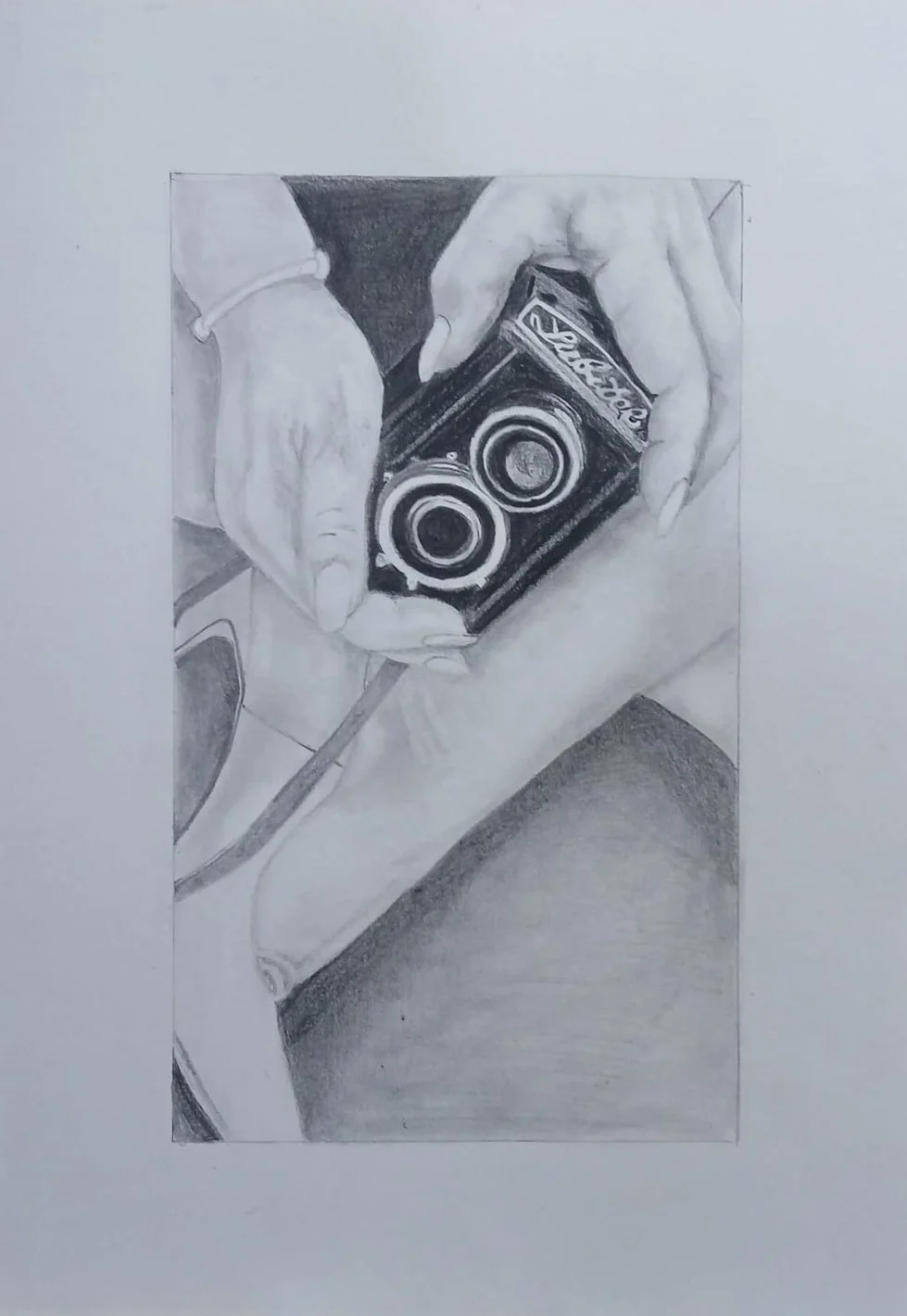
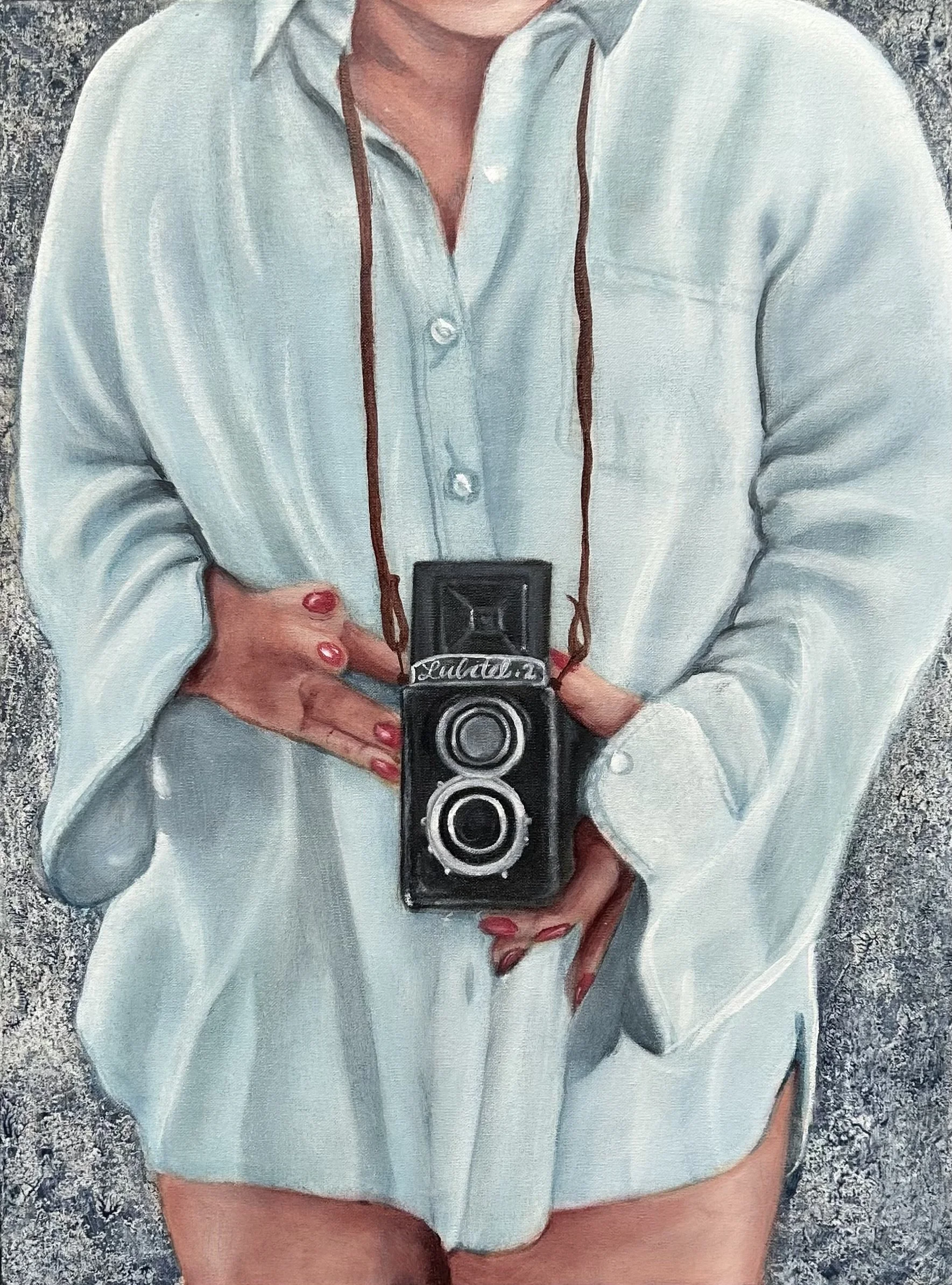
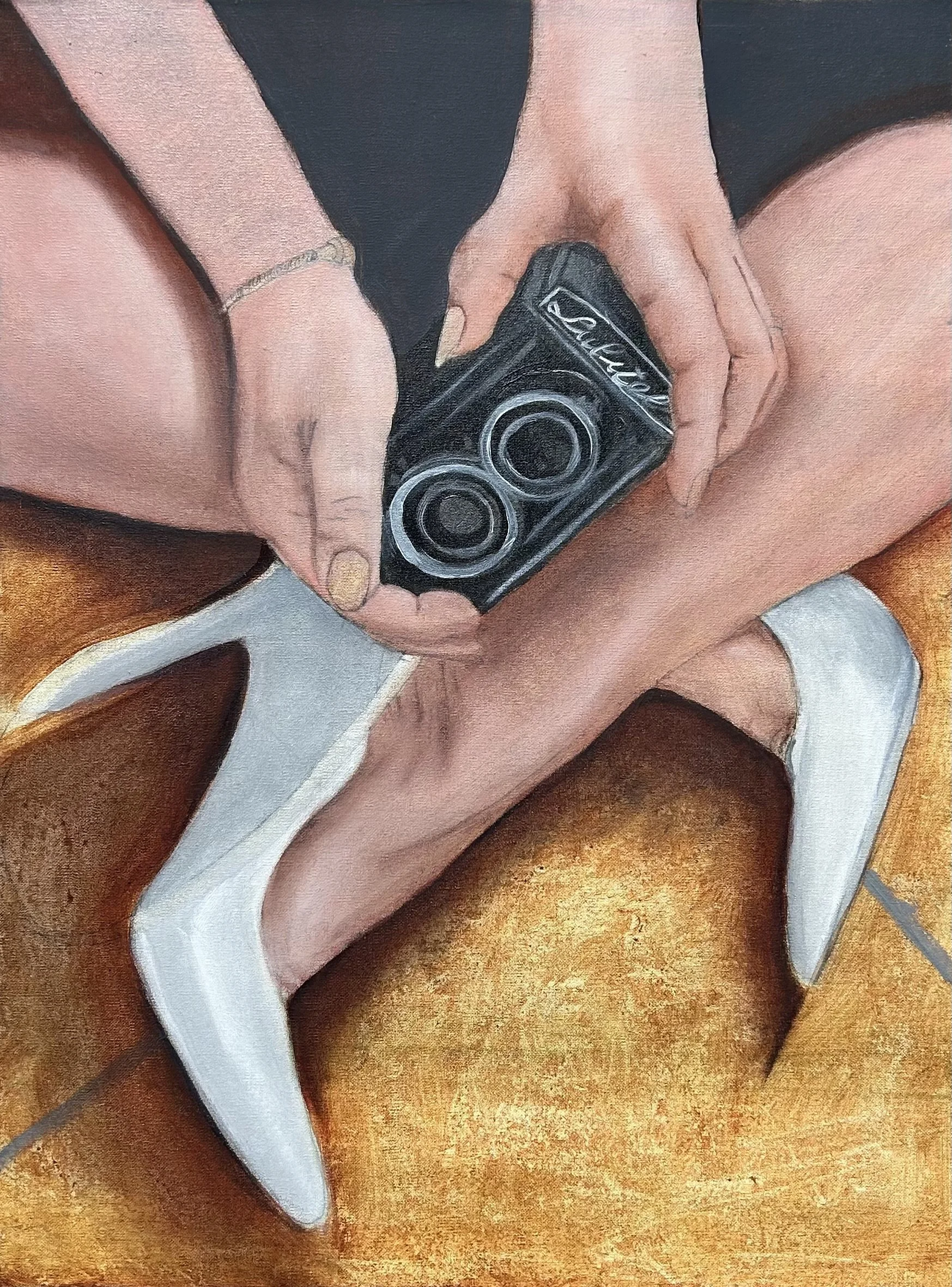
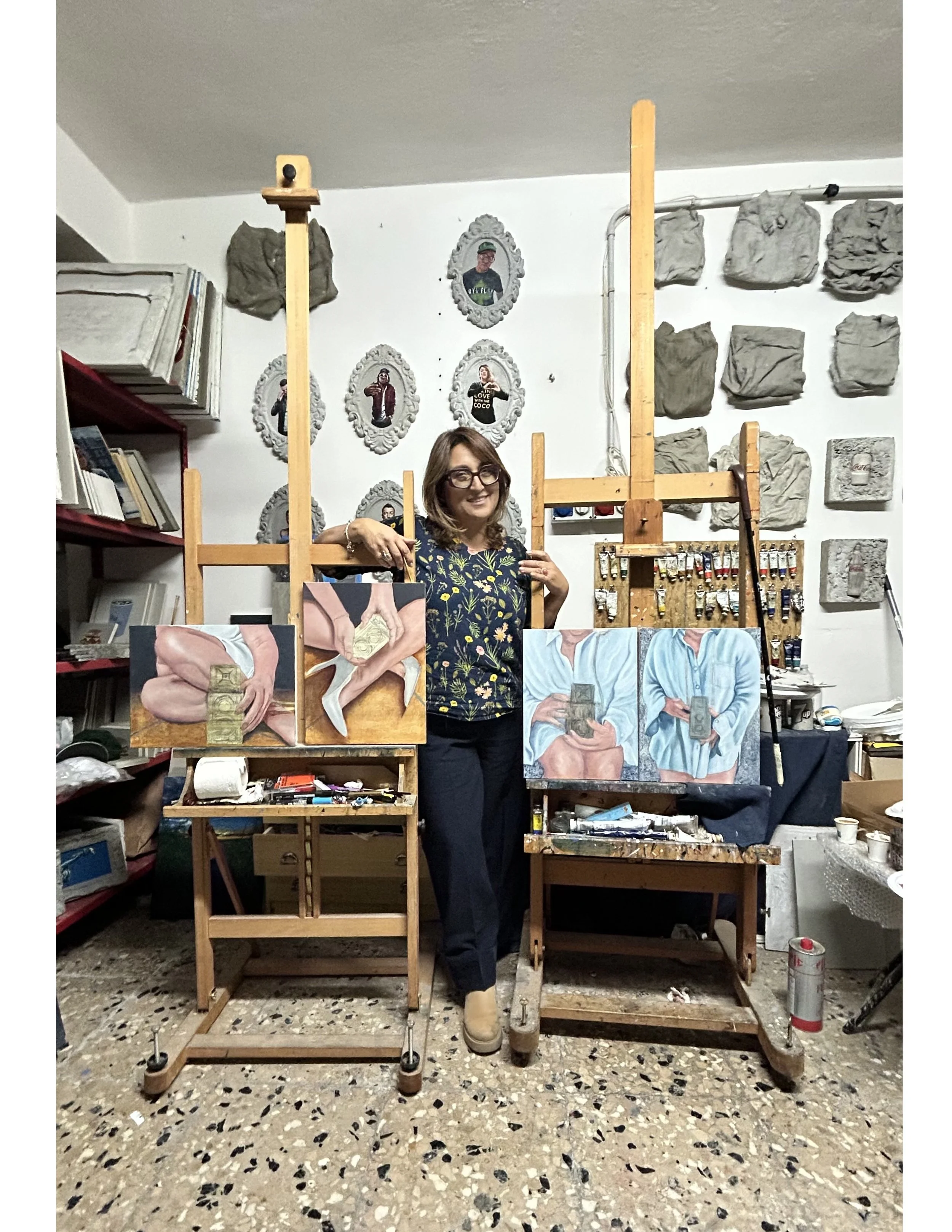
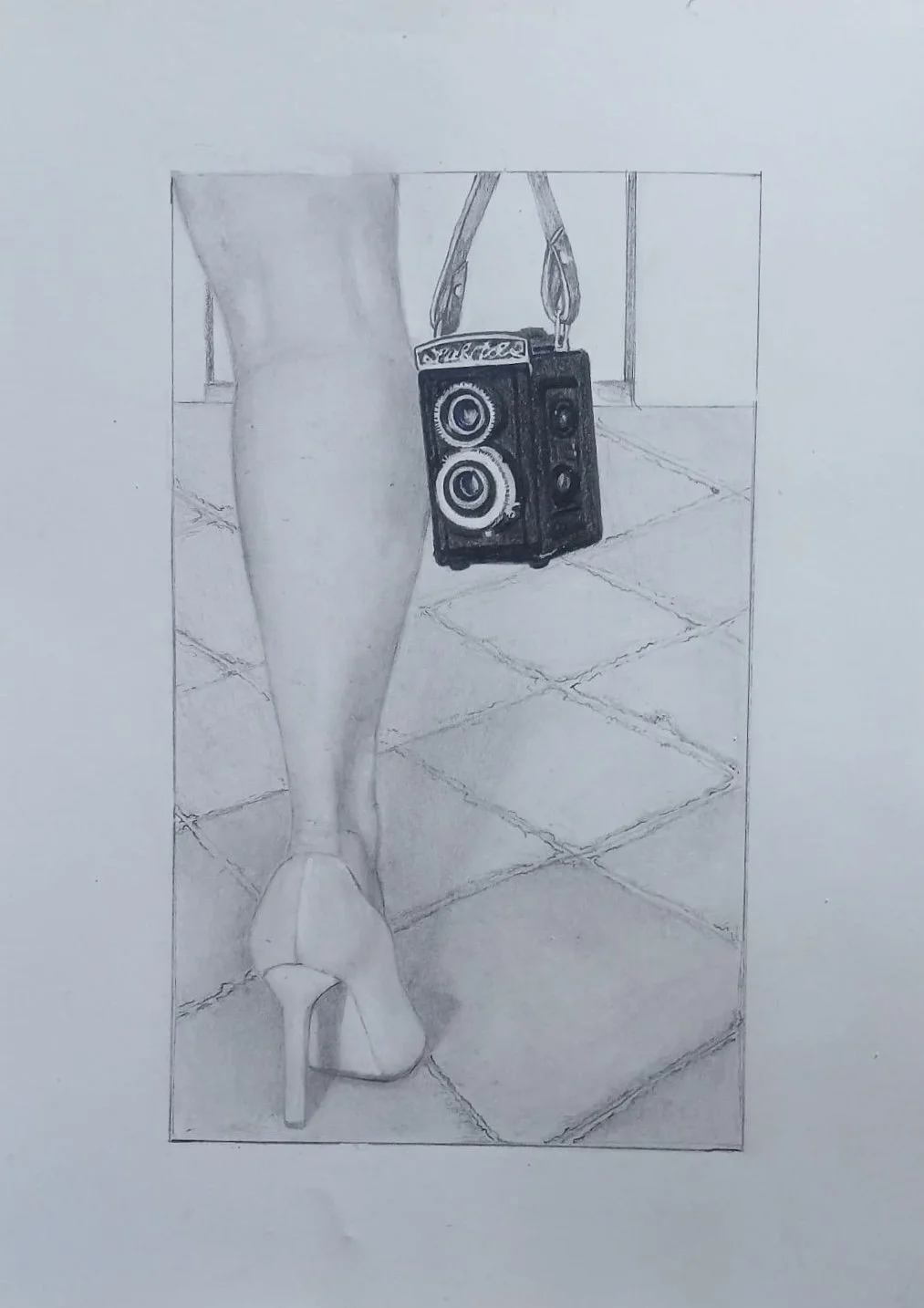
In the dialectic between the self and the other, between the present and the past, the work of Mary Wild stands as a sensitive bridge. Her project, LEGAME (Bond), is not merely a family chronicle; it is a profound reflection on the transmission of meaning. At the center of the scene, we find more than just the artist; there is a silent, omnipresent "third actor": the Lubitel 2.
The Camera as Relic and Extension
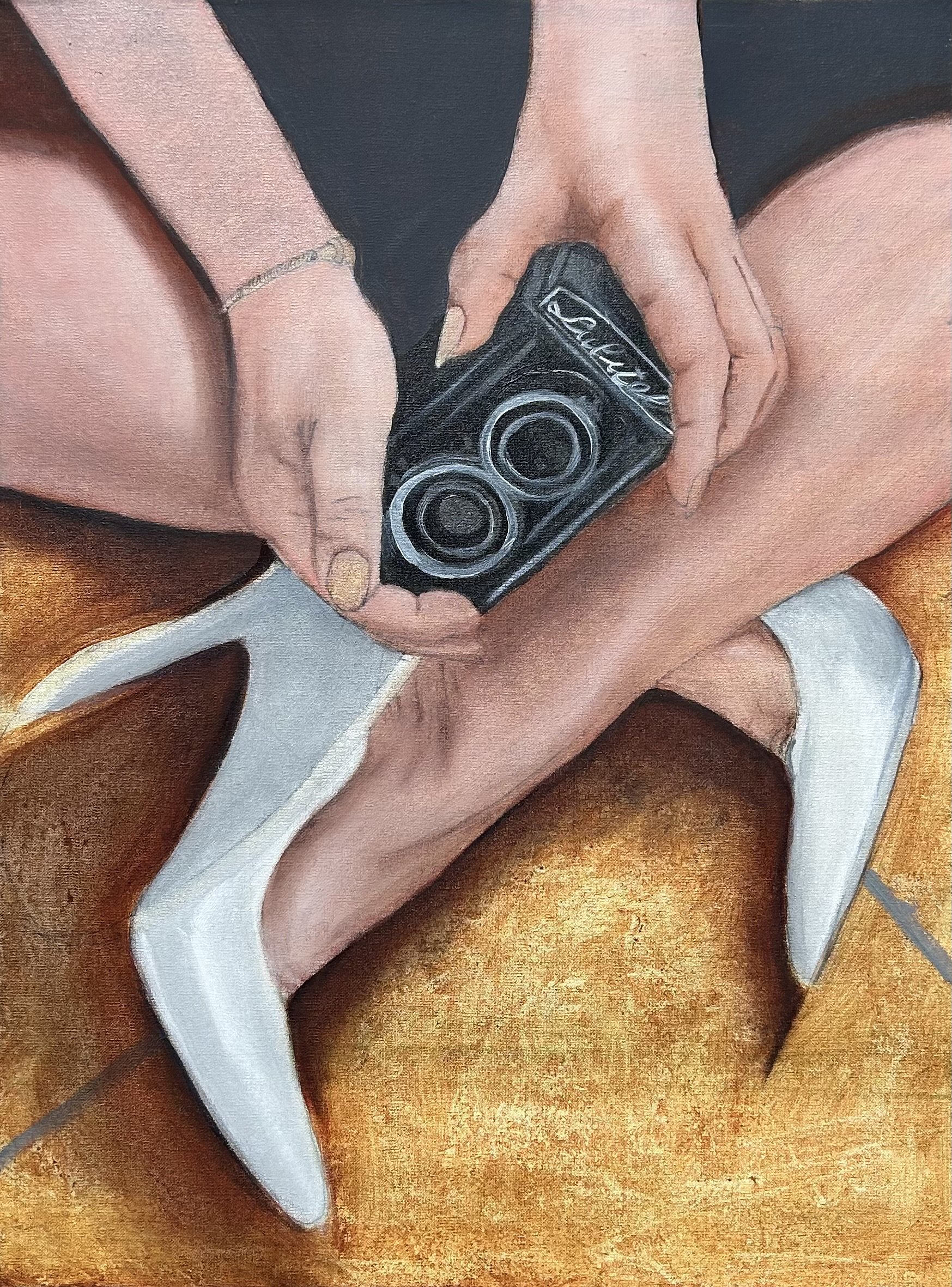
Philosophically, the camera ceases to be a mere tool for capture and transforms into a transitional object. As Maurice Merleau-Ponty suggested in his phenomenology of perception, the tool becomes an extension of the body. In Wild’s canvases, the Lubitel 2 is not simply held or placed; it seems to be grafted into the flesh, becoming the organ through which the filial bond is decoded and rendered eternal.
Composition: The Body Protecting Time
The framing chosen by the artist is intimate, almost tactile. The focus on crossed legs and hands enveloping the black bakelite of the camera suggests an act of guardianship. It is a return to the womb of memory: the artist protects the instrument that, in turn, has protected the history of a life lived alongside her father. The overhead and close-up perspectives eliminate the superfluous, forcing the viewer to confront the raw density of emotion.
Circular Time
There is a secular sacredness in the way Mary Wild paints matter. The grain of the color seems to seek the same vibration as old film stock, creating a temporal short-circuit: the act of painting (slow, meditative) celebrates the act of photographing (instantaneous, rhapsodic). In this "Legame," time is no longer a line that flees, but a circle that embraces.
LEGAME is, therefore, an affirmation of existence. Through her brush, Wild transforms nostalgia into presence, proving that art is the only place where an object from the past can continue to look toward the future alongside us.
Fine Artist: Mary Wild