
In Conversation: Ellis David on Knitwear, Process and Sculptural Silhouettes
Based in Yorkshire, Ellis is the founder of Ellis David Knitwear, a small independent brand focused on one of a kind knitwear pieces that sit between craft, sculpture and wearability. A recent graduate, their work has already appeared on the catwalk at York Fashion Week and West Yorkshire Fashion Week, marking an early but confident step into the industry. Proudly neurodivergent, Ellis approaches knitwear as both a material practice and a way of thinking, using slow, tactile processes to build garments that are emotionally grounded, visually impactful and structurally considered. We spoke to Ellis about slowness, materials, repetition, and what it means to build a knitwear practice in 2026.
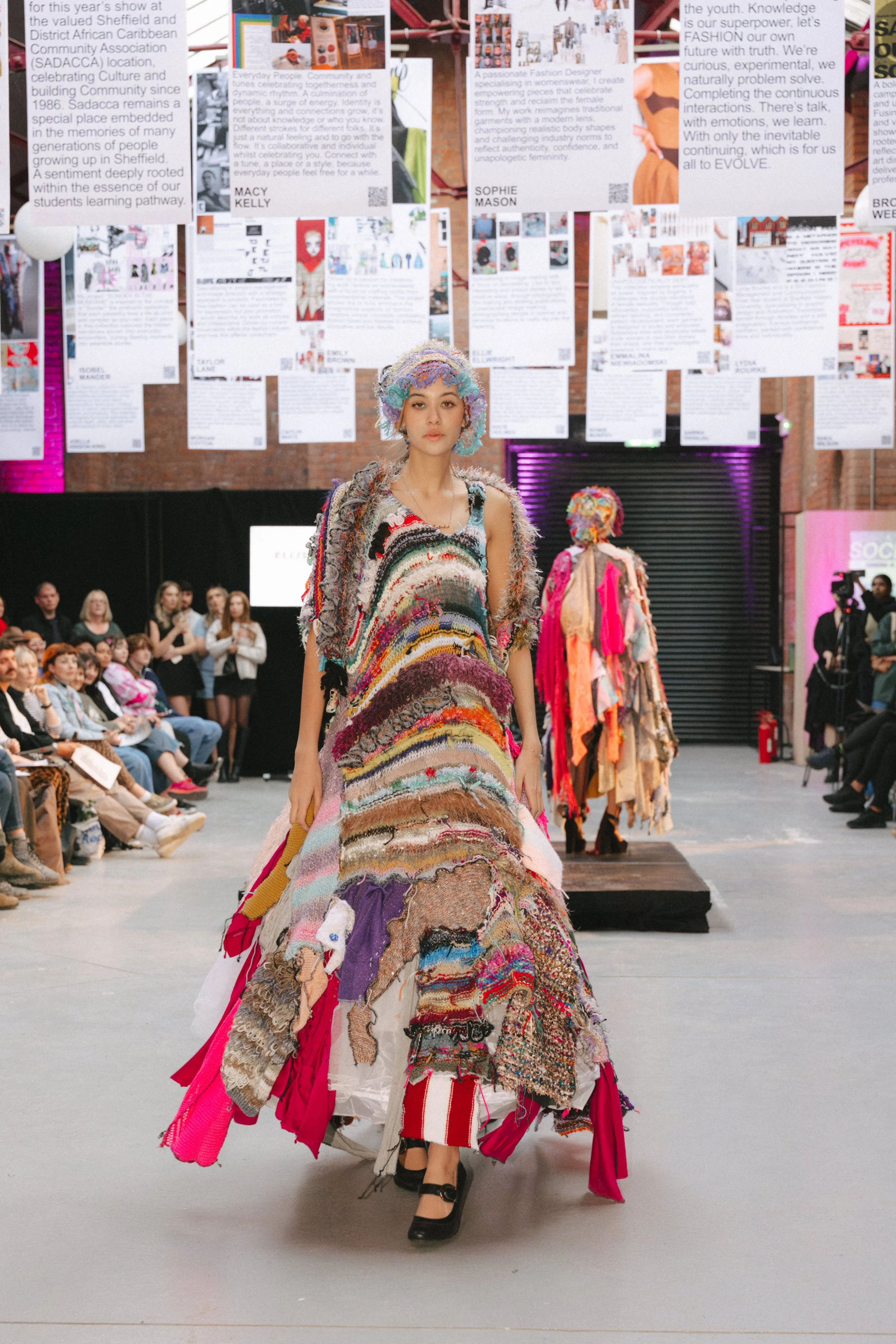
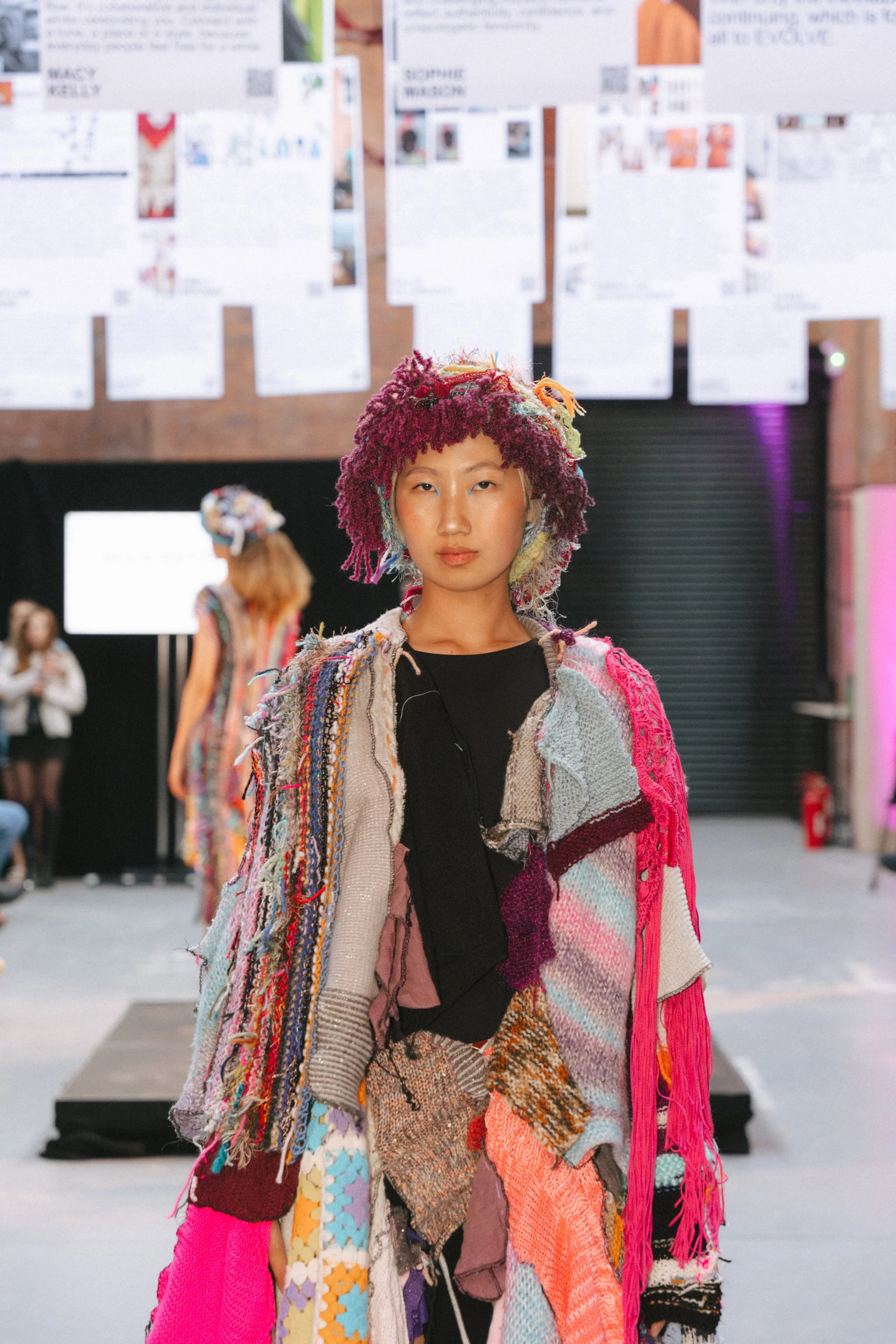
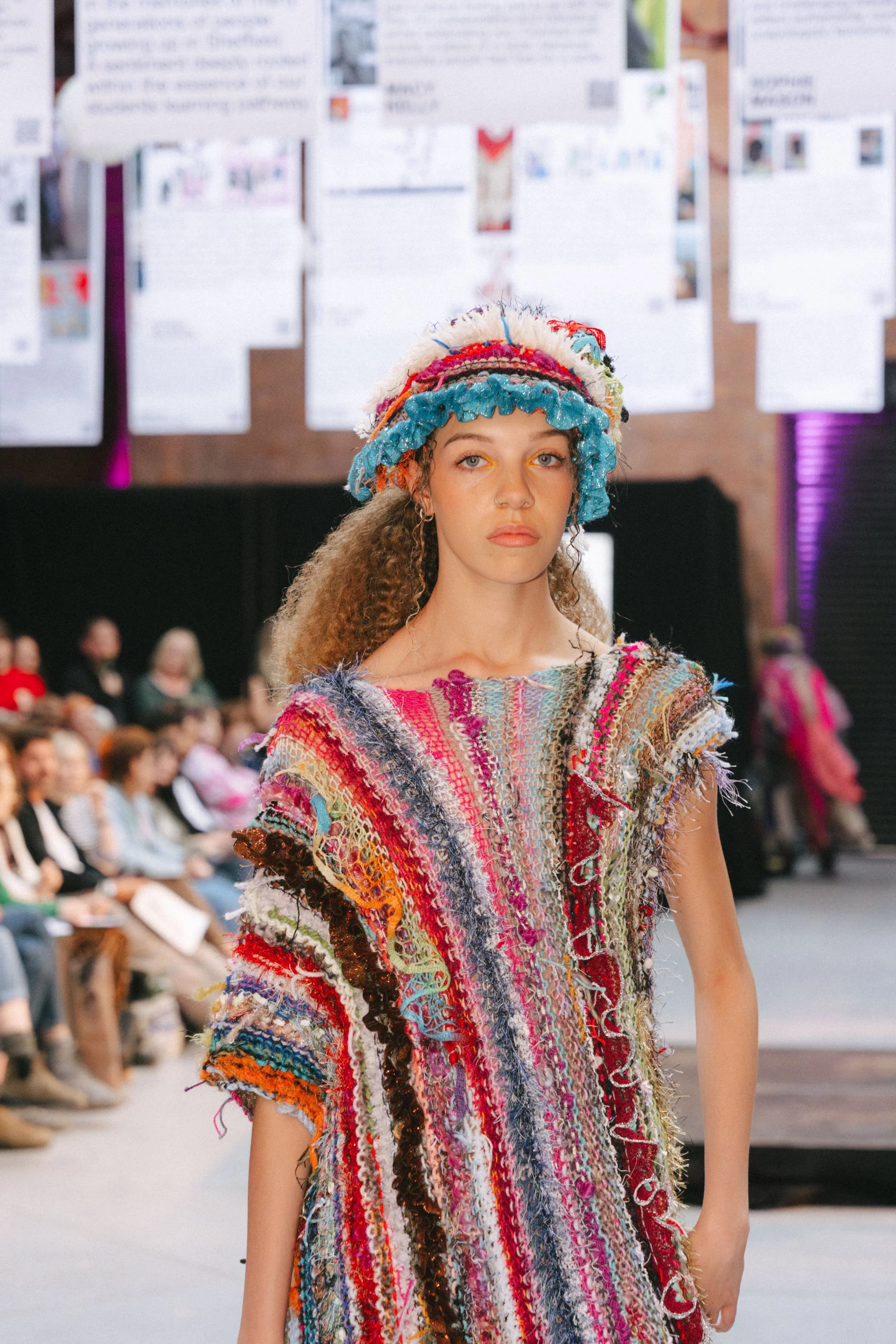
Knitwear sits between craft and industry. Knitting can be a slow process. How do you consciously resist scale, speed, or perfection?
I find the process of knitting very calming. It helps me relax, especially as I was diagnosed with ADHD at sixteen, and knitting has become a kind of therapy for me. One of the reasons I enjoy working slowly is that you get to watch the garment develop over time, while also having space to think about the textures you’re creating and the silhouette. That slowness is important to me. It keeps the process grounded and intentional rather than rushed or overly focused on perfection.
Material choice is never neutral. What fibres, yarns, or production methods do you refuse to compromise on, and why?
When it comes to materials, unless I’m working for a client or a specific brief, I don’t like using just one block colour in a garment. I want my pieces to have impact from the moment they’re seen. A good example of this was our graduation show at university. My first look, a knitted poncho dress with a matching hat and legwarmers, came out, and the audience reaction was immediate. They actually went “wow”. That moment really confirmed for me how important colour, texture and material impact are to my work.
Knitting is slow, repetitive, and bodily. How does the physical act of making shape the ideas, silhouettes, or emotions in your collections?
The slow process makes finishing a garment feel very rewarding. It also gives me more time to think about the different yarns I could use and how they might drape on the human form, or how they could accentuate certain curves or parts of the body. That thinking feeds directly into the shapes I create and often leads to more sculptural silhouettes.
Knitwear is often dismissed as domestic or decorative. How do you respond to that framing, and do you see your work as political in any way?
I think recently knitting and other crafts that were seen as domestic in the past have had a kind of regeneration, partly because of the sustainable element and because people are becoming more focused on the environment and the planet. Personally, I wouldn’t say my work is political, but I do think these shifts in how craft is valued are interesting and important.
Looking back at your own archive, what do you see repeating itself in your work, and what are you trying to unlearn or undo in future pieces?
One thing that keeps coming back in my work is the use of sculptural elements on simple silhouettes. This is especially clear in the poncho pattern I use a lot. It’s a very simple shape, but I like to change the length, sometimes short, sometimes long, sometimes waist-length, and each time I incorporate different yarns, like ruffle yarn or pom pom yarn, which create movement when worn and give a simple silhouette more life. I’ve also started playing around with offcuts to create new silhouettes, which feels like an important way of pushing things forward.
Finally, what does it mean to you to be a neurodivergent knitwear designer in 2026?
I think being a neurodivergent knitwear designer in 2026 is very exciting. More creatives are talking openly about being neurodivergent, and that visibility really matters. It feels like it’s helping the next generation, too, by making space for different ways of thinking, working, and creating.
Conclusion
At a moment when speed, scale and spectacle dominate much of the fashion industry, Ellis David Knitwear offers a quieter but no less confident counterpoint. Rooted in slowness, tactility and thoughtful construction, Ellis’s work shows how knitwear can function as both garment and sculpture, and how repetition, care and material sensitivity can become a language of their own. With early runway appearances already behind them and a clear, self-assured voice emerging, Ellis represents a new generation of designers building practices that are personal, process-led and unafraid to move at their own pace.