
Erupja Review: Charli XCX’s Bold Art Film Debut
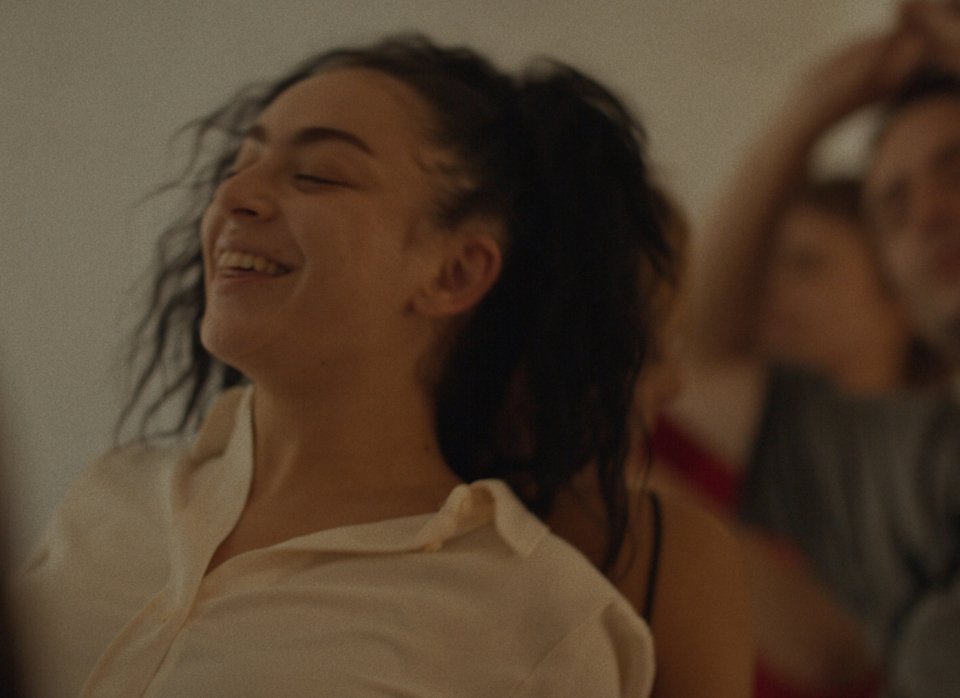
Charli XCX may be beloved by her fans for her music career, but more recently she has been turning her eye towards film. Pete Ohs’ Erupja marks her first major role, taking on the character of Bethany, a woman who goes on a trip to Warsaw with her boyfriend Rob (Will Madden). Supposed to be a romantic getaway, he secretly plans to propose. But Bethany does not know if she wants that future for herself, and she cannot resist the opportunity to reconnect with her old flame Nel (Lena Góra).
Erupja is certainly a bold choice for the musician-turned-actress; a small, stylised art film that is far from a mainstream option. She has previously given voice performances in animated features The Angry Birds Movie (2016) and UglyDolls (2019), and has had small roles in various other features, both previous and upcoming, such as 100 Nights of Hero, which premiered at last year’s Venice International Film Festival. With Erupja, which she also co-wrote and produced, Charli XCX takes the focal role as Bethany; a woman unable to resist the impulse to throw her whole life into chaos, regardless of the consequences, and uncaring of those she harms in the process.
Bethany is far from likeable in her behaviour. But Charli XCX brings much-needed nuance to a character who could otherwise seem utterly unsympathetic. Through her performance we see someone desperate to escape herself, and the discomfort she feels in her own skin. Bethany is drawn to Nel because with her she feels the earth shake. She cannot help but seek that intensity, even though it is incredibly destructive. More than anything, Bethany feels like someone who is very lost and desperately seeking some kind of meaning in her life.
Erupja is a very stripped-back film, made over only two weeks through Pete Ohs’ unique collaborative process. Its bare bones allow for a sense of intimacy as you watch these lives entangle, and the disruption they cause. Lena Góra shines as Nel, showing us a woman who yearns for Bethany and the chaotic joy she brings to her life, yet as they reconnect, is also finally able to see all the ways that the fallout might not be worth it. Their chemistry feels undeniable, and they each play the relationship in such a way that you can feel the history, tenderness, and connection within it.
Will Madden’s Rob, however, feels like a wooden counterpoint to their performances. As he finds himself abandoned by Bethany, the worry, hurt, and heartbreak he supposedly feels are hard to recognise in his performance. It is difficult to feel the weight of Bethany’s behaviour when he does not even register as a fully realised person being affected. This, alongside an infuriating choice to have a voiceover occasionally butt in to quip little tidbits of information about the characters, leaves Erupja unable to quite shine. The voiceover is a baffling stylistic choice that brings nothing of value and only serves to jar you out of the film, and Rob’s lack of weight as a character leaves the central premise feeling greatly weakened.
Conclusion
Erupja shines in its nuanced examination of two people seeking escape with each other, and how difficult it can be to learn that just because the earth shakes with someone does not mean that it is what you need, or that it is meant to be. It is a wonderful and tender exploration of how messy it can be to grow. However, its weaker points are hard to ignore; stylistic choices that feel opposed to the film itself, and an incredibly weak character in Rob.
Erupja stumbles in ways that make it feel unpolished and lacking. But its central characters and story are incredibly strong, and for all its flaws there is a genuinely effective, honest, and touching film at the centre. Which is perhaps why the flaws feel so glaring. There is a sense that Erupja is close to being great. The strength of Charli XCX and Lena Góra’s performances, and the complex relationship they portray, make for a worthy and emotional watch.
Words: Arete Noctua, Film Features Editor & Writer @ Féroce Magazine
Arete is Féroce’s Film Editor, overseeing the magazine’s film coverage through incisive short-form reviews and longer anthology pieces. Their writing explores cinema as both art form and social mirror, examining how iconic films reflect, challenge and shape the cultural moments they emerge from.
With a critical and respected voice in the community, Arete situates film within wider political, aesthetic and historical contexts, drawing connections between screen narratives and cinema history.
Their editorial approach balances close analysis with broader cultural insight, offering readers thoughtful criticism that moves beyond ratings or hype to consider film’s lasting impact, relevance and position within society.