
Alice Winocour’s Couture : A Meditation on Women’s Artistry and Labour in Fashion
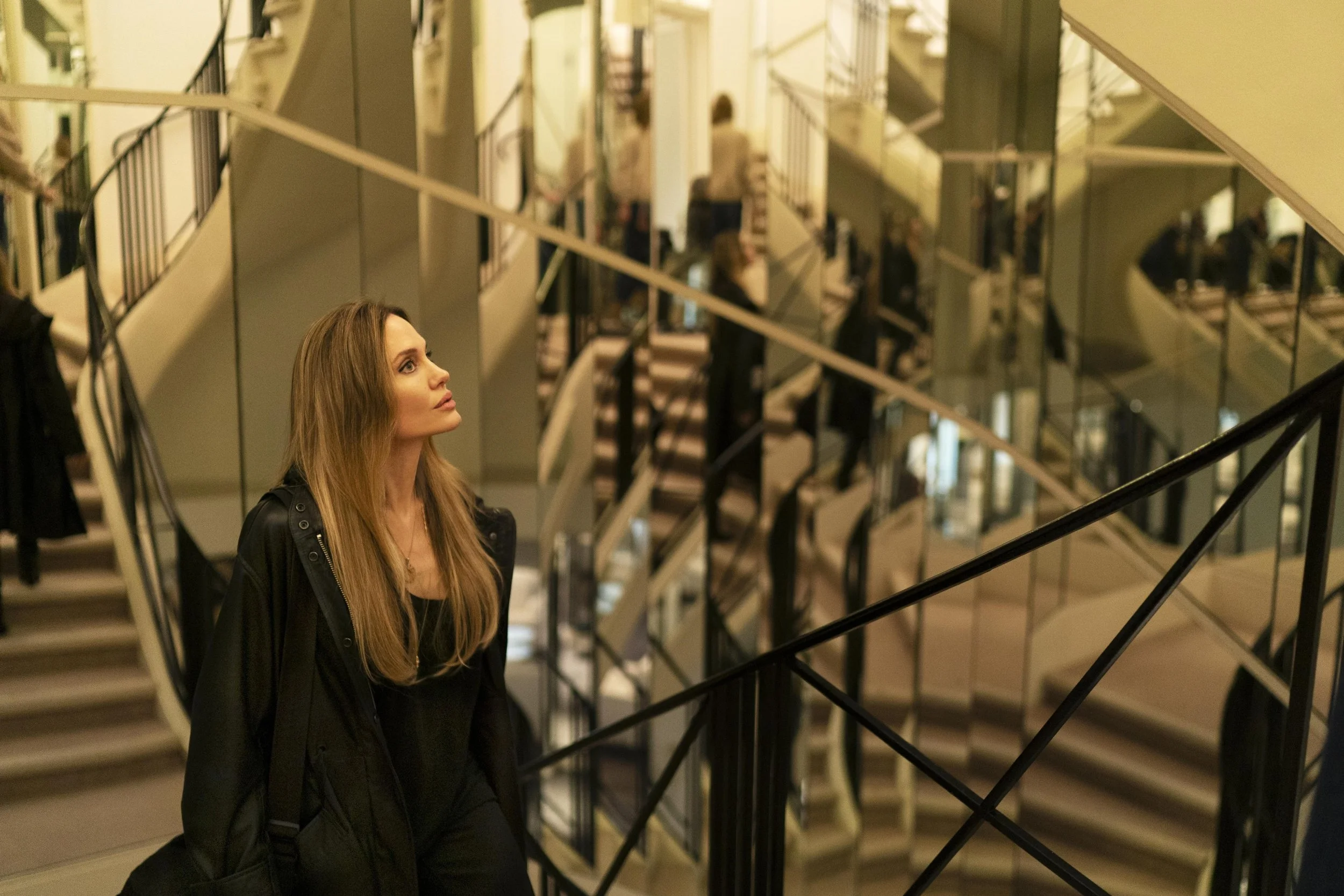
Alice Winocour’s Couture weaves itself quietly and intimately through the lives of various women as they navigate the build-up to Paris Fashion Week. Angelina Jolie stars as Maxine Walker, a director making a vampire short film for the show, and learns that she has cancer shortly after she arrives in Paris. As she faces an uncertain future, we’re also introduced to Ada (Anyier Anai), a South Sudanese model and star of Maxine’s short, who is so new to the job that she hasn’t yet learned how to walk, and make-up artist Angèle (Ella Rumpf), who harbours aspirations of becoming a writer.
Couture is about women and their work, much of it the quiet background labour of artisans who weave together the fine gossamer that creates the final sumptuous spectacle. Women who are moving parts of a massive machine that they often seem somewhat drowned within, even as they firmly establish themselves as worthy of the space and talented in their work. There’s a subtlety and tenderness to Winocour’s observational lens, allowing expression and environment to speak volumes as we watch these women live and work.
Angelina Jolie gives an arresting, powerful and vulnerable performance as Maxine. From the moment she lands in Paris, she has to stand her ground against the dismissiveness of men trying to soften her art and reshape her vision into something more palatable. Her cinematographer Anton (Louis Garrel) is often combative and frustrated with her stubbornness, though he is also attentive and supportive when he sees her need for care. She juggles directing alongside doctor’s appointments and refuses to reveal why she must keep leaving the set. The weight of her isolation, fear and grief is palpable, and Jolie expertly shows us a woman burdened on all sides by expectations and obligations. She is even distanced from her daughter, who is cold and disappointed by her mother’s absence during their calls. There is a sense of a woman unable to prioritise her life over her art when she needs to, and that the revelation of cancer has unsettled her sense of self. Her journey becomes one of seeking clarity and looking beyond her work.
Ada provides a vulnerable counterpoint to Maxine. At eighteen and entirely fresh to the fashion industry, she feels like an outsider at every turn. She quietly tries to befriend and fit in with the other models, but even when they are welcoming, she clearly feels adrift. Couture excels in showing the complexity of these working relationships. Rather than indulging stereotypes of competitiveness, it presents them as often supportive and joyful. For each person who is derisive of her lack of polish, she meets someone offering kind advice. Her quiet, contemplative loneliness, far from her family who settled in Nairobi after fleeing war, reaches out from the screen. Much of her struggle is internal, and Anyier Anai conveys this beautifully through a subtly expressive performance. Ada is also bold and determined despite her shyness. She defied her father by coming to Paris, leaving behind pharmaceutical studies without telling him, and in the face of intimidating expectations and brash personalities, she continues to push forward.
Angèle fades somewhat into the background. As a make-up artist, this is not entirely misplaced. Her work is often dismissed or disrespected, and her story becomes most compelling when she grapples with rude co-workers and a dismissive editor. She is gentle in her touch towards the women she works on. A shot of her applying make-up to feet blistered from heels highlights how tenderness towards young bodies so often reduced to objects is a deliberate act for her. Much of what we hear from Angèle comes through voiceover as she writes, briefly interspersed throughout the film as commentary. This framing device is one of the few elements that feels slightly out of place. In a film grounded in intimacy, the literary voice occasionally creates distance.
Couture is frequently a dreamy experience. The audience is swept into the glittering, hazy world of a vast artistic undertaking, moving between perspectives as each character grapples with the scale of what they are part of. At times we drift to careful shots of seamstresses delicately working on garments. One in particular, Christine (Garance Marillier), works diligently on Ada’s diaphanous white gown in which she is to open the show. There is a consistent emphasis on the extraordinary number of craftspeople working behind the scenes.
Winocour’s dreamy and tender direction culminates in the storm of the final scene. Drenched in bold and sumptuous imagery, there is a celebratory indulgence as the spectacle unfolds and transforms under nature’s unexpected onslaught. A sense of liberation and release floods the screen as the work we have witnessed finally reaches its crescendo. Much of the unspoken weight of Couture lies in the myriad ways women endure scrutiny. Their bodies are utilised as resources, yet they continually find ways to navigate, endure and strengthen themselves and one another within that framework.
OUR VERDICT on couture
Couture offers a tender and vulnerable portrait of creative women navigating an industry filled with both beauty and pressure. The scale of the craft behind Paris Fashion Week is shown with genuine appreciation, foregrounding the artisans and workers who are so often overlooked. Angelina Jolie delivers one of her most emotionally raw performances as Maxine, anchoring the film with depth and restraint. Her co-stars shine alongside her, ensuring that each narrative thread feels meaningful within the whole. Directed with style and precision, Winocour infuses the film with warmth and intimacy. Minor weaknesses in Angèle’s narrative do little to diminish what is ultimately a thoughtful and carefully realised story of women, labour and artistry.
Words: Arete Noctua, Film Features Editor & Writer @ Féroce Magazine
Arete is Féroce’s Film Editor, overseeing the magazine’s film coverage through incisive short-form reviews and longer anthology pieces. Their writing explores cinema as both art form and social mirror, examining how iconic films reflect, challenge and shape the cultural moments they emerge from.
With a critical and respected voice in the community, Arete situates film within wider political, aesthetic and historical contexts, drawing connections between screen narratives and cinema history.
Their editorial approach balances close analysis with broader cultural insight, offering readers thoughtful criticism that moves beyond ratings or hype to consider film’s lasting impact, relevance and position within society.