
Meet Designer Alisa Kopysova
Fashion design student Alisa Kopysova (Sysa) is currently based in Moscow, where she is developing her graduate collection as a deeply personal exploration of emotional restraint, vulnerability and strength. Using fashion as a tool of self-expression, her work is driven by the things she cannot say out loud, drawing on experience, memory, emotion and protest.
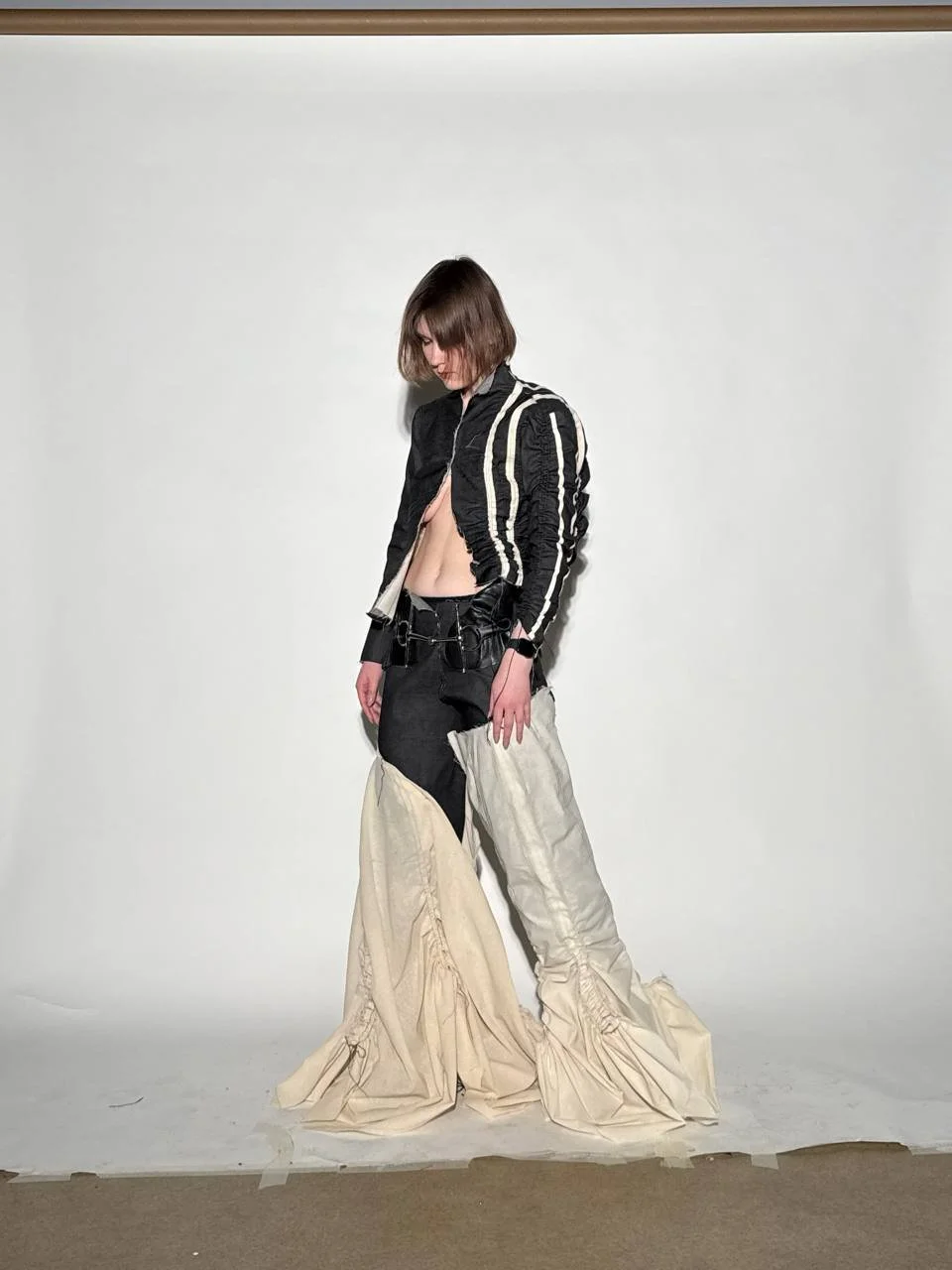
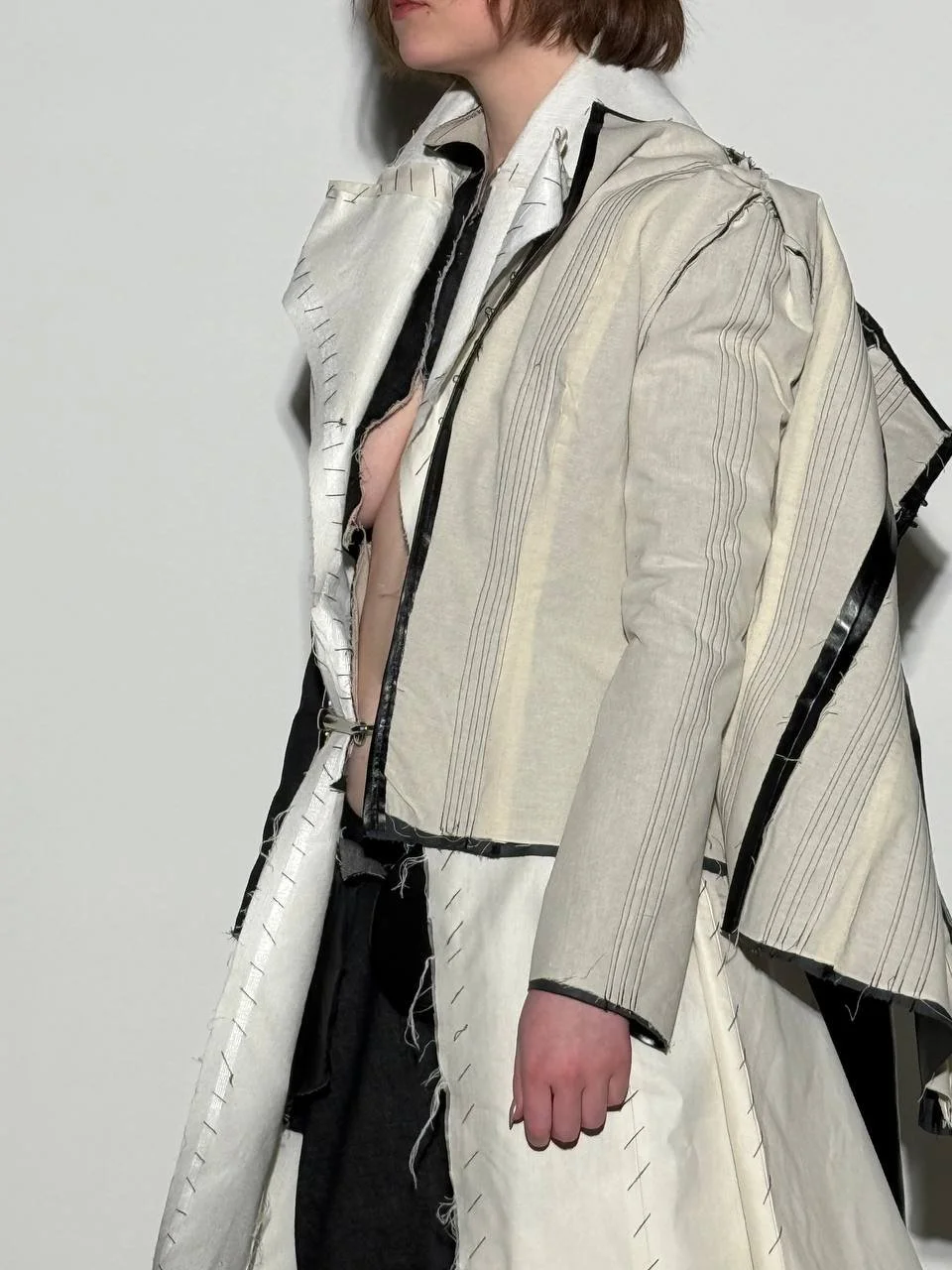
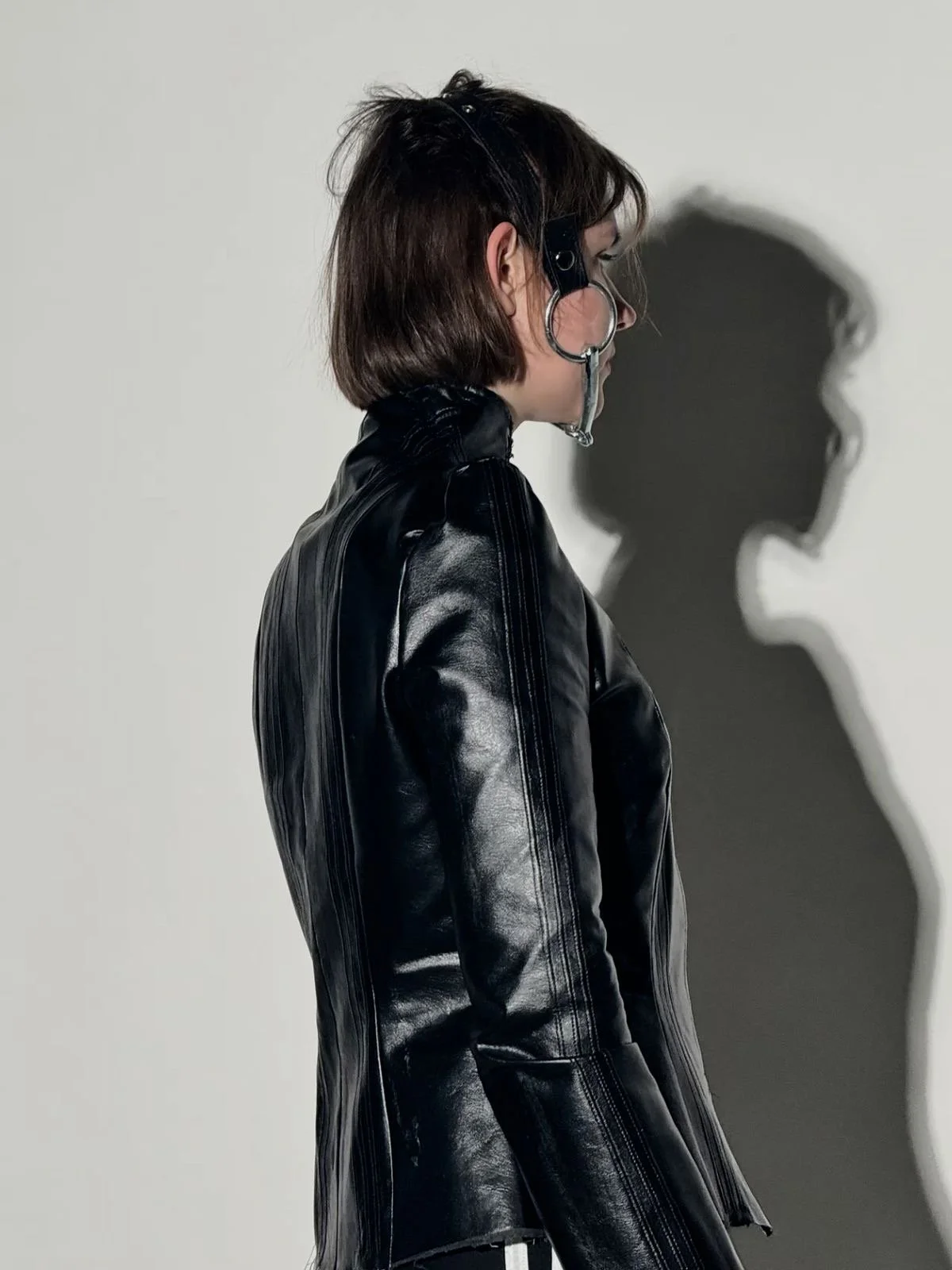
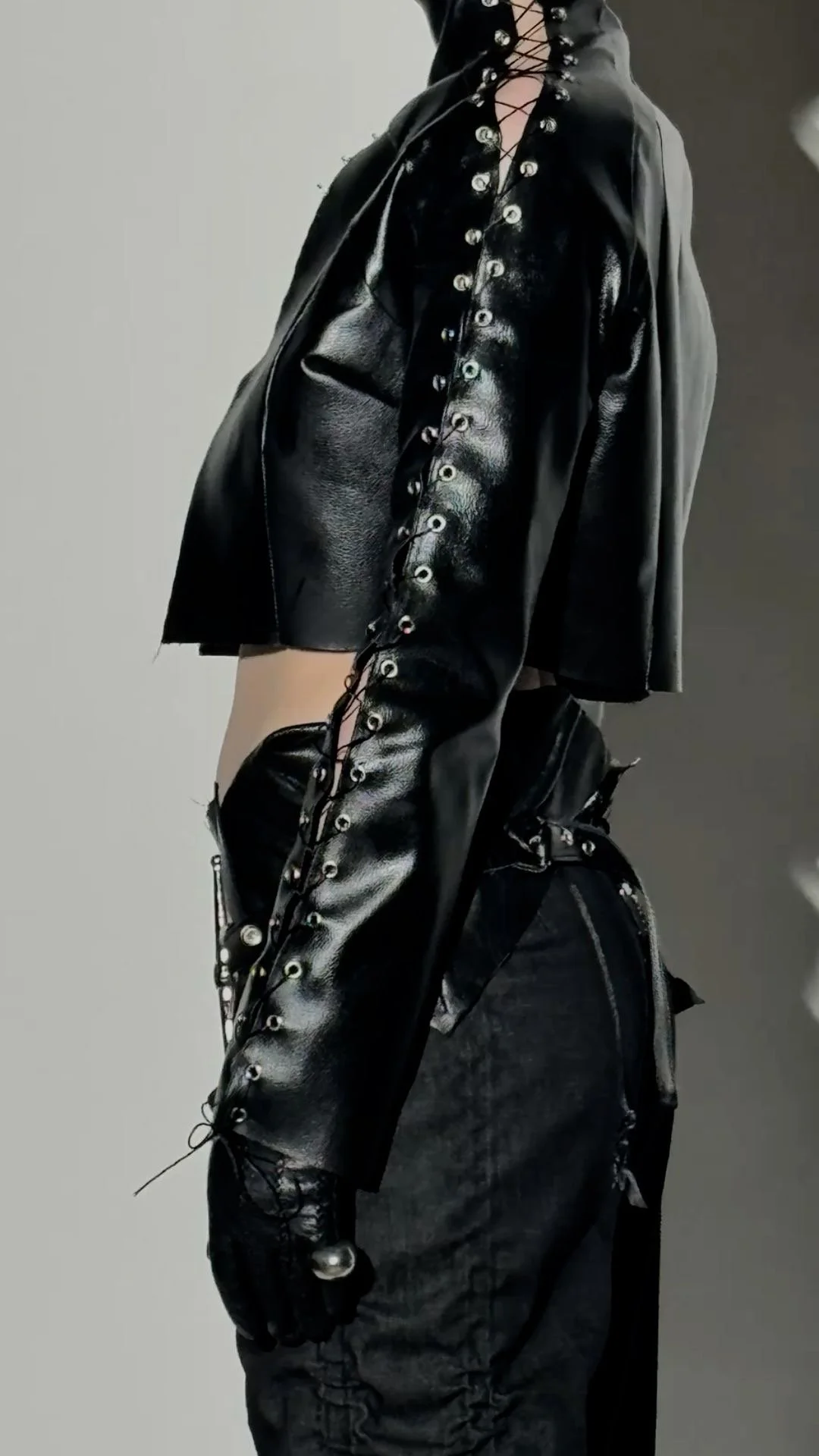
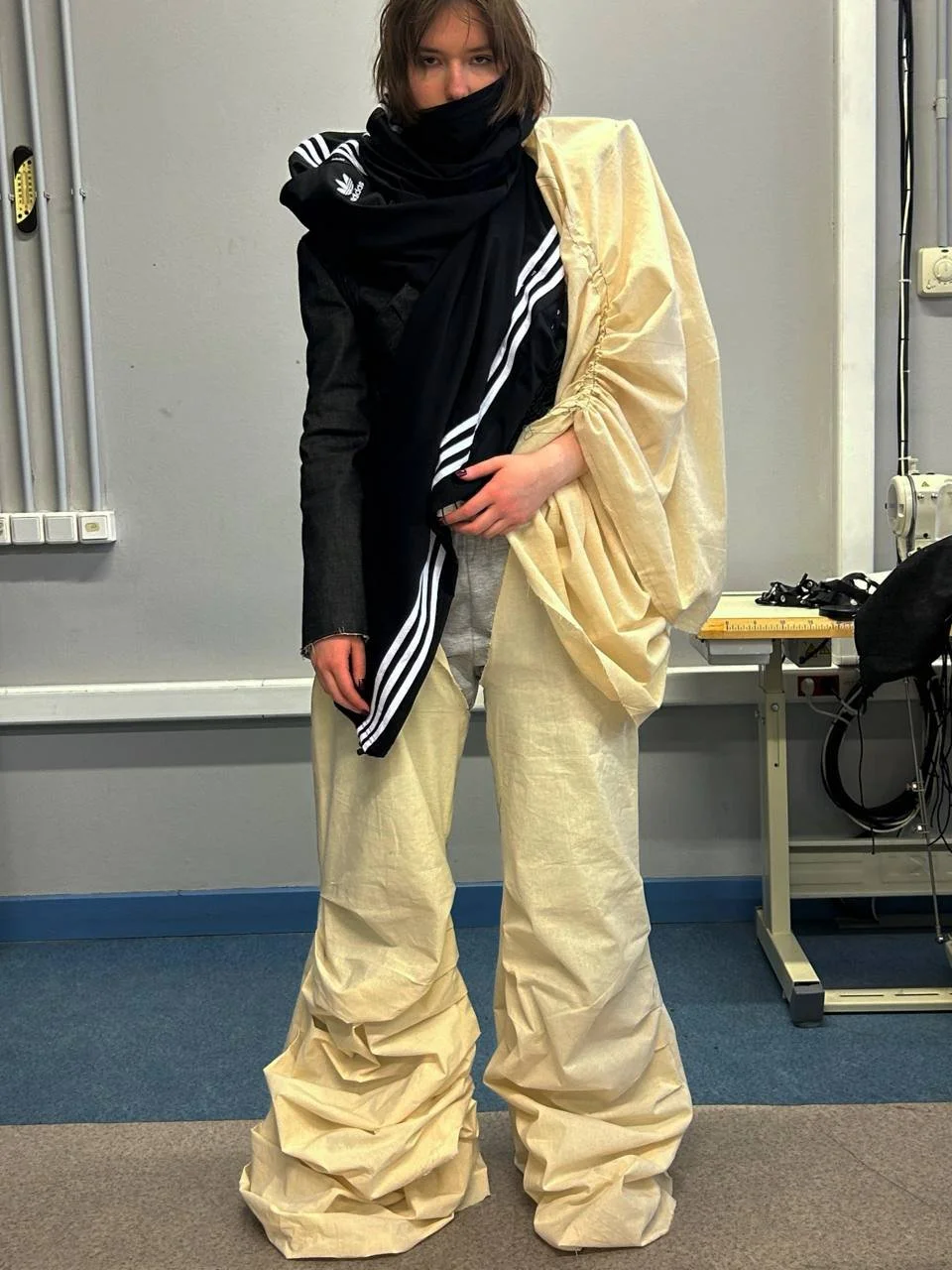
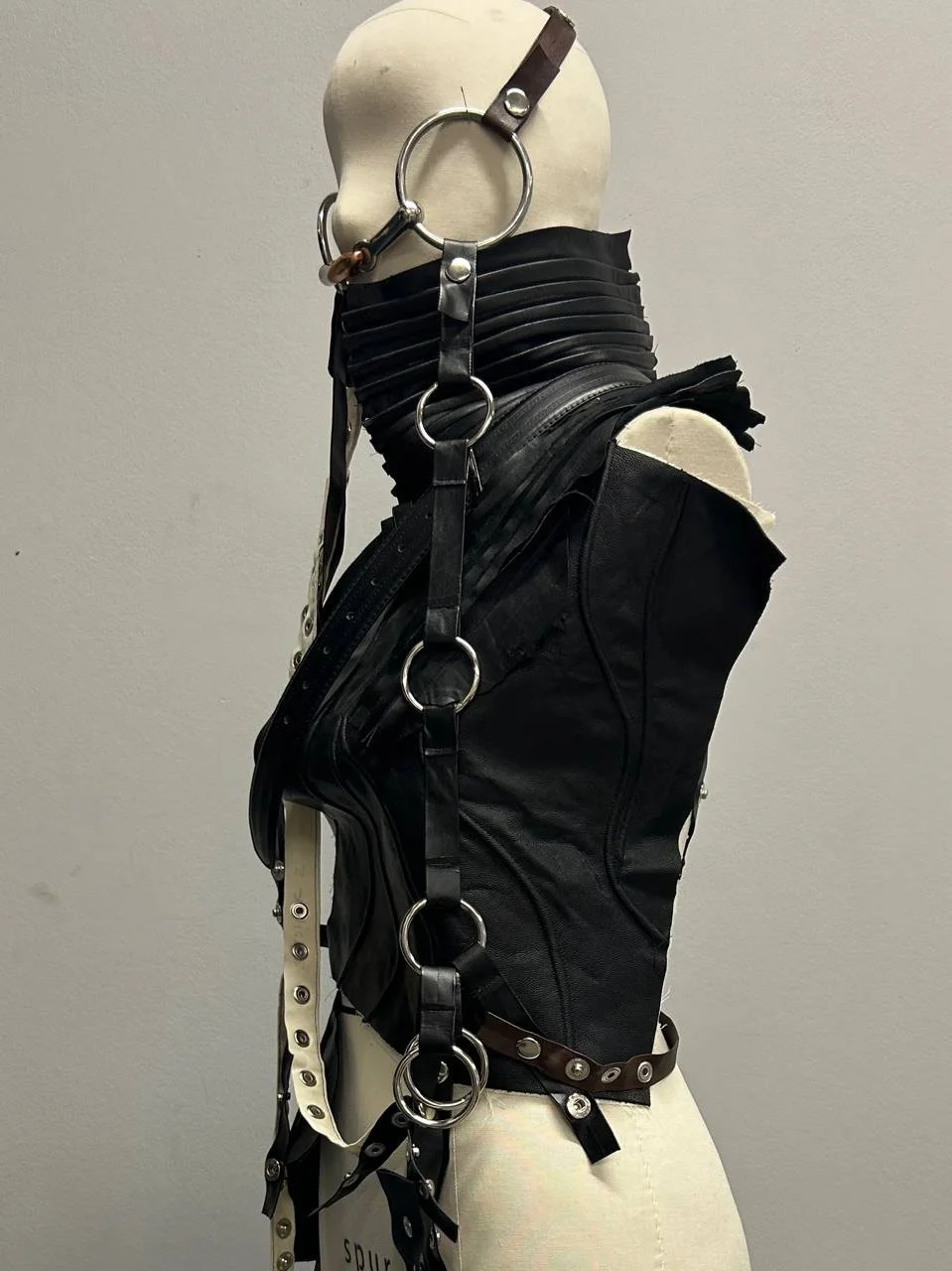
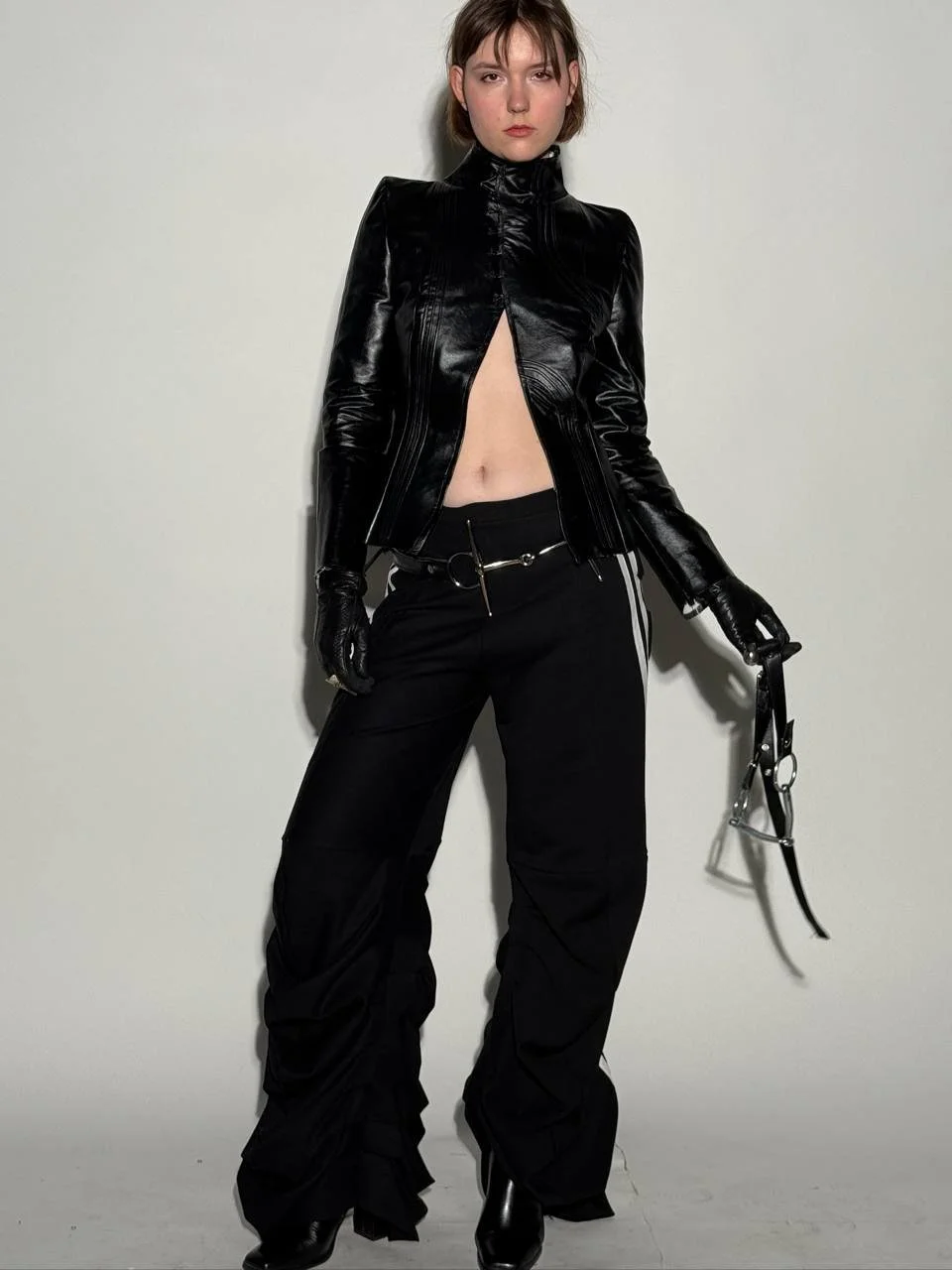
Alisa is drawn to tough, demanding materials such as thick fabrics, leather and metal hardware, which she sculpts into tailored, conceptual yet wearable pieces with a strong focus on pattern cutting and detail. Her current collection centres on the concept of emotional suppression and the performance of resilience, using hyperflexion, a controversial horse training practice, as its central metaphor. It is a powerful reflection on what it means to stand tall while breaking, and on how discipline, beauty and control often mask pressure and pain.
We spoke to Alisa about vulnerability, materiality, performativity, and why confrontation, rather than comfort, sits at the heart of her work.
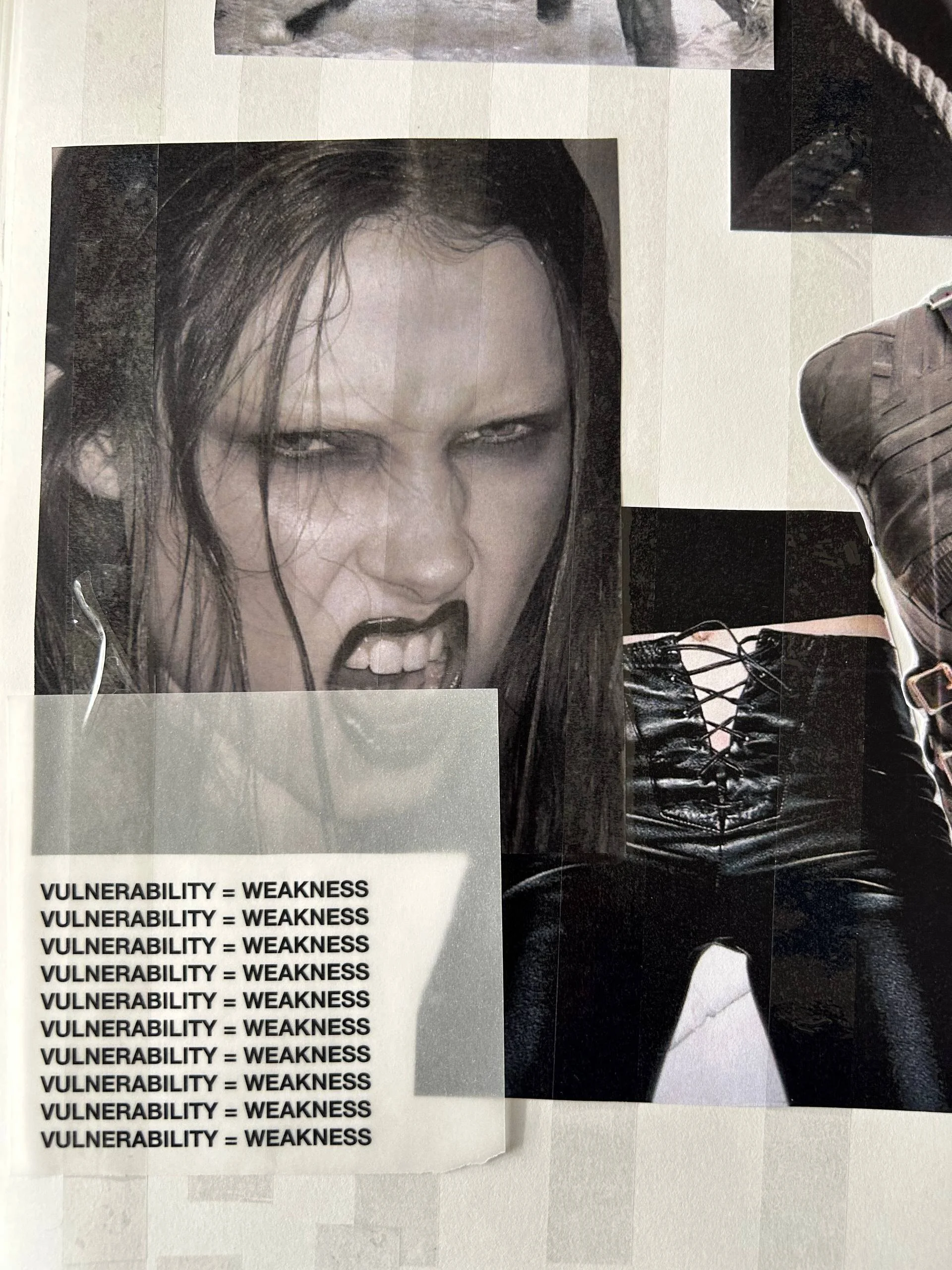
You describe fashion as a way of saying what you “can’t say out loud”. What are you trying to articulate through this collection that feels impossible to express in words?
This collection became a sublimation for the condition I’ve been living in for years. Since early childhood, I’ve been taught, and then self-taught, to control and censor my emotions: don’t cry, be strong, don’t overreact, hold yourself together. Over time, this discipline became an internal part of me, and self-restraint turned into self-surveillance. I was too afraid to show the weak part of myself.
In this work, I’m speaking about the fear of vulnerability. The fear that if you soften, you will lose; if you bend, you disappear. It demands that you always stand strong, even if you are breaking. In horse training, forcing an animal’s neck into an extreme curve, an image of obedience, is actually produced through pressure. It looks graceful, almost noble, but it’s still submission. The posture is beautiful, the tension is invisible.
Hyperflexion creates a beautiful silhouette through pain and coercion. Do you see parallels between that and how bodies are shaped by social expectations, especially in fashion?
Absolutely. Hyperflexion is not only about horse training, it’s about bodies and human discipline.
Uniforms are the most obvious example. They standardise posture, silhouette and behaviour. They erase individuality in favour of discipline and belonging. You don’t just wear a uniform, you perform it, and your body adjusts accordingly. The same could be said about gender stereotypes. Women are mostly expected to be soft but controlled, strong but not threatening, attractive but effortless, while men must be composed, dominant and emotionally contained. These expectations shape your body and gestures, how you sit, how you walk, your manners and how much space you allow yourself to take.
Fashion can become a system of subtle coercion. We discipline our bodies through diets, posture, self-editing, beauty standards and trends, whatever the current ideal is, forcing ourselves to fit the silhouettes of the moment. Just like hyperflexion, the result always looks beautiful. It’s polished, controlled, desirable. But beauty achieved through pressure still carries violence within.
You’re drawn to tough materials like leather, denim, thick fabrics and metal hardware. What do these materials let you say emotionally that softer materials wouldn’t?
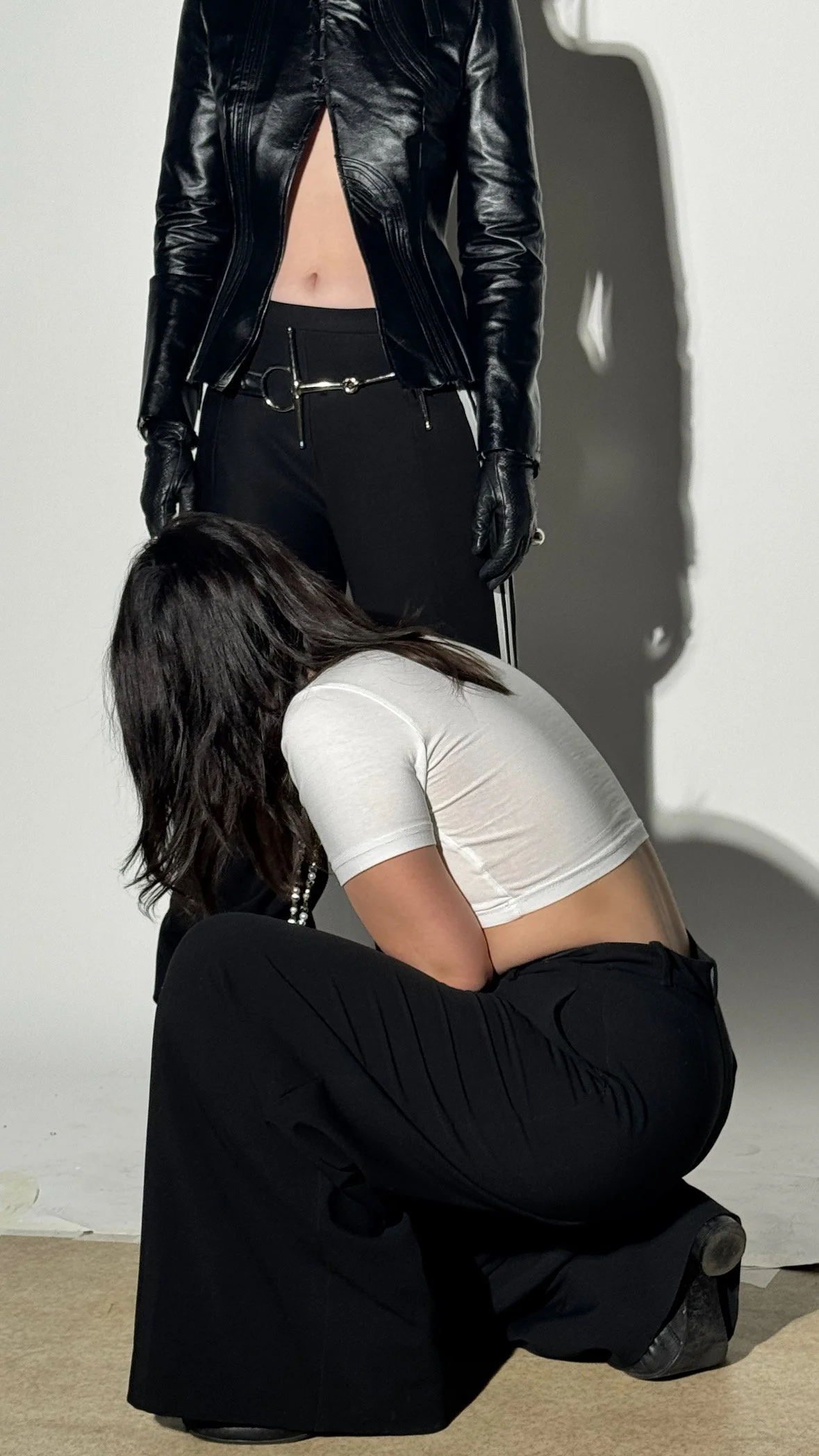
I found them much easier to work with than lighter fabrics and softer materials. I enjoy the feeling when my garments stand tall like a statue and I can sculpt them further. It also measures the level of my physical labour. If the outfit becomes heavy, it means it carries effort.
Emotionally, working with leather, denim and metal hardware is a physical confrontation. You have to force them by pulling the needle through, stretching and holding the weight. It somehow reminds me of my equestrian past, working with hard horses. It’s challenging at the beginning, but if you find the right key, it becomes your best friend.
Also, working with leather makes me feel stronger, more solid, almost more masculine in energy. There is something empowering in producing powerful, structured pieces out of fabrics that demand strength and endurance. Constructing them becomes a performance of strength in itself. And I want the wearer to feel it too, not fragile, not decorative, but grounded and solid. Soft materials comfort, heavy materials confront. Now I’m more interested in confrontation.
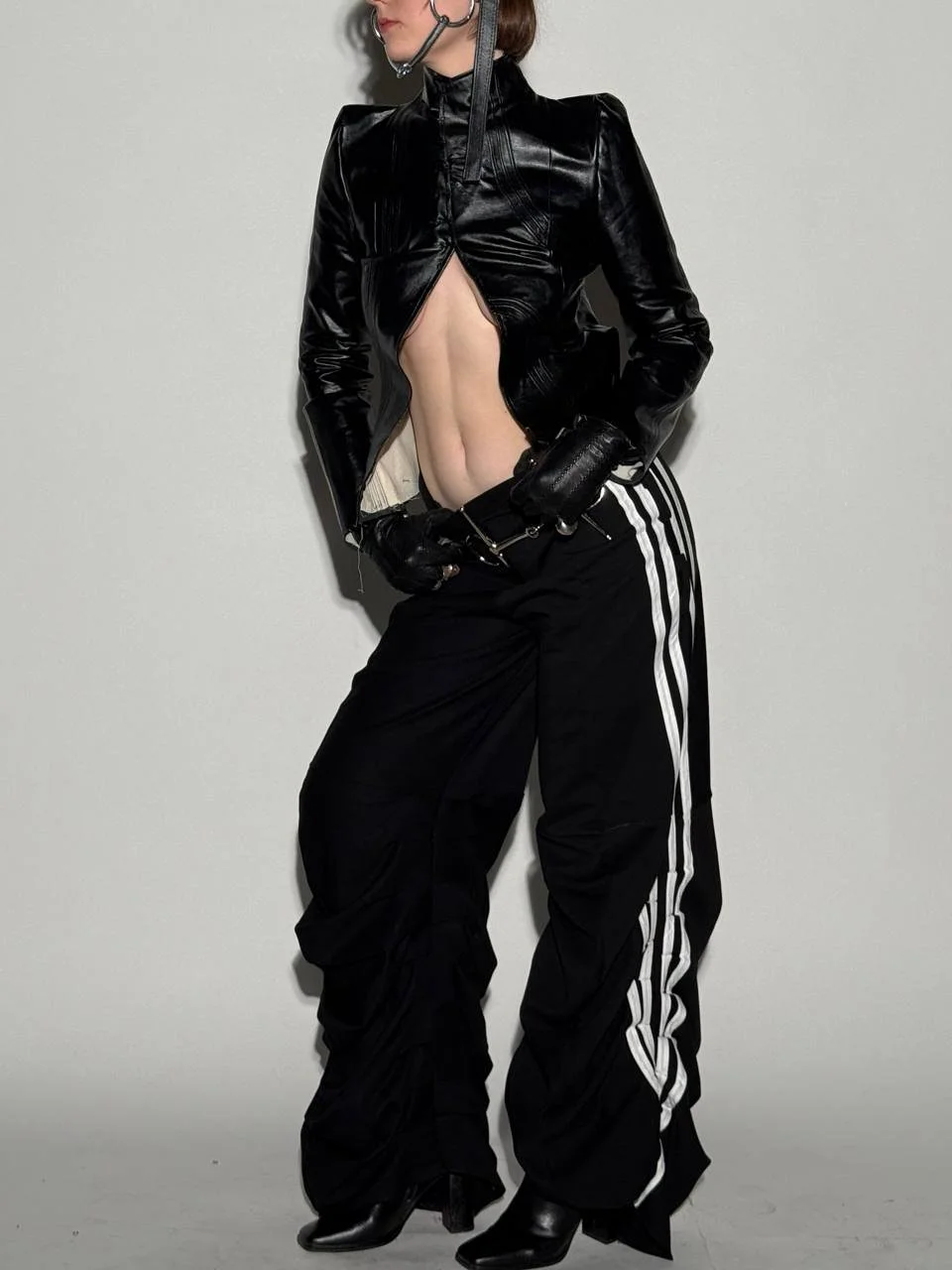
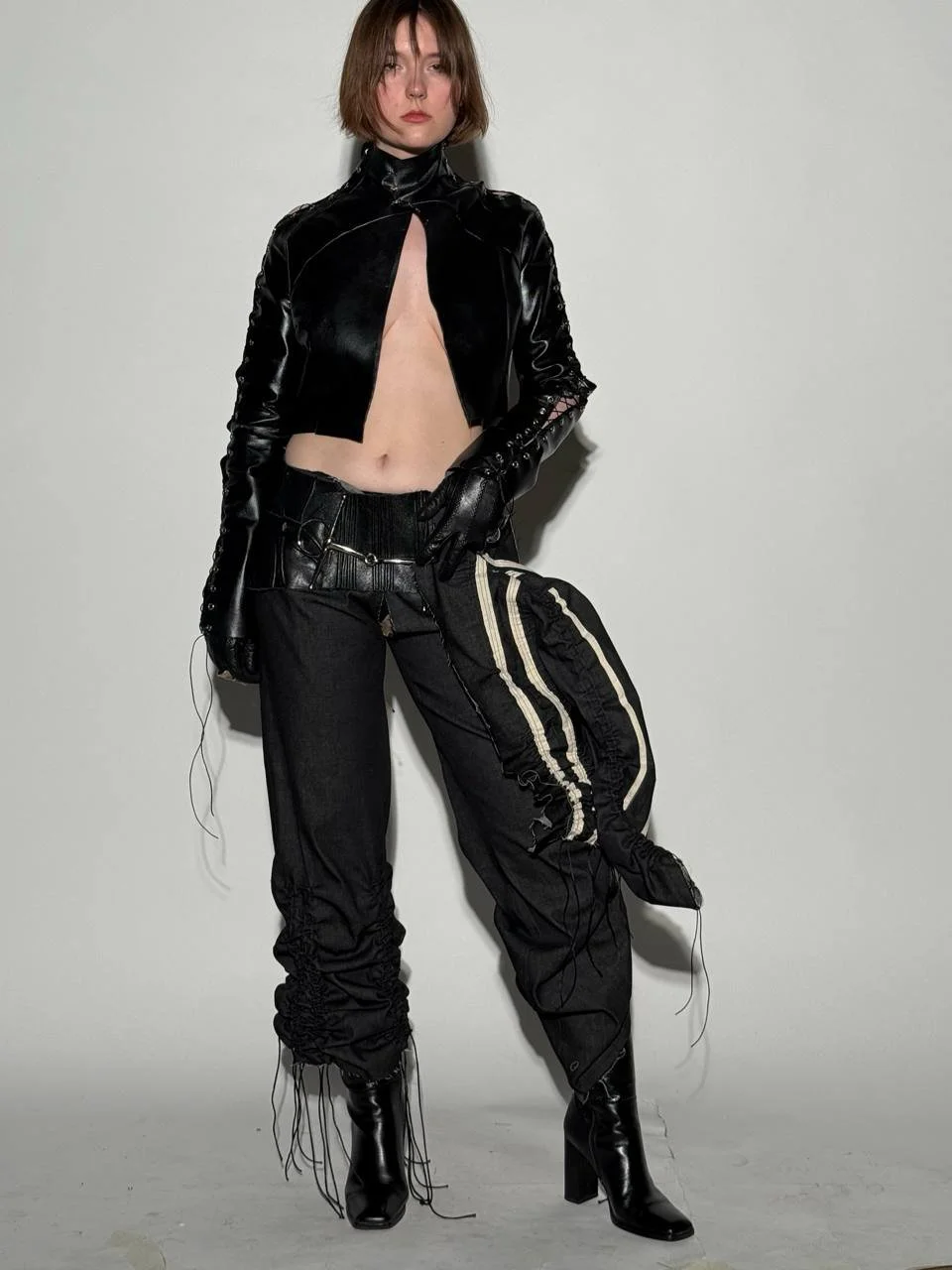
In a fashion industry that often glorifies suffering for beauty, what do you want people to question when they see this work?
I see hyperflexion not as empowerment, but as a burden that has been normalised. All in all, this collection is about performativity, the constant need to present yourself in the best possible manner. Like hyperflexed horses during competition, their posture is flawless, their silhouette refined, their discipline is impressive. The audience sees elegance, but the inner pressure remains invisible. When pressure is normalised, we are conditioned to do the same by curating ourselves, suppressing discomfort and prioritising appearance over feelings. The burden becomes the new norm. Vulnerability becomes something almost shameful.
The fashion industry often rewards this dynamic. But I’m not interested in celebrating this aesthetic, rather than exposing its weight. Hyperflexion looks graceful, but it’s sustained through pressure. And I guess many of us live in the same posture, beautifully composed, but deeply strained. Rather than romanticise that condition, I’m taking it to the top and questioning why it is still acceptable.
Do you think fashion has a responsibility to address pain, control and power structures, or is it enough for it to simply reflect them?
I don’t think fashion carries a moral obligation to fix pain or take down power structures. It’s not a government or a therapy system, but a mirror. It reflects the time we live in, our obsessions, anxieties, hierarchies and fantasies. If an era is obsessed with control, perfection and productivity, fashion will show that. Fashion is not a moral authority. What it can do, and what interests me, is reveal what is already there.
In my case, I’m not trying to solve structures of control, but reflect them back, slightly sharpened. Hyperflexion already exists, self-restraint is already rewarded. Performativity is already part of everyday life. Fashion doesn’t have to preach, but it shouldn’t pretend neutrality either. Even choosing to just reflect is a position.
Our Verdict
Alisa Kopysova’s graduate collection is still in development, but its direction is already clear: a body of work that uses structured silhouettes, leather, denim and metal hardware to build a material language around emotional suppression, self-restraint and the performance of resilience. Referencing horse equipment such as bits and leather straps, and combining thick fabrics with gathering and draping, her designs explore the tension between restriction and comfort, control and vulnerability.
Through this collection, Alisa is not offering easy answers. Instead, she is asking harder questions about beauty, discipline and the quiet violence of expectation, and about what it means to keep standing tall when the cost of that posture is hidden strain.
See more from Sysa here: https://www.instagram.com/sy.sssa/profilecard/
Publication: FÉROCE Magazine: http://ferocemagazine.com
https://www.instagram.com/ferocemagazine
© FÉROCE Magazine. All rights reserved.